The Rest of the World Report | May 23, 2026 — Saturday Edition
The View From Everywhere Else
Weekday morning and evening editions. Saturdays once. Good news on Sundays. All sources labeled.
WHAT CUBANS IN CUBA THINK
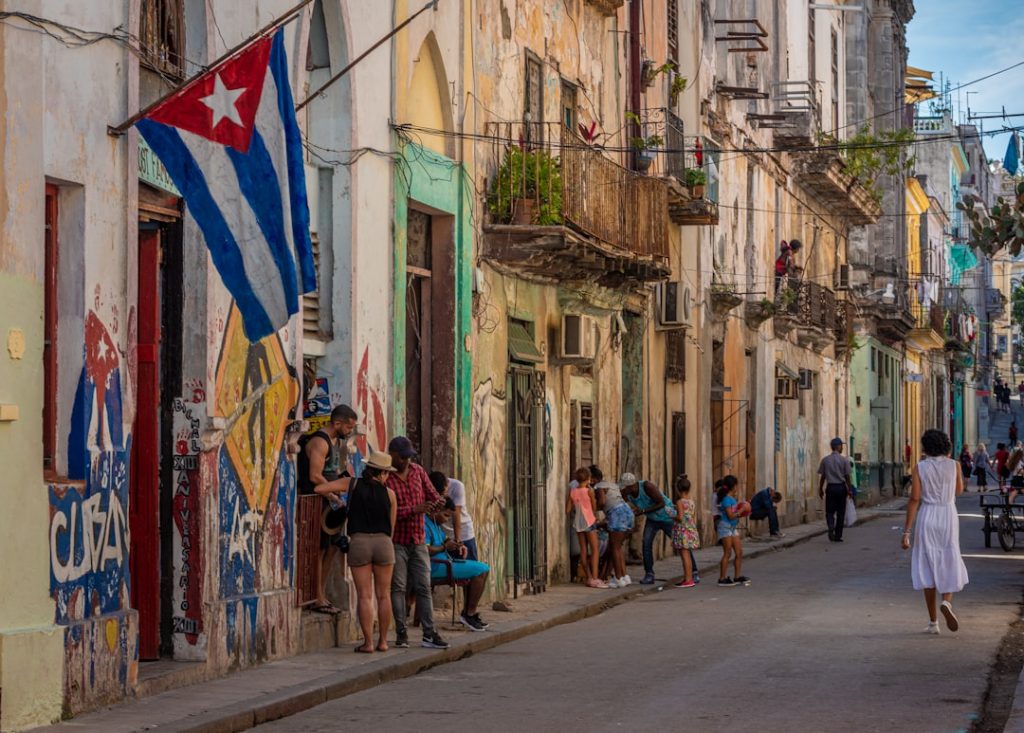
The indictment of former Cuban President Raúl Castro was announced Wednesday at Miami’s Freedom Tower, on Cuban Independence Day, to a crowd of Cuban exile leaders who have waited thirty years for this moment. The reaction in Miami was celebration. The reaction in Havana was something else.
What the Miami announcement did not mention is the documented history that preceded the shootdown. Cuba’s embassy in the United States posted on X this week that Brothers to the Rescue committed more than 25 violations of Cuban airspace between 1994 and 1996, each “formally reported in writing” to the State Department, the FAA, and the International Civil Aviation Organization. That claim is backed by declassified US government documents. The National Security Archive at George Washington University released FAA records this week showing the agency had tried to suspend Brothers to the Rescue founder Jose Basulto’s pilot license over his repeated unauthorized flights, but allowed him to keep flying through appeal. One FAA official wrote internally in January 1996, one month before the shootdown: “Worst case scenario is that one of these days the Cubans will shoot down one of these planes.” The State Department had contacted the Transportation Secretary to discuss the situation. The US government knew this was coming.
The airspace question itself remains genuinely disputed. Cuba has always maintained the planes were shot down in Cuban airspace. The US insists they were downed in international airspace. The International Civil Aviation Organization’s own investigation concluded that Cuba had notified US authorities of multiple airspace violations since May 1994. Following a January 1996 incident in which leaflets were dropped over Havana, the ICAO found, Cuba’s Anti-Aircraft Defence commander was authorized to shoot down further flights, whether or not they had entered Cuban airspace. The order authorizing the shootdown preceded the February 24 attack by six weeks. None of this appears in the Miami indictment. All of it is in the documents the US government has held for thirty years.
Euronews sent cameras to Havana. The residents who spoke on camera called for dialogue, not confrontation. One woman said she was tired of tension between the two countries and wanted normal relations. Another said the indictment would change nothing for ordinary Cubans: the people who matter in Washington and Havana would negotiate whatever they were going to negotiate regardless of what a 94-year-old man was charged with in a Miami courtroom he would never enter. AP’s Cristiana Mesquita, reporting from Havana for WBUR’s Here & Now, found the same pattern: Cubans on the street more focused on the daily grind of survival under a struggling economy than on the fate of a former president.
The Cuban government’s response was formal and sharp. In a statement read on state television, Havana condemned what it called a “despicable accusation” made against Castro. Cuban President Miguel Díaz-Canel denounced the indictment on X. The government characterized it as another episode in a decades-long US campaign of aggression, a characterization that, while self-serving, also accurately describes how most Cubans have been taught to read American legal actions against their leadership.
The indictment was not the only thing announced that week. The United States sent an aircraft carrier to the southern Caribbean this week. President Trump, speaking to reporters Thursday, hinted at possible intervention: “It’s not going to be like the biggest thing we have ever done, but I will tell you to a lot of people it’s going to be one of the most important. They have been looking for this moment for 65 years.” Secretary of State Rubio said Thursday he hopes Cuba will “choose a new path.” The administration’s pattern in the hemisphere — regime change in Venezuela, severe pressure on Nicaragua, now an aircraft carrier off Cuba’s coast — is not ambiguous.
Raúl Castro is 94 years old and will almost certainly never face a US courtroom. The indictment is a legal document. The aircraft carrier is something else.
🌍 TRANSLATOR’S NOTE: Latin American press is covering the Cuba story through a lens entirely absent from US coverage: the Monroe Doctrine is back, and the continent is watching. Regional outlets across South America and Mexico have framed the Castro indictment alongside the Venezuela operation, the Nicaragua pressure campaign, and now the aircraft carrier deployment as parts of a coherent hemisphere strategy. The reaction across Latin America is not enthusiasm. The governments of Colombia, Brazil, and Mexico, all led by left-leaning administrations, have watched the Venezuelan operation closely and are drawing conclusions about what the Trump administration considers acceptable tools of regional policy. The gap between Miami’s celebration and Havana’s weariness is not as interesting as the gap between Washington’s framing and Latin America’s.
🇺🇸 WHAT AMERICAN READERS NEED TO KNOW: The US indicted a 94-year-old man who will never be extradited, sent an aircraft carrier to the Caribbean, and the president hinted at military intervention in Cuba. The Cubans who spoke to international press in Havana said they want dialogue. The Cuban government condemned the indictment. The Trump administration has now pursued regime change in Venezuela, heavy pressure on Nicaragua, and is signaling Cuba is next. Latin America is watching. The Cuban people, who live with the consequences of US-Cuba relations every day, are tired.
Sources: Euronews (European, broadly centrist — Havana street reaction confirmed, dialogue over confrontation framing, confirmed this session); WBUR / AP / Cristiana Mesquita (wire — on-the-ground Havana reporting, aircraft carrier deployment, confirmed this session); CNN (US — Havana state TV condemnation, Díaz-Canel response, confirmed this session); PBS NewsHour (wire — Trump intervention hint quote, Rubio “new path” quote, confirmed this session)
SPILL OR EXPLOSION
Fire officials in Garden Grove, California, have been blunt about what is going to happen: a storage tank at the GKN Aerospace facility is going to fail. The only question is how.
The tank contains between 6,000 and 7,000 gallons of methyl methacrylate, a highly toxic and flammable chemical used to manufacture plastic components, that overheated Thursday and began venting vapors into the air. Orange County Fire Authority incident commander Craig Covey said Friday the tank will fail in one of two ways: a spill releasing thousands of gallons of toxic liquid onto the ground, or an explosion. Approximately 40,000 residents are under mandatory evacuation orders. Schools in the surrounding area are closed until further notice.
Fire crews have been unable to control the valves on the overheating tank. Unmanned fire hoses and an automatic sprinkler system are continuously spraying water on the exterior of the tank in an attempt to keep it cool enough to prevent catastrophic failure. Covey said Friday evening that experts from around the country had submitted “outside-the-box” ideas, some of which fire personnel hoped to try overnight. “It is not OK with me just to sit back and watch this thing blow up or fail,” he said. As of Saturday morning the situation remained unresolved. Evacuation centers have been established at the Garden Grove Sports and Recreation Center and the Cypress Recreation and Community Center.
Methyl methacrylate is used widely in aerospace manufacturing to make transparent plastic components including aircraft windows and canopies. It is both toxic and highly flammable, classified as a hazardous material requiring special handling under normal conditions. An uncontrolled release would expose the surrounding area to toxic vapors; an explosion would extend that risk significantly. The evacuation zone covers the area north of Trask Avenue, south of Ball Road, east of Valley View Street, and west of Dale Street.
GKN Aerospace has not commented publicly. The cause of the overheating has not been disclosed.
🌍 TRANSLATOR’S NOTE: Industrial chemical incidents at aerospace facilities are covered as major public safety events in European and international press when they occur. The scale of this evacuation is significant by any measure: 40,000 people, schools closed, unmanned fire hoses running overnight. The broader international frame on US industrial safety has shifted in recent years as EPA enforcement budgets have been cut and environmental regulation has been rolled back. Safety incidents at industrial facilities are tracked internationally as indicators of regulatory posture, not just local emergencies.
🇺🇸 WHAT AMERICAN READERS NEED TO KNOW: 40,000 people are under mandatory evacuation orders in Orange County, California, this morning. A tank full of toxic, flammable chemical at an aerospace facility is expected to fail, either as a spill or an explosion, and fire crews have not been able to prevent it. Experts from around the country are working the problem overnight. If you are in the evacuation zone, leave.
Sources: NBC News / AP (wire — tank contents, 40,000 evacuated, Covey quote, outside-the-box ideas, confirmed this session); ABC7 / KABC (local — unmanned hoses, evacuation zone boundaries, schools closed, GKN Aerospace confirmed, spill or explosion framing, confirmed this session); CNN (US — Saturday morning update, methyl methacrylate described, confirmed this session)
THE WORLD IS AFRAID TO COME
The 2026 FIFA World Cup begins June 11. It is the largest sporting event in the history of the planet: 48 teams, 16 cities across three countries, an estimated 1.5 million international visitors expected in the United States alone. Hotels in 11 American host cities have been preparing for years. Now, just 19 days from opening day, 80 percent of surveyed hotel operators across those cities report bookings tracking substantially below initial forecasts, according to the American Hotel and Lodging Association. The shortfall is not a mystery. The hotels know why. The survey says so plainly: the primary factors are visa barriers and what it called “geopolitical challenges.” International visitors are afraid to come to the United States.
The fear is documented. Amnesty International issued a formal World Cup travel advisory warning of “arbitrary denial of entry and risk of arrest, detention, and/or deportation of non-US nationals, even those with prior authorization from the US government.” The advisory notes that a visa or ESTA does not guarantee admission. It flags ICE’s documented use of surveillance including drones, facial recognition, and phone monitoring at protests. It notes that 68,289 people were held in ICE detention as of February 2026 and that 17 people have died in ICE custody since the start of 2026. Ireland advised citizens to “exercise caution in the Minneapolis-St. Paul area, where tensions are high following recent ICE activities.” Germany warned that “demonstrations sometimes lead to violent clashes with immigration and security authorities.”
European bookings to US World Cup host cities are down 14 percent. ICE personnel have not been prohibited from making arrests at World Cup matches, according to two Department of Homeland Security officials. No guidance has gone out inside the agency instructing officers to steer clear of stadiums. ICE has offered its personnel to local police departments to provide additional security at game perimeters. The White House, asked directly whether it would rule out ICE raids at matches, refused. Andrew Giuliani, executive director of the White House Task Force on the FIFA World Cup, said: “The one thing — and I’ve known the President for 25 years — the President does not rule out anything that will help make American citizens safer.” Only four of the 16 host cities have published human rights plans. None address immigration enforcement. Dallas, Houston, and Miami have signed agreements for local law enforcement to collaborate with ICE.
Bob Heere, professor of sports management at the University of North Texas, put it plainly: “The policies of the American government in recent years have sent a clear signal to the rest of the world. Many of them are concerned about coming to the United States.”
FIFA says more than 500 million ticket requests were submitted. Global interest in the tournament is enormous. The world wants to come. It is afraid of what happens when it gets here.
🌍 TRANSLATOR’S NOTE: International sports press is covering the World Cup booking crisis as a story about the United States, not about football. The tournament has become a referendum on whether the rest of the world trusts the US as a host nation, and the early answer is mixed at best. The Amnesty advisory is being cited across European, Latin American, and Asian sports coverage as the most comprehensive accounting of what international visitors face. FIFA has said nothing publicly about ICE enforcement at stadiums. The gap between FIFA’s “safe, welcoming and inclusive” tournament pledge and the on-the-ground reality it has not publicly addressed is the question international press is asking, and not getting answered.
🇺🇸 WHAT AMERICAN READERS NEED TO KNOW: The World Cup starts in 19 days. Eighty percent of US host city hotels are below booking forecasts. European bookings are down 14 percent. Ireland and Germany issued travel warnings about ICE. Amnesty International issued a formal travel advisory warning visitors they may be detained regardless of visa status. The White House refused to rule out ICE raids at stadiums. The tournament was supposed to generate billions in economic activity across 11 American cities. The world wants to attend. It is not sure it is safe to.
Sources: Fortune / AHLA (business — 80% below forecast, visa barriers primary factor, confirmed this session); Amnesty International USA (human rights — formal travel advisory, arbitrary detention risk, ICE surveillance, confirmed this session); NBC News / DHS officials (wire — ICE not prohibited at stadiums, no guidance issued, ICE security offer to departments, confirmed this session); AOL / Parade / European bookings (wire — 14% European drop, Ireland and Germany travel advisories, UNT professor quote, confirmed this session); The Independent / White House (wire — Giuliani refuses to rule out ICE raids, confirmed this session); Gulf News / Amnesty (UAE — only 4 of 16 cities have human rights plans, Dallas/Houston/Miami ICE agreements, confirmed this session)
THE ALLIANCE TRUMP IS TESTING
NATO foreign ministers met in Helsingborg, Sweden this week, the final ministerial gathering before the alliance’s annual summit in Ankara, Turkey on July 7-8. The meeting was described by European officials as vital. The dominant subject was not Ukraine, not Russian aggression, not the defense spending targets agreed at last year’s Hague summit. The dominant subject was Iran.
Secretary of State Rubio told his counterparts in Helsingborg that the US remains “disappointed” that NATO allies did not join the US and Israel in the war against Iran. He indicated that Trump would express that disappointment personally at the leaders’ level in Ankara. NATO Secretary General Mark Rutte confirmed that Ukrainian President Zelenskyy has been invited to Ankara, in a limited form at the White House’s direction, with it remaining unclear how many private sessions he would attend. It was a sharp contrast to the 2024 Washington summit under Biden, where Zelenskyy was a guest of honor and allies gave Kyiv guarantees of an “indestructible path” to NATO membership. Such language is no longer part of the conversation.
The Atlantic Council, assessing the Ankara summit’s prospects, noted that alliance unity has been challenged by two specific episodes in 2026: Trump’s proposal to seize Greenland, and European allies’ refusal to join the Iran war. Both created friction that remains unresolved. Trump has lashed out at NATO allies on numerous occasions since the war began February 28. The 5 percent GDP defense spending commitment extracted at The Hague last year is the one achievement both sides point to; beyond it, the relationship is strained.
And beneath the summit preparations, a more fundamental question is moving. Some NATO members are pushing to end annual summits altogether, according to a senior European official and five NATO-country diplomats who spoke to the Japan Times. One diplomat said NATO was considering holding no summit at all in 2028, the year of the US presidential election and Trump’s final full calendar year in office. Another said some countries were pushing to hold summits every two years. No decision has been taken. But the fact that the question is being asked, whether annual summits are worth holding when the US president uses them to berate allies, is itself the measure of where the alliance is.
🌍 TRANSLATOR’S NOTE: European defense ministries are reading the Helsingborg meeting as confirmation of what they have been privately saying since February 28: the United States launched a war without consulting NATO allies, demanded their participation, and is now using every available forum to express disappointment that they declined. The European position, that joining the Iran war would have violated international law and set precedents for collective defense obligations that NATO members have not agreed to, has not changed. The Ankara summit will be the first leaders’ meeting since the war began. What Trump says there about Article 5, about Ukraine, and about European free-riding will determine the alliance’s near-term trajectory more than any communiqué.
🇺🇸 WHAT AMERICAN READERS NEED TO KNOW: NATO foreign ministers met this week and the main topic was that the US is angry its allies didn’t join the Iran war. The alliance’s annual summit is in Ankara in six weeks. Some members are quietly discussing whether to hold annual summits at all given Trump’s conduct at them. Zelenskyy will be there in a limited role. Ukraine’s path to NATO membership, which Biden’s administration described as “indestructible,” is no longer being discussed. The US launched a war, asked its allies to join, and they said no. That disagreement is now the central dynamic of the alliance.
Sources: Euronews / AP (European, broadly centrist — Helsingborg meeting, Rubio disappointment, Zelenskyy invitation limited form, confirmed this session); Atlantic Council (non-partisan think tank — Greenland and Iran as unity challenges, 5% commitment, confirmed this session); Japan Times / Reuters (Japan, broadly centrist — summit frequency debate, 2028 possibility, confirmed this session)
THE OUTBREAK IS SPREADING RAPIDLY
On Friday, the Director-General of the World Health Organization stood at a press briefing and said the Ebola outbreak in the Democratic Republic of the Congo is “spreading rapidly.” He upgraded the national risk assessment from “high” to “very high.” He warned that the agency knows the epidemic “is much larger” than confirmed figures suggest.
As of Friday, there were almost 750 suspected cases and 177 suspected deaths in the DRC, according to WHO. The outbreak has spread from its epicenter in Ituri Province into North Kivu Province, one of the DRC’s most conflict-affected regions, where ongoing armed violence has created a displacement crisis and made contact tracing enormously difficult. The outbreak is caused by the Bundibugyo strain of the Ebola virus, for which there is no approved vaccine and no approved antiviral treatment. Previous Bundibugyo outbreaks have recorded case fatality rates of between 25 and 50 percent.
The response is also under physical attack. WHO Director-General Dr. Tedros Adhanom Ghebreyesus acknowledged a “security incident” Thursday in Ituri Province in which medical tents and supplies were set on fire, an attack that “significantly jeopardized” response operations. WHO’s representative in the DRC appeared by video link from the field. Building community trust, she said, is critical to any response: “It is only when communities are engaged in the response that such outbreaks are brought under control.” The region’s history with the 2018-2019 Ebola outbreak, which took two years to contain and killed more than 2,200 people, has left deep mistrust of international health responders.
The United States has pledged $23 million and said it would fund the establishment of up to 50 Ebola treatment clinics in the affected regions. Ugandan authorities told PBS NewsHour they were not aware of any treatment centers being set up by the US. The UN released $60 million from its Central Emergency Response Fund on Friday to accelerate the response. The CDC confirmed as of Saturday morning that no cases related to this outbreak have been reported in the United States, and that the risk to the American public remains low. Previous Bundibugyo outbreaks had death rates of 25 percent and 50 percent respectively.
The previous DRC Ebola outbreak ended in December 2025. The current one began in May 2026. Between them, the US eliminated the CDC’s Global Health Center, cut the CDC budget by 54 percent, and completed its withdrawal from the WHO, which is itself cutting a quarter of its workforce due to a $1.9 billion funding shortfall driven largely by that withdrawal.
🌍 TRANSLATOR’S NOTE: The Africa CDC, WHO’s Africa regional office, and African public health ministries are tracking this outbreak with alarm proportional to its actual risk profile. The Bundibugyo strain’s last major outbreak, in Uganda in 2007, had a case fatality rate of 32 percent. The current outbreak’s epicenter in Ituri and North Kivu is one of the most chronically under-resourced and conflict-affected regions on the continent. International health experts have consistently noted that the global early-warning and response systems built after the 2014-2016 West Africa outbreak depend on US CDC infrastructure and WHO funding that have both been significantly degraded. The arson attack on medical supplies Thursday is the sharpest illustration of the trust deficit that makes response in this region so difficult. Community engagement is not a supplementary strategy. It is the only strategy available.
🇺🇸 WHAT AMERICAN READERS NEED TO KNOW: The WHO says the Ebola outbreak in the DRC is spreading rapidly. There are nearly 750 suspected cases and 177 suspected deaths. The strain has no vaccine and no treatment. Medical supplies were set on fire by attackers Thursday. The US pledged 50 treatment clinics — Uganda says it hasn’t seen them. The CDC says the risk to Americans is currently low. The infrastructure that keeps it low has been significantly weakened. These remain connected facts.
Sources: ABC News / WHO (wire — 750 suspected cases, 177 deaths, “spreading rapidly,” Tedros quote, security incident confirmed, confirmed this session); PBS NewsHour / AP (wire — US $23 million pledge, 50 clinics, Uganda unaware, UN $60 million fund, confirmed this session); CDC situation summary (US primary — Saturday morning update, no US cases, risk low, North Kivu spread confirmed, confirmed this session); WHO primary (UN — Bundibugyo confirmed, no vaccine or treatment, community engagement framing, confirmed this session); UN News (UN — “patient zero” unknown, two months before vaccine possibility, previous outbreak two years, confirmed this session)
ALSO DEVELOPING — for the curious:
Iran deal — no movement. Negotiations continue. Secretary Rubio said there are “some good signs.” Iran is reviewing the latest US proposal via Pakistani mediators. The uranium question — the US wants Iran’s enriched stockpile shipped out; Iran says it will downblend at home — has not moved in any confirmed session. The mid-June Aramco threshold is 23 days away. Brent is at $103.50.
Epstein/Bondi testimony: Attorney General Pam Bondi is scheduled to testify before the House Oversight Committee on Thursday, May 29, six days from now. It will be the first public congressional testimony from the head of the Justice Department on the Epstein files. Democratic lawmakers have accused the DOJ of violating the Epstein Files Transparency Act by withholding FBI victim interview statements and a draft indictment from the 2007 Florida investigation. France has identified approximately 10 new Epstein victims investigators had not previously known. Independent UN human rights experts have formally used “crimes against humanity” language regarding the files.
Lebanon: Israeli attacks have killed at least 3,072 people and injured 9,362 in Lebanon since March 2, with 700 killed since the April 17 “ceasefire” extension. The Pentagon military track between Israeli and Lebanese military delegations opens May 29. The fourth round of political talks is scheduled for June 2-3.
Knesset dissolution: The preliminary reading of the government-backed dissolution bill passed 110-0 on Wednesday — the first of four required steps. The bill now proceeds to committee. Elections must be held within five months of a final passage. The prime minister expected to lose the resulting election is simultaneously managing strikes in Lebanon, coordinating with the US on possible Iran strikes, and negotiating a peace framework in Washington.
NUMBERS AT PUBLICATION
🇮🇷 Iran: 3,636+ killed (HRANA floor estimate — FROZEN since April 7; no updated HRANA report this session; Iranian Health Ministry figure as of May 5: 3,468 — methodology differs)
🇱🇧 Lebanon: 3,072 killed since March 2, 700 killed since April 17 “ceasefire,” 9,362 wounded, 1.6 million displaced (Lebanon Health Ministry, as of May 20)
🇮🇶 Iraq: At least 118 killed (Iraqi health authorities — mostly PMF members)
🇮🇱 Israel: At least 19 soldiers killed in Lebanon, 26 killed across all fronts (Al Jazeera tracker, as of May 5)
🌍 Gulf states: At least 28 killed (Al Jazeera live tracker — figure stable, no update this session)
🇺🇸 US military: 15 KIA confirmed (IranWarLive tracker, as of May 12)
🛢️ Brent crude: $103.50/barrel (OilPrice.com, Saturday morning, editor-confirmed)
⛽ US gas: $4.53/gallon national average (AAA, editor-confirmed)
Sourcing note: Iran casualties sourced to HRANA (US-based Human Rights Activists News Agency), a floor estimate. Iranian Health Ministry figure cited separately. Methodology differs; figures should not be treated as directly comparable.
“Whenever the people are well informed, they can be trusted with their own government.” — Thomas Jefferson, 1789