The Rest of the World Report | September 1, 2026 — Evening Edition
The View From Everywhere Else
Weekday morning and evening editions. Saturdays once. Good news on Sundays. All sources labeled.
MIDTERM WATCH September 1, 2026
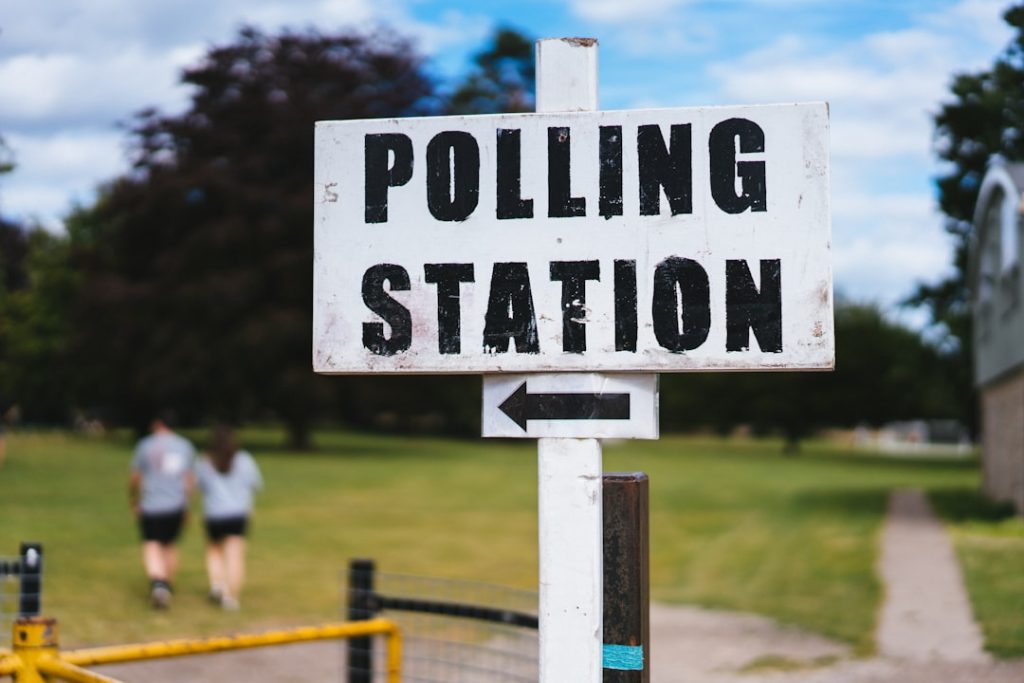
Massachusetts votes today, and the race that matters most for the House and Senate math nationally isn’t even competitive in November. Gov. Maura Healey faces no primary opponent and no serious general election threat either. The race that matters is a fight inside one party. It’s a preview of the argument Democrats are going to keep having between now and November 3.
Incumbent Sen. Ed Markey, 80, is defending his seat against Rep. Seth Moulton, 48, who gave up his safe House seat to make the challenge. This is explicitly a generational fight. Moulton has built his campaign around Markey’s age. Markey has built his around experience and a progressive record Moulton, a more moderate Democrat, doesn’t share. Whoever wins faces Republican John Deaton in November, in a state Republicans have not carried in a Senate race since 2010. The primary itself is the real contest.
Moulton’s departure from his own seat opened up Massachusetts’s 6th Congressional District, where five Democrats are competing to replace him. Down-ballot, Suffolk County’s district attorney primary is drawing real attention. Incumbent Kevin Hayden faces both Linda Champion and Rachael Rollins, the former US Attorney trying to reclaim the DA seat she once held. Polls close at 8pm ET. Results will not be final at publication.
Separately, a federal court handed voting rights groups a real win this week, but it’s a narrower and more temporary one than it might look. It’s worth walking through the actual sequence, because the details change how much confidence to place in it.
In June, a federal court blocked USPS from implementing Trump’s executive order restricting mail voting, in a case brought by California and other states. On August 11, District Judge Indira Talwani expanded a separate injunction, in League of Women Voters of Massachusetts v. Trump, to block USPS nationwide. USPS issued its final rule anyway on August 21, stating it would implement the rule “immediately” once the injunctions were lifted.
On August 24, the Supreme Court stayed the states’ injunction. The ruling turned on standing, not on whether a final rule existed. The Court held that states could only sue over a final rule, not the proposed rule the original case had been built on. Two days later, the district court vacated the League of Women Voters injunction as a result, and USPS’s rule was formally published the same day.
Voting rights groups, including the League of Women Voters, the ACLU, the Brennan Center, and the NAACP Legal Defense Fund, went back to court immediately. On August 27, Judge Talwani issued a 14-day temporary restraining order, again blocking USPS from implementing the rule. That is what’s currently protecting mail ballots for November. It is not settled law. It is a TRO, and TROs expire.
None of this is over. A 14-day order issued August 27 runs out around September 10 unless the court extends it or converts it into something more lasting. Separately, the Supreme Court’s underlying reasoning on standing could still shape how any longer-term injunction survives review. Watch both dates, not just one. The gap between “mail ballots are protected through November” and “mail ballots were protected for two weeks in early September” is the actual story here. It is not yet resolved which one this becomes.
9 Tuesdays remaining.
IRAN RETALIATES AGAIN
US Central Command said it began striking Islamic Revolutionary Guard Corps (IRGC) targets across Iran at noon ET Tuesday. CENTCOM said the strikes followed attempted Iranian attacks on commercial shipping in the Strait of Hormuz and on American service members in the region. Iranian state media reported explosions in at least nine locations, including Bandar Abbas, Qeshm Island, Chabahar, and Jask. One US strike hit a home hosting a wedding, according to local officials, killing two people and wounding dozens more. Trump later told Fox News the strikes had targeted radar systems Iran was rebuilding. “They tried to rebuild their radar because they can’t see anything,” he said. “We waited until it was almost built and then we hit it.”
Iran responded within hours. The Associated Press reported explosions over the southern Jordanian city of Aqaba late Tuesday as Iran said it was retaliating for the US strikes. Iran’s Armed Forces General Staff and its top joint operational command issued a joint statement. They vowed to “deliver crushing and devastating blows” against what they called “the vile and hostile American enemy.” The IRGC separately condemned the day’s attacks and promised a “crushing” response of its own. Iranian state media separately claimed the US had bombed civilian sites along Iran’s southern coast and struck a civilian airport. That claim has not been independently verified.
Trump escalated the rhetoric sharply on social media Tuesday. He wrote that the strikes were “large and powerful.” He warned that if Iran retaliates, it “will be hit again at a much harder and higher level.” He went further, describing a separate, larger strike “waiting in the wings” that he said would leave “very little left” of the Islamic Republic. Iran’s army separately vowed “severe punishment” for what it called American aggression.
Tuesday’s strikes are the second exchange in three days. On Sunday, US forces struck Iranian rocket launchers on Larak Island. Iran responded overnight with missile launches at American targets in Jordan and the UAE. That exchange ended roughly a month of relative calm. The renewed fighting undercuts an administration strategy, described just last week, of shifting toward economic pressure on Iran rather than continued strikes. Oil prices climbed above $94 a barrel Tuesday. US stock indexes fell, with the Dow dropping 374 points, though all three major indexes still closed August with monthly gains.
The timing lands awkwardly for Tehran on the world stage. Iranian President Masoud Pezeshkian appeared Tuesday at the Shanghai Cooperation Organization summit in Bishkek, Kyrgyzstan. He posed alongside Vladimir Putin, Xi Jinping, and Narendra Modi in a photograph distributed by Russian state media. It came even as his own country was absorbing a fresh round of American strikes back home.
🌍 TRANSLATOR’S NOTE: Al Jazeera’s live coverage treated Tuesday’s strikes as a story about American appetite for further war. It was not treated simply as a tactical response to a shipping threat. Regional framing has focused less on the mine allegation CENTCOM cited. It has focused more on the scale of Trump’s threatened follow-up. Several regional commentators read that threat as the administration signaling openness to a far larger campaign than the war’s official aims have so far described. The Bishkek photograph, appearing the same day as the strikes, was read regionally as evidence of something specific. The war has not isolated Iran from its major partners, a framing that gets little attention in American coverage focused narrowly on the Hormuz flashpoint.
🇺🇸 What American readers need to know: Your president just publicly threatened to leave “very little” of another country. He said it in writing, on his own social media account, during an active war. One American strike killed two people and wounded dozens at a wedding. Iran did not wait to see if Trump meant his threat. Within hours, the Associated Press was reporting explosions over Jordan tied to Iranian retaliation. The administration’s own stated strategy of economic pressure over military force did not survive a single weekend once Iran first tested it. It did not survive this Tuesday either.
Sources: The Associated Press via Queen City News (wire — wedding strike casualties, Trump’s radar explanation, Aqaba explosions, Iran’s civilian-site claim); CNN (US — CENTCOM statement, strike locations, Trump’s Truth Social statements, oil and market reaction); Al Jazeera (Qatar, state-funded/editorially independent — IRGC statement, strategic shift context); Fox News (Iran’s joint military statement); CBS News (US — SCO summit photograph, Bishkek context)
GERMANY BLAMES RUSSIA FOR LEIPZIG DRONE
Germany’s government formally accused Russia on Tuesday of orchestrating an attempted drone attack at Leipzig/Halle Airport last month. German Interior Minister Alexander Dobrindt said investigators found drone components, explosives, and a detonator matching “the known pattern of Russian hybrid operations.” He said the device showed “a high degree of technical expertise” in its planning. The people who physically carried it out, he said, appeared to be “low-level” operatives acting on behalf of Russian state entities.
The drone was discovered the night of August 4 to 5, carrying explosives, at the airport in eastern Germany. It followed months of unexplained drone sightings over German military and industrial sites. A third drone was later found in a nearby field, suggesting more than one device had been intended for use. Chancellor Friedrich Merz had said Germany increasingly “found itself in the crosshairs of hybrid attackers.” He warned on August 25 that those responsible would “pay for them,” without naming a target at the time.
Foreign Minister Johann Wadephul announced Germany’s response Tuesday. Russia’s consulate in Bonn will close by September 18, and its cultural center in Berlin will also close. Russian nationals will face tighter border controls going forward. Wadephul said Russia had “decided deliberately to do significant damage” to the two countries’ already strained relationship. Russia’s foreign ministry spokeswoman Maria Zakharova dismissed the accusation. She told CNN that Moscow would “respond to all anti-Russian decisions.” NATO Secretary General Mark Rutte welcomed Germany’s measures and said the alliance’s commitment to Ukraine “remained unwavering.”
🌍 TRANSLATOR’S NOTE: German and European coverage has treated the Leipzig incident as part of an accumulating pattern rather than an isolated event. It ties explicitly to last September’s drone incursion into Polish airspace and repeated hybrid incidents across the continent. That throughline is discussed openly in European reporting as a defining feature of the current period: an expanding, deniable campaign against NATO members short of open conflict. American coverage has tended to treat each incident in isolation.
🇺🇸 What American readers need to know: A NATO ally just formally accused Russia of trying to bomb one of its own airports. It says Russia used low-level operatives to obscure state involvement. Germany’s response, closing consulates and tightening borders, is a diplomatic escalation most Americans have not seen covered with the weight it carries in Europe.
Sources: Euronews (Europe — Wadephul statement, consulate closure details); CNN (US — Zakharova quote, Rutte statement, third drone detail); The Washington Times via AP (US — Dobrindt’s technical assessment, Merz’s prior warning)
HIS STATUS, THEN HIS LIFE
Pierre Damas Bel came to the United States from Haiti with Temporary Protected Status. He graduated with honors from Springfield High School in Ohio and enrolled at Wright State University to study neuroscience. He was 20 years old. On Monday morning, Ohio State Highway Patrol troopers were called to Interstate 70 near South Vienna. Bel had parked his car on the shoulder and walked in front of an oncoming tractor-trailer. He was pronounced dead at the scene.
His family says the chain of events that led there began when the Trump administration ended Temporary Protected Status for Haitian nationals. Bel lost the legal status that had let him remain in the country, and immigration authorities placed him under GPS ankle monitoring. In a July 30 Instagram post, Bel described walking the streets of a country he loved wearing a monitor that left him feeling ashamed and humiliated. He said he had come to the US only to study, not to cause anyone harm. His father, Pierre Ronal Bel, said his son faced bullying over the monitor during his first week of college.
The two spoke by video call the morning Bel died. His father said Bel told him he was not doing well mentally because of the bullying. He urged his son to come home so they could talk. Police arrived at the father’s door roughly three hours later. In a statement released through the advocacy group G92, the elder Bel said, “The government treated my son like an animal.”
The Ohio State Highway Patrol is still investigating. Bel’s father has publicly questioned whether his son’s death was intentional. “I need proof,” he told the Haitian Times, saying he did not believe his son would have walked in front of a truck on purpose. He described his son in his final days as unrecognizable. It was a stark contrast, he said, to the energetic young man who loved life, friends, family, and education. Wright State University said in a statement that it was heartbroken by the loss of an honors student. The university said he was already deeply engaged in campus life.
🌍 TRANSLATOR’S NOTE: Haitian Times, reporting from within the Haitian diaspora community Bel belonged to, framed his death as something specific. It was less an isolated tragedy than confirmation of a fear that community has been voicing since TPS termination began, that the policy’s human cost would not stay confined to paperwork and deportation flights. That framing treats TPS revocation as a public health and safety crisis for a specific, named community, rather than an abstract immigration policy debate. It has had limited traction in general American coverage of the TPS rollback.
🇺🇸 What American readers need to know: A federal policy decision to end Temporary Protected Status for Haitian nationals set in motion a chain of events. A grieving father says that chain ended his son’s life. Bel did everything the country asked of an aspiring citizen: he studied, he stayed out of trouble, he pursued a medical career. He died on a highway shoulder anyway, wearing a monitor his own words called a source of shame he never chose.
Sources: The Washington Post (US — TPS termination context, family’s account); Haitian Times (US, Haitian diaspora outlet — father’s direct quotes, highway patrol account, community context); WYSO (US, public radio — G92 statement, Wright State’s statement, Instagram post text)
NUMBERS AT PUBLICATION
🇮🇷 Iran: 3,636 killed
🇱🇧 Lebanon: 4,346 killed, 12,301 wounded
🇮🇱 Israel: 1,200+ killed, ~5,400 wounded (includes 472 killed, 3,004 wounded in Gaza)
🇺🇸 US military: 18 killed, 687 wounded
🇵🇸 Gaza: 1,303 killed, 4,336 wounded since the October 10, 2025 “ceasefire”
🇵🇸 West Bank: 316 killed (incl. 73 children), 5,641 wounded (incl. 915 children), since January 2025
🛢️ Brent crude: $95.27/barrel (OilPrice.com)
⛽ US gas: $4.10/gallon (AAA)
Sources: HRANA (Iran), Lebanon MOPH, INSS (Israel), DCAS (US, disputed), OCHA (Gaza and West Bank), OilPrice.com, AAA. Iran, Lebanon, Israel, US military, Gaza, and West Bank figures carried forward from this morning’s edition.
“Whenever the people are well informed, they can be trusted with their own government.” — Thomas Jefferson, 1789