The Rest of the World Report | September 7, 2026 — Morning Edition
The View From Everywhere Else
Weekday morning and evening editions. Saturdays once. Good news on Sundays. All sources labeled.
HER FIRST DAY OF SCHOOL
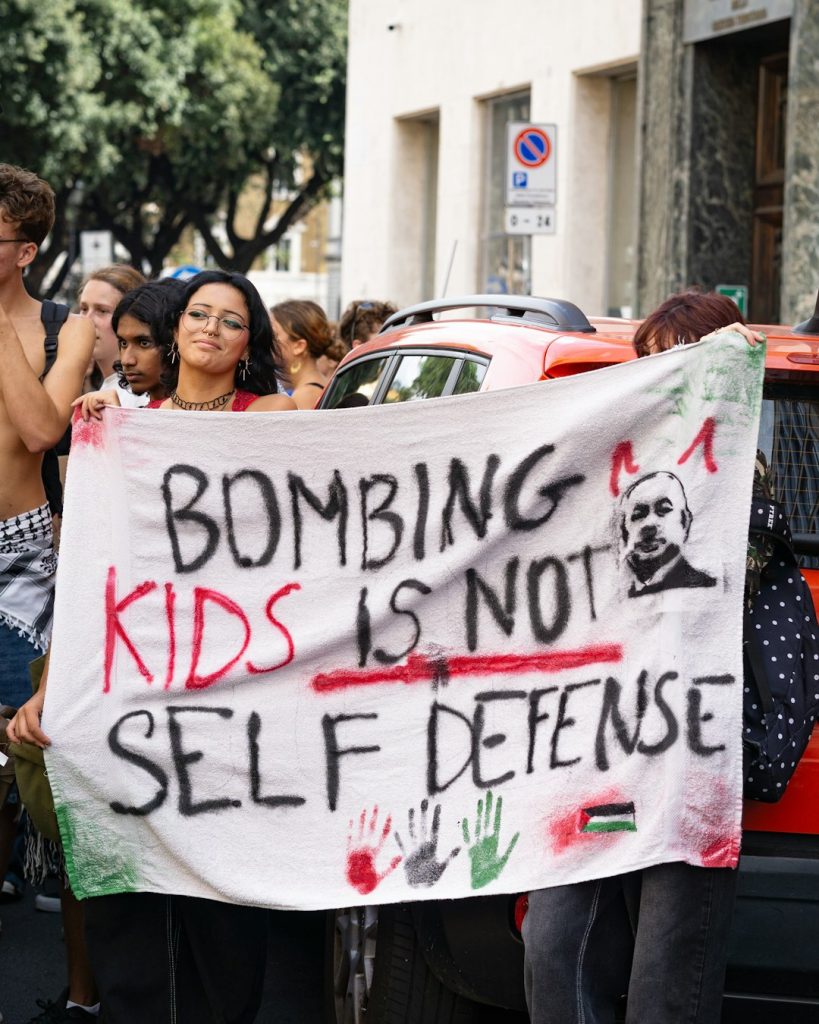
An Israeli strike killed eight-year-old Wafaa Akila and her father, Youssef, in western Gaza City on Sunday. It was Wafaa’s first day back at school for the new academic year. The strike hit their car. Images from the scene showed her schoolbooks and school supplies scattered beside the wreckage. Six others were wounded. Mohamed Abu Selmia, head of Al Shifa Hospital, confirmed the deaths. The Israeli military said its forces had targeted a Hamas militant and were still examining the results of the strike.
The day did not end there. Two more separate Israeli strikes killed two more people in Gaza City later Sunday. One of them was a second child. An Israeli tank struck a school sheltering displaced families, killing a seven-year-old girl. Sunday’s death toll in Gaza reached at least four people, two of them children under the age of nine.
Gaza’s Health Ministry says 1,344 Palestinians have been killed and 4,464 wounded since the ceasefire took effect last October. Formal classes in Gaza schools are not scheduled to begin until later this month, but some schools and alternative learning centers had already reopened. Many school buildings remain unusable. Children who do attend often learn in tents.
🇺🇸 What American readers need to know: An eight-year-old girl was killed on her way to school. Her father died beside her. This happened under a ceasefire your government brokered and still calls a success.
Sources: Arab News (Saudi Arabia — Abu Selmia confirmation, Sunday’s broader death toll); Hurriyet Daily News (Turkey — Wafaa’s first day of school, scattered supplies, Israeli military statement); IMEMC (Palestine — cumulative Gaza casualty context, second strike details)
ELEVEN KILLED IN NABATIEH
Israeli strikes killed at least eleven people in Lebanon’s Nabatieh district between Sunday and Monday morning. It is the latest and bloodiest round in an escalation that traces back to a single contested ridge. Israeli Defense Minister Israel Katz said Israeli forces had captured the Ali al-Taher Ridge, a strategically significant position overlooking a wide stretch of southern Lebanon. Hezbollah has not confirmed losing control of it. Israel’s military said this weekend’s strikes were carried out in response to Hezbollah drones launched at its forces stationed near the ridge. It called the launch a “blatant violation” of the ceasefire.
Two women died in an air attack on Arab Salim. Two more were killed in a strike on Nabatieh al-Fawqa. Lebanon’s Health Ministry counted four dead and twenty wounded by Sunday alone. A separate strike in Kfar Reman destroyed the home of the town’s late former mayor. Strikes and shelling also hit al-Mansouri, Majdal Zoun, Beit Lif, Zawtar al-Sharqiyah, and Mayfadoun over the same period.
The strikes escalated overnight. An Israeli fighter jet hit an apartment building in Kfar Reman after midnight, killing nine people, including two infants. A separate Israeli drone strike hit a car in the same town, killing two paramedics. By Monday morning, Lebanese media put the total at eleven dead, including the two infants and the two paramedics. Rescue teams searched the rubble through the night. Part of Ghandour Hospital in Nabatieh al-Fawqa was destroyed in the strikes. A Finance Ministry building was also damaged.
Lebanese President Joseph Aoun condemned the strikes as a dangerous escalation. Israel’s military said the targets included Hezbollah infrastructure, weapons storage sites, and a command center it said was located inside the former hospital building. More than 4,300 people have been killed by Israeli strikes in Lebanon since March 2, according to Reuters. That count begins the day Hezbollah fired at Israel in support of Iran.
🇺🇸 What American readers need to know: A ceasefire is technically still in effect between Israel and Hezbollah. Eleven people are dead anyway, including two infants and two paramedics responding to an earlier strike. This is a fight over a single ridge most Americans have never heard of.
Sources: Al Jazeera (Qatar, state-funded/editorially independent — Sunday’s initial toll, Kfar Reman mayor’s home, list of towns struck); Al Jazeera (Qatar, state-funded/editorially independent — Ali al-Taher Ridge capture claim, Katz’s statement); Clash Report (military tracking outlet — overnight escalation, Ghandour Hospital damage, Aoun’s statement); Reuters via US News (wire — cumulative Lebanon death toll since March 2); Palestine Information Center (Kfar Reman apartment and paramedic strike details, NNA sourcing)
THE FIRST TANKER SUNK
US forces struck three Iranian oil tankers over the weekend, sinking one for the first time in the six-month war. CENTCOM said it “permanently disabled” the M/T Downy off Kharg Island and the M/T Stark 1 near Jask. A third ship, the unladen M/T Kylo, also known as the Noxen, was destroyed in the Gulf of Oman. Its crew was ordered to abandon ship first. CENTCOM said the strikes came after Iran’s Revolutionary Guard launched ballistic missiles at a US aircraft carrier and a guided-missile destroyer. Both American ships evaded the attack. No US personnel were hurt.
CNN confirmed audio of the warning issued to the Stark 1’s crew before it was hit. “Motor Tanker STARK 1, this is the United States military aircraft,” the recording says. “I am preparing to fire at your stern.” The crew was given ten minutes to clear the stern. The countdown continued in stages down to a final warning. CENTCOM commander Adm. Brad Cooper laid out the logic driving the strikes. He said any attack on US ships would draw an even higher economic cost against Iran’s own vessels. He added that the US would not hesitate to defend American forces. If necessary, he said, the US would “destroy Iran’s limited and exposed oil fleet.” CENTCOM’s own statement described the three tankers as part of “a multibillion-dollar shadow network” funding the IRGC and its regional proxies.
Iran has not issued a single detailed statement matching CENTCOM’s account point for point, but it has not denied acting against the ships either. Al Jazeera reported that Iran did two things: struck tankers and fired a ballistic missile toward the US warships over the same 24-hour period. Hassan Ghashghavi, spokesman for the Iranian Parliament’s National Security Commission, told Al Jazeera the attacks on US warships were part of “an existential war with America.” He said Washington’s naval blockade “should never have existed” in the first place.
Iran’s parliament speaker issued a warning regardless. He said any further strikes on Iranian interests would draw a “faster, heavier and more painful response.” Iran’s Revolutionary Guard claimed new attacks on US warships Sunday. Tehran is expected to announce a restricted zone near the Strait of Hormuz, according to Al Jazeera’s live coverage of the war.
A separate development points to a wider risk. Israeli intelligence assessments, per the Jerusalem Post, describe Iran coordinating Hezbollah, Hamas, the Houthis, and Iraqi militias for a potential simultaneous attack. Israeli officials say the goal is to avoid the coordination failures Iran’s allies experienced around October 7. Quds Force officials have held conference calls with commanders across the three fronts, according to the same Israeli assessment.
Iran’s Health and Rescue Association puts the war’s death toll inside Iran at 3,684, an increase from the figure reported last week.
🇺🇸 What American readers need to know: The US just sank an Iranian ship for the first time in this war. Vice President Vance said days ago that this fight isn’t technically a “war.” An Iranian lawmaker describes it as existential for his country.
Sources: Iran International (opposition-aligned, Saudi-connected funding — tanker names and locations, CENTCOM statement text); CNN (US — countdown audio confirmation, Stark 1 warning transcript); The Jerusalem Post (Israel, centre-right — Cooper’s full quote, Tasnim’s account); Al Jazeera (Qatar, state-funded/editorially independent — direct confirmation of Iran’s missile fire, Ghashghavi’s statement); Al Jazeera (Qatar, state-funded/editorially independent — IRGC claims, Hormuz restricted zone reporting); GlobalSecurity.org (US, defense tracking outlet — Jerusalem Post’s multi-front coordination assessment, HRANA’s updated death toll)
A HUMAN THREAD
In Deir al-Balah, in one of UNICEF’s temporary learning spaces, a girl named Lama still goes to class. Her brother was killed early in the war. She says that’s why she wants to become a doctor, to help others the way no one could help him. She used to love coding before the war took her internet access. She still dreams of being, in her own words, “someone special who can make a difference.” More than 135,000 children are currently learning in similar spaces across Gaza. The program launched after over 97 percent of the territory’s schools were damaged or destroyed. It is not a classroom. It may not even be enough, but it is still school.
Source: UNICEF USA
NUMBERS AT PUBLICATION
🇮🇷 Iran: 3,684 killed
🇱🇧 Lebanon: 4,346 killed, 12,301 wounded
🇮🇱 Israel: 1,200+ killed, ~5,400 wounded (includes 472 killed, 3,004 wounded in Gaza)
🇺🇸 US military: 18 killed, 756 wounded
🇵🇸 Gaza: 1,344 killed, 4,464 wounded since the October 10, 2025 “ceasefire”
🇵🇸 West Bank: 316 killed (incl. 73 children), 5,641 wounded (incl. 915 children), since January 2025
🛢️ Brent crude: $96.71/barrel (OilPrice.com)
⛽ US gas: $4.15/gallon (AAA)
Sources: HRANA (Iran, updated), Lebanon MOPH, INSS (Israel), DCAS (US, disputed), OCHA and Gaza Health Ministry (Gaza, updated), OCHA (West Bank). Iran and Gaza figures updated this session. Lebanon, Israel, US military, and West Bank figures carried forward from Saturday’s edition. Brent and gas confirmed same-session.
“Whenever the people are well informed, they can be trusted with their own government.” — Thomas Jefferson, 1789