The Rest of the World Report | September 16, 2026 — Evening Edition
The View From Everywhere Else
Weekday morning and evening editions. Saturdays once. Good news on Sundays. All sources labeled.
RED LINES
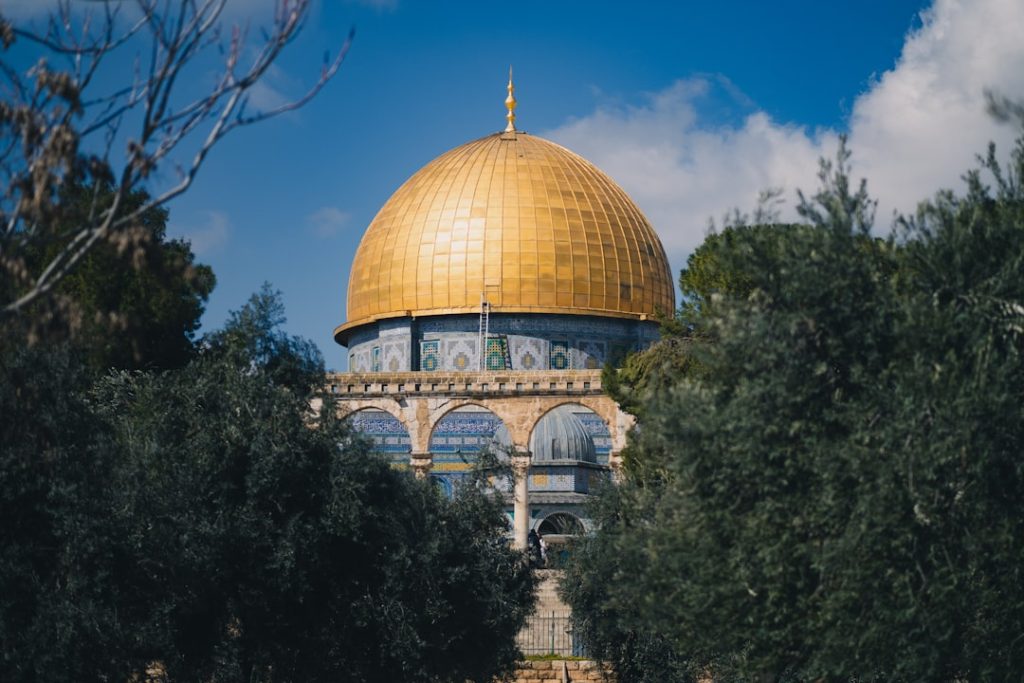
Saudi Arabia said it intercepted a Houthi drone before it could enter the airspace over Mecca on Tuesday, the first security alert activated in Islam’s holiest city in nearly a decade. Hundreds of miles away in Jerusalem, Israeli police have quietly begun allowing something the same religious framework has forbidden for decades: Jewish prayer at the Al-Aqsa compound, Islam’s third-holiest site.
Turki al-Maliki, spokesperson for the Saudi-led coalition, said Royal Saudi Air Defence Forces destroyed the drone before it reached restricted airspace. He called it “a deliberate act intended to provoke the feelings of millions of Muslims.” Al-Maliki said the security of pilgrims and the two holy mosques is non-negotiable, a line Saudi Arabia is not prepared to see crossed. The kingdom issued a security alert in Mecca for the first time since 2017, the last time the Houthis were accused of targeting the city.
The Houthis deny it entirely. Military spokesman Yahya Saree said the group’s actual targets were Saudi oil facilities and military bases “far removed from the holy places.” The Associated Press could not independently verify either side’s account. Adam Baron, a fellow at the Washington think tank New America who follows Yemen and the Gulf, said the dispute over what was actually targeted matters less than what it confirms. Fighting between Saudi Arabia and the Houthis has now reached the doorstep of the holiest site in Islam.
The incident lands amid a rapid escalation. The Houthis have seized several islands along the Bab el-Mandeb Strait in recent weeks and shut down a critical Saudi pipeline, reportedly for weeks, after an attack by Iran-backed militias in Iraq. Saudi Arabia is reportedly running low on missile interceptors and has asked France, Britain, Pakistan, and Egypt for air-defense support. Its main supplier, the United States, has seen its own interceptor stock depleted over six months of the Iran war. The attacks are also the first real test of a month-old defense pact among Saudi Arabia, Türkiye, and Pakistan. Turkish and Pakistani officials told the AP they have not yet received a formal Saudi request for support.
In Jerusalem, a parallel story is unfolding with far less international attention. On September 13, during Rosh Hashanah, roughly 250 Jewish visitors entered the Al-Aqsa compound, known to Jews as the Temple Mount. Palestinian news agency Wafa reported that some “performed Talmudic rituals” there under heavy Israeli police protection. Under the status quo arrangement in place since 1967, and administered by the Jordanian Islamic Waqf, non-Muslims may visit the compound but have historically been barred from praying there. The Times of Israel reported that in recent months Israeli police have begun allowing Jewish prayer at the site. Police operate under far-right National Security Minister Itamar Ben-Gvir. That is not a single incident. It is a policy shift.
The pattern extends beyond one holiday. The Palestinian Ministry of Endowments documented 26 separate incursions into the Al-Aqsa compound by Israeli authorities and settlers in August alone. The same ministry said the Muslim call to prayer was banned at the Ibrahimi Mosque, a separate holy site in Hebron, 155 times over the same period.
🌍 Translator’s Note: Al Jazeera’s coverage of the Mecca incident treats the security alert itself as historically significant, the first since 2017. It spends less time dwelling on the unresolved question of what the drone was actually aimed at. That emphasis is largely missing from American coverage. US outlets have focused more on parsing the competing Saudi and Houthi claims than on the alert’s own historical weight. Times of Israel’s reporting on the Al-Aqsa prayer shift is notable too. It treats the change as quiet and incremental, distinguishing it from the periodic large storming events international outlets have covered before.
🇺🇸 What American Readers Need to Know: Two of the most sensitive religious sites on Earth are both live flashpoints in the same week, for different but related reasons. One is a disputed attack on the birthplace of Islam’s founder. The other is a confirmed, ongoing change to sixty years of practice at a site both Muslims and Jews consider sacred. Both are unfolding inside the same regional war this publication has covered daily. Both carry the kind of religious weight that can widen a conflict far faster than territory or oil ever could.
Sources: Al Jazeera (Mecca interception, al-Maliki quote, security alert history); CNBC (Houthi denial, Saree quote, defense pact context); NBC News (Baron quote, Houthi “fabrications and lies” characterization); AP via local10.com (Saudi allied support request, interceptor shortage); Times of Israel (Al-Aqsa Rosh Hashanah visit, prayer policy shift); QNA (Palestinian Ministry of Endowments incursion count, Ibrahimi Mosque call-to-prayer bans)
THE HOLD
The top Democrat on the House Foreign Affairs Committee placed a formal hold Wednesday on a $2.8 billion sale of heavy bombs to Israel. The Washington Post and AFP described it as the largest single US sale of this particular munition, the 2,000-pound bomb, in recent years.
Representative Gregory Meeks, the committee’s ranking member, said he would withhold approval over “grave, unresolved concerns” about how the weapons could be used in Gaza and Lebanon. He said the decision does not reflect reduced support for Israel’s right to defend itself. Congress, he said, has an obligation to ensure US-funded weapons are used lawfully.
The package includes 60,000 munitions in total, per Al Jazeera’s reporting: 20,000 MK-84 general-purpose bombs, 20,000 BLU-117s, a navy-storage-safe MK-84 variant, and 20,000 I-2000 Penetrator warheads designed to strike hardened underground targets. Most headline figures cite 40,000 bombs, referring to the MK-84 and BLU-117 count alone. The sale is funded through Foreign Military Financing, the mechanism under which the US government provides (gives) Israel the money to buy American-made weapons.
A hold like Meeks’s is not binding. Committee leaders are informally briefed on major arms sales and can request more information before a sale proceeds. Secretary of State Marco Rubio retains authority to bypass the process entirely, though, by declaring the sale an emergency national security interest. Rubio has done exactly that before, including once already to override a separate Meeks objection, in February 2025. Senator Chris Van Hollen has separately said he intends to build opposition to the sale in the Senate, though neither lawmaker’s objection currently has the votes to stop it outright.
The sale follows a pattern of escalating US arms transfers to Israel under the current administration: roughly $3 billion pushed through by emergency bypass in 2025, and another $6.67 billion approved in January 2026.
🇺🇸 What American Readers Need to Know: A senior member of Congress has formally objected to sending 60,000 munitions to Israel on the grounds that their use in Gaza and Lebanon may not comply with US and international law. That objection is real, and it is also very likely to be overridden, because this administration has already shown it will bypass exactly this kind of hold when it wants to.
Sources: Al Jazeera (full munitions breakdown, Foreign Military Financing mechanism); House Foreign Affairs Committee Democrats (Meeks statement); Reuters via investing.com (emergency bypass mechanism, prior February 2025 override); AP via clickondetroit.com (prior sale figures, Van Hollen context)
THE VERDICT
A European Union-backed war crimes tribunal in The Hague convicted former Kosovo President Hashim Thaçi on Wednesday of murder, torture, cruel treatment, and arbitrary detention, and sentenced him to 25 years in prison.
The Kosovo Specialist Chambers found Thaçi guilty of ordering the murder of 96 political opponents and people perceived as collaborators with Serbian security forces. The killings were carried out by the Kosovo Liberation Army during Kosovo’s 1998-99 war for independence from Serbia. He was also convicted of the arbitrary detention of 385 people, the torture of 303, and the cruel treatment of roughly 50 more. Presiding Judge Charles Smith said Thaçi “showed a ruthless ability to remove and eliminate political impediments” to his own leadership and that of other commanders. Thaçi denied all charges throughout his nearly three-year trial and can appeal, as can prosecutors, who had sought a 45-year sentence.
Thaçi resigned as president in November 2020 after being indicted, and was transferred to detention in The Hague the same month. He was tried alongside three other former KLA leaders, Kadri Veseli, Rexhep Selimi, and Jakup Krasniqi, all of whom also received sentences Wednesday and have denied wrongdoing.
The verdict is a sharp reversal for a man once embraced by the West. Thaçi was invited to the 1999 peace talks in France and widely credited with guiding Kosovo toward independence, declared in 2008. In Pristina, Kosovo’s capital, thousands of people watching the verdict on a public screen booed. Al Jazeera’s correspondent at The Hague, Sonia Gallego, said the ruling “cuts right to the bone” for many Kosovar Albanians who view Thaçi as a wartime hero. She said the verdict lands as Kosovo faces political deadlock, with repeated failed attempts to form a stable government that could advance the country’s path toward the European Union.
🇺🇸 What American Readers Need to Know: The US backed Kosovo’s independence movement and its 2008 declaration of statehood, in part on the strength of leaders like Thaçi. This verdict is a reminder that Washington’s allies in a war are not automatically vindicated once that war is won, and that international courts can eventually catch up to leaders the US once considered founding fathers of an ally state.
Sources: Al Jazeera (Gallego quote, trial background, Thaçi’s February statement); CNN (co-defendant names, prosecutors’ sentencing request); ABC News Australia (Judge Smith quote, conviction counts, Pristina reaction); NPR (resignation and detention timeline)
STRASBOURG
European Commission President Ursula von der Leyen proposed Wednesday that Canada become the European Union’s first-ever associate member, a new category of relationship with no precedent and few details yet public.
Von der Leyen made the offer to Canadian Prime Minister Mark Carney during her annual State of the European Union address in Strasbourg, France. She said the two sides must urgently reimagine their partnership, and told him she wanted to work with him toward “opening the door for Canada to be the first associate member of the EU.” Carney rose from his seat, embraced her, and kissed her on both cheeks as lawmakers gave a standing ovation. He addresses the European Parliament on Thursday.
The move is a direct response to the trade war between Canada and the United States. Trump’s tariffs, and his repeated suggestions that Canada become the 51st US state, have pushed Ottawa toward Europe over the past year. A Canadian official told the AP last week that Ottawa was exploring an arrangement stopping just short of full EU membership, including visa-free rights for Canadians to live and work in Europe.
Full membership was never on the table, since Canada is not a European state. Associate membership as a category does not yet formally exist. German Chancellor Friedrich Merz floated a similar status for Ukraine in May. He described it as access to EU decision-making bodies without voting rights or a dedicated portfolio, alongside step-by-step access to EU-funded programs. Von der Leyen separately proposed a new alliance with Canada covering technology, critical raw materials, energy, and defense. She noted trade between Canada and the EU has grown 75% in under a decade since the Canada-EU trade agreement, CETA, was provisionally implemented. Ten member states, including France and Italy, still have not formally ratified it.
🇺🇸 What American Readers Need to Know: One of America’s closest allies and largest trading partners is now being offered a formal, unprecedented relationship with Europe, explicitly framed by Brussels as a response to how Washington has treated Ottawa. That is not a minor diplomatic courtesy. It is Europe making a direct play for a country the US president has repeatedly suggested annexing.
Sources: NPR (von der Leyen quotes, Canadian visa-free exploration); CBC (”urgently reimagine” quote, standing ovation, Carney’s reaction); Euronews (Merz’s Ukraine associate-membership proposal); Global News (CETA trade growth figure, ratification status); CNN (Trump 51st-state context)
NUMBERS AT PUBLICATION
🇮🇷 Iran: 3,684 killed
🇱🇧 Lebanon: 4,352 killed, 12,318 wounded
🇮🇱 Israel: 1,200+ killed, ~5,400 wounded (includes 472 killed, 3,004 wounded in Gaza)
🇺🇸 US military: 18 killed, 756 wounded
🇵🇸 Gaza: 1,358 Palestinians killed, 4,541 wounded, since the October 10, 2025 “ceasefire”
🇵🇸 West Bank: 316 killed (incl. 73 children), 5,641 wounded (incl. 915 children), since January 2025
🛢️ Brent crude: $105.50/barrel (OilPrice.com)
⛽ US gas: $4.37/gallon (AAA)
Sources: HRANA (Iran), Lebanon MOPH, INSS (Israel), DCAS (US), OCHA (Gaza, West Bank), OilPrice.com, AAA.
Whenever the people are well informed, they can be trusted with their own government. — Thomas Jefferson, 1789