Rest of the World Report | Good News Sunday
Sunday, September 20
Five real stories this week. Here’s what went right.
BHUTAN ENDS DOG-TRANSMITTED RABIES
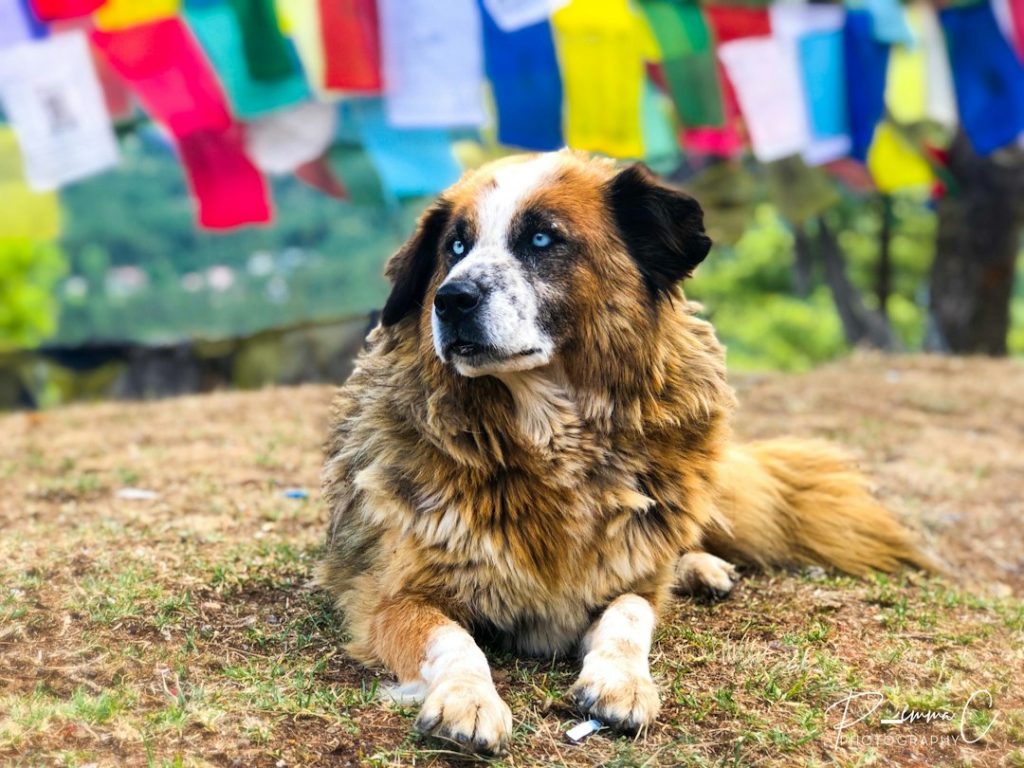
Bhutan has recorded zero human deaths from dog-mediated rabies since June 2023, when the country’s last case was recorded in Tareythang, Sarpang. On September 4, the World Health Organization made it official: Bhutan is the first country in its South-East Asia region to eliminate dog-transmitted rabies as a public health problem, and the second country in the world to do so, after Mexico. Chile is the only other country to have reached the milestone.
The turning point came in July 2021, when Bhutan’s king issued a royal decree ordering a whole-of-nation campaign. The Nationwide Accelerated Dog Population Management and Rabies Control Programme ran from March 2022 to October 2023, budgeted at 295 million ngultrum. It sterilized every free-roaming dog in a population exceeding 100,000, vaccinated more than 90 percent of them against rabies, well past the 70 percent threshold WHO says is needed to break transmission, and registered and microchipped tens of thousands of pet dogs. Roughly 12,000 De-suung volunteers, known as Guardians of Peace, carried the work into every district. Every volunteer received their own pre-exposure rabies vaccination before being sent into the field.
The results are measurable beyond the death toll. Bhutan’s Ministry of Agriculture and Livestock told Kuensel that dog bites fell from an annual average of roughly 7,000 incidents to about 550 last year.
WHO’s validation wasn’t a formality. A review team spent a week in August walking through health facilities and laboratories and examining the porous Bhutan-India border, where the risk of rabies crossing back into Bhutan is highest, before signing off.
Sources: WHO (validation announcement); WHO feature story (De-suung volunteer figures, review process); Kuensel (dog bite figures, programme budget); Asia News Network (second-country framing, last death location)
TWO NIGERIAN ENGINEERS ARE ABOUT TO POWER 230,000 HOMES
Ifeanyi Orajaka and Henry Ureh both started out as engineering interns who saw rural Nigerian communities living without electricity and decided to do something about it. Orajaka built his first solar mini-grid in 2008, as an undergraduate, powering about 60 homes in a single village. He founded Green Village Electricity Projects the following year. Ureh went on to found Darway Coast Nigeria.
Now each of them has won a contract to build 109 solar mini-grids across the country. Combined, the projects will bring reliable electricity to more than 230,000 homes and businesses, and their combined installed capacity will exceed 12 megawatts.
It traces back to a single seed grant. “The Foundation provided us with $44,521,” Orajaka told IEEE Spectrum. “I still remember the number, down to the last dollar.” That grant, from the IEEE Foundation, launched GVE. IEEE Smart Village has backed both entrepreneurs for more than a decade since. With this latest award, the organization’s total reach worldwide tops 4 million people, nearly doubling on the strength of these two contracts alone.
The model has already been tested at smaller scale. Ureh’s Darway Coast led construction of a 500-kilowatt mini-grid in Robinyan, Ogun State, in 2025, in partnership with Sahara Power Group and Ikeja Electric. It now serves more than 5,000 residents who previously relied on diesel generators, cutting an estimated 420 metric tons of carbon emissions a year.
Sources: African Business (contract figures, combined reach); IEEE Spectrum (Orajaka quote, seed grant); RMI (Robinyan project detail)
A BREAST CANCER DRUG FINALLY REACHES ENGLAND
On September 17, England’s drug-cost watchdog reversed a decision that campaigners had fought for two years. Enhertu, a targeted treatment for HER2-low advanced or metastatic breast cancer, is now available on the NHS.
NICE rejected the drug in 2024, ruling it wasn’t cost-effective. Scotland has offered it for more than two years, and so have 26 other European countries. The reversal became possible two ways. NICE raised the ceiling it will pay per quality-adjusted life year, from £30,000 to £35,000. AstraZeneca and Daiichi Sankyo, the drug’s makers, then agreed a commercial pricing deal with the NHS. In clinical trials, the drug nearly doubled median progression-free survival, from 5.1 to 9.9 months. It pushed median overall survival to 23.4 months, against 17.5 months on standard chemotherapy. About 1,000 women a year in England will now be eligible.
Kathryn Hulland, diagnosed with metastatic breast cancer in 2022, said the decision means more time with her nine-year-old daughter, Grace. “When I was first diagnosed, I was told I’d be lucky to see 12 months,” she said. “Three years later I know how important every extra month is. It’s another chance at more time with my daughter, another chance to make memories together, another month to be her mum and see her grow.”
NICE’s own director of medicines evaluation, Helen Knight, acknowledged the approval comes too late for many families. Breast Cancer Now’s chief executive, Claire Rowney, said thousands of patients missed out during the two-year gap, and some died waiting. She is now pushing Wales and Northern Ireland to follow England’s lead.
Sources: ITV News (Hulland quote, approval date); Streamlinefeed, NICE guidance summary (Rowney quote, QALY threshold change); Newsy Today (survival trial figures)
THE WORLD’S RAREST PIG IS COMING BACK
In 1996, conservationists in Assam captured six pygmy hogs from the Kuribeel grasslands of Manas National Park. The species, the world’s smallest wild pig, had come close enough to disappearing that leaving the survivors in the wild seemed too risky. The Pygmy Hog Conservation Programme began breeding them in captivity. It’s led by the Durrell Wildlife Conservation Trust, in partnership with the Assam Forest Department, the IUCN Wild Pig Specialist Group, and the Assam-based nonprofits Aaranyak and Ecosystems-India.
This June, fifteen of their descendants went back into the exact grassland where the original six were captured thirty years earlier. Nine were female, six were male. No confirmed signs of the species had been recorded there in nearly a decade. The total number of hogs bred and released since 1996 now stands at 194.
Rebecca Brewer, Durrell’s chief executive, called the release a remarkable conservation achievement. Vinay Gupta, Assam’s chief wildlife warden, said such efforts are vital for restoring grassland ecosystems and safeguarding threatened species. Getting the site ready took eight years of grassland restoration work by the partnership before a release was even possible.
Assam’s forest and climate change minister, Jayanta Malla Baruah, has now set a formal target: 300 pygmy hogs in the wild by 2040. “The journey from six to 194 shows what determined conservation can achieve,” he said.
Sources: Durrell Wildlife Conservation Trust (release detail, Brewer quote); The Better India (history, Gupta quote); The Federal, PTI wire (Baruah quote, 2040 target)
NEW ZEALAND’S KAKAPO JUST HAD ITS BIGGEST YEAR EVER
In 1995, when New Zealand’s Kakapo Recovery Programme began, there were 51 birds left: 31 males and 20 females. The kakapo is flightless, nocturnal, the heaviest parrot in the world, and famously difficult to breed. Its old defense against predators is freezing and trusting its moss-green camouflage. That worked fine against nothing. It stopped working once humans introduced cats, rats, and stoats to New Zealand.
This year changed the arithmetic. A mass fruiting event of native rimu trees, the kind of mast year that triggers kakapo breeding, produced the largest season on record. Forty-eight mothers, fathered by 32 males, produced chicks. Ten were conceived using artificial insemination, in pairings conservationists chose deliberately to strengthen genetic diversity. Ninety of those chicks survived to 150 days old, the point at which they’re considered independent. They were officially added to the population on September 1. That brought the total from 235 to 325 kakapo, the highest count of the modern recovery era.
“To blow through that 300 population mark just knocks my socks off,” said Deidre Vercoe, the recovery program’s operations manager. Researchers believe the species hasn’t topped 300 birds in roughly 75 years. It took the program sixteen years to produce its first 90 surviving chicks. This year, one breeding season did it.
Tane Davis, who represents Te Runanga o Ngai Tahu on the Kakapo Recovery Group, said the season also marked a deliberate shift toward lighter-touch management, fewer nest checks, less supplementary feeding, as the population grows large enough to handle more of its own recovery. The next challenge is space. The predator-free islands currently housing kakapo are already full, and the program is searching for another site before the next expected breeding season in 2028.
Sources: NZ Department of Conservation (population figures, Vercoe quote); RNZ (Davis quote, management shift); NBC News (breeding detail, mast year)
“Whenever the people are well informed, they can be trusted with their own government.” — Thomas Jefferson, 1789