The Rest of the World Report | September 21, 2026 — Morning Edition
The View From Everywhere Else
Weekday morning and evening editions. Saturdays once. Good news on Sundays. All sources labeled.
RIYADH STRIKE
A Houthi ballistic missile targeted Riyadh before dawn on Saturday. Saudi-led coalition forces said they intercepted and destroyed it roughly 200 kilometers from the capital. Residents heard the explosion. Later, they saw a plume of black smoke near King Khalid International Airport.
It was the first attack on Riyadh itself since the Houthis escalated their war with Saudi Arabia in July. Coalition spokesperson Major-General Turki al-Maliki said Houthi forces also tried to hit civilian infrastructure in four other cities. Bisha, Taif, Farasan and Yanbu were the targets. Yanbu is home to a major Saudi oil pipeline terminal. Air defenses stopped those attempts too, al-Maliki said. Houthi military spokesperson Yahya Saree claimed the group struck “sensitive sites” in Riyadh. He said the group also hit an Aramco facility in Yanbu. Saree said the attack used cruise missiles, ballistic missiles and drones, and that it caused major fires. Aramco did not respond to a request for comment. The Associated Press could not independently verify the Houthi claims.
President Trump cut short a weekend at Camp David. He returned to the White House on Saturday, a day before he was originally scheduled to leave. The White House gave no explanation. CNN national security analyst Alex Plitsas said he had been told the Camp David meeting was convened specifically to review options for strikes on Yemen. Trump told Axios on Thursday he was nearing a decision on whether to restart large-scale attacks on Iran. He asked advisers whether he wanted to “go in and annihilate” the Iranian regime.
The State Department raised its security warning level. Per the BBC, the warning said the Houthis “have engaged in hostile acts against Saudi Arabia, including civilian airports,” and cautioned that the conflict could escalate rapidly. The warning urged Americans in the region to exercise a high degree of vigilance. It told them to prepare for flight cancellations or airspace closures. FlightRadar24 listed King Khalid International as experiencing extreme disruption. Long delays and multiple canceled flights followed.
The strike comes as Houthi forces make rapid gains on the ground. They have seized the Red Sea port of Mokha over the past two weeks. They have also taken islands along the Bab el-Mandeb Strait, one of the world’s most important shipping chokepoints. Regional officials told the AP that Saudi Arabia is running low on missile interceptors. Riyadh has asked France, Britain, Pakistan and Egypt for air defense support. Saudi Arabia signed a joint defense agreement with Türkiye and Pakistan last month. UN Secretary-General Antonio Guterres condemned the targeting of civilian infrastructure. So did Gulf Cooperation Council Secretary-General Jassim al-Budaiwi. Both spoke on the sidelines of the UN General Assembly in New York. Jordan’s Foreign Ministry called the strikes a “blatant violation” and said Jordan stood in full solidarity with Saudi Arabia.
Separately, forces loyal to Yemen’s Presidential Leadership Council said they repelled a Houthi infiltration attempt in southern Marib on Saturday. Twelve Houthi fighters were killed.
🇺🇸 What American readers need to know: The State Department’s warning covers travel to the Middle East broadly, not just Saudi Arabia. It also flags risk to American interests outside the region. Trump reviewed Yemen strike options at Camp David the same weekend Riyadh was hit. That timing is the clearest sign yet that Washington may open a second military front in a war it has struggled to end on the first one.
Sources: Al Jazeera (Qatar, state-funded/editorially independent — coalition statement, Guterres and al-Budaiwi condemnation, Marib clash, Jordan statement); The National (UAE — Mokha seizure, Makkah defense agreement, interceptor shortage); The Statesman (India — Plitsas quote, Trump’s Camp David deliberations); NBC News (US, confirmation — Riyadh smoke, fuel tank damage); NewsCord/BBC compilation (BBC warning language, FlightRadar24 disruption data)
THE YELLOW LINE
An Israeli man was shot and killed Sunday at a natural spring near the West Bank settlement of Neve Tzuf, also known as Halamish. It happened hours before Yom Kippur began.
The Samaria Regional Council identified the victim as Netanel Shukrun. He was a father of six from the nearby settlement of Alei Zahav. He worked as a systems information analyst. Shukrun had gone to the spring with his eldest son to immerse in the water ahead of the holiday. A gunman opened fire from inside a passing vehicle, then fled on foot. Magen David Adom paramedics restored Shukrun’s pulse at the scene. He was airlifted to Rabin Medical Center in Petah Tikva, where he later died of his wounds. Soldiers from the Israeli military’s Duvdevan counterterrorism unit, acting on Shin Bet and police intelligence, cornered the shooter near a hospital and arrested him. National Security Minister Itamar Ben-Gvir called for the attacker’s execution.
Separately, the Israeli military said a Palestinian man tried to ram a vehicle into soldiers. The incident happened near the site of the former settlement of Ganim in the northern West Bank. Troops from the Paratroopers Brigade’s 890th Battalion opened fire, killing the driver. A second Palestinian in the car was detained. Israeli security services have announced expanded West Bank operations during the Yom Kippur period in response to Shukrun’s killing.
In Gaza, Al Jazeera correspondents reported heavy Israeli gunfire overnight. It targeted tents sheltering displaced people near the boundary Israel calls the “Yellow Line.” That line was set up after the October 2025 “ceasefire.” It separates Israeli-held territory from the rest of the Strip. At least four Palestinians were wounded by gunfire at the Qatar Camp in southern Khan Younis. Correspondents noted that area lies some distance from the line itself. Israeli military vehicles also fired on people along Salah al-Din Street, between the Bureij and Maghazi refugee camps. Artillery shelling hit nearby residential areas.
The line itself keeps moving. An Al Jazeera investigation in July identified 40 permanent Israeli military outposts inside Gaza. Several were built from scratch since the ceasefire took effect. The restricted zone had expanded to cover 64.9 percent of the Strip by June, according to OCHA, up from 53 percent earlier in the year. Reuters reported residents in Deir al-Balah, Khan Younis, Gaza City and northern Rafah describing the concrete yellow blocks marking the line being physically advanced. Some residents said they got only a text message or a drone-mounted loudspeaker warning beforehand.
🇺🇸 What American readers need to know: American coverage tends to describe the “Yellow Line” as marking the edge of active fighting. It is closer to a moving front. Al Jazeera’s own reporting shows Israeli forces have expanded the zone it covers by more than 10 percentage points of Gaza’s territory this year alone. This weekend’s violence broke out on both sides of it, and in the West Bank. It happened during the same 48 hours Washington’s attention was on Riyadh and Tehran.
Sources: The Jerusalem Post (Israel, centre-right — Shukrun shooting details, Duvdevan arrest); The Times of Israel (Israel, right-centre — Shukrun identification, Ben-Gvir statement, Ganim ramming incident); Al Jazeera (Qatar, state-funded/editorially independent — Gaza gunfire and shelling reporting); Al Jazeera (Qatar, state-funded/editorially independent — outpost investigation, zone expansion figures); Asharq Al-Awsat via Reuters (Reuters wire — resident accounts of the line’s advance)
THE AFD’S SECOND WIN
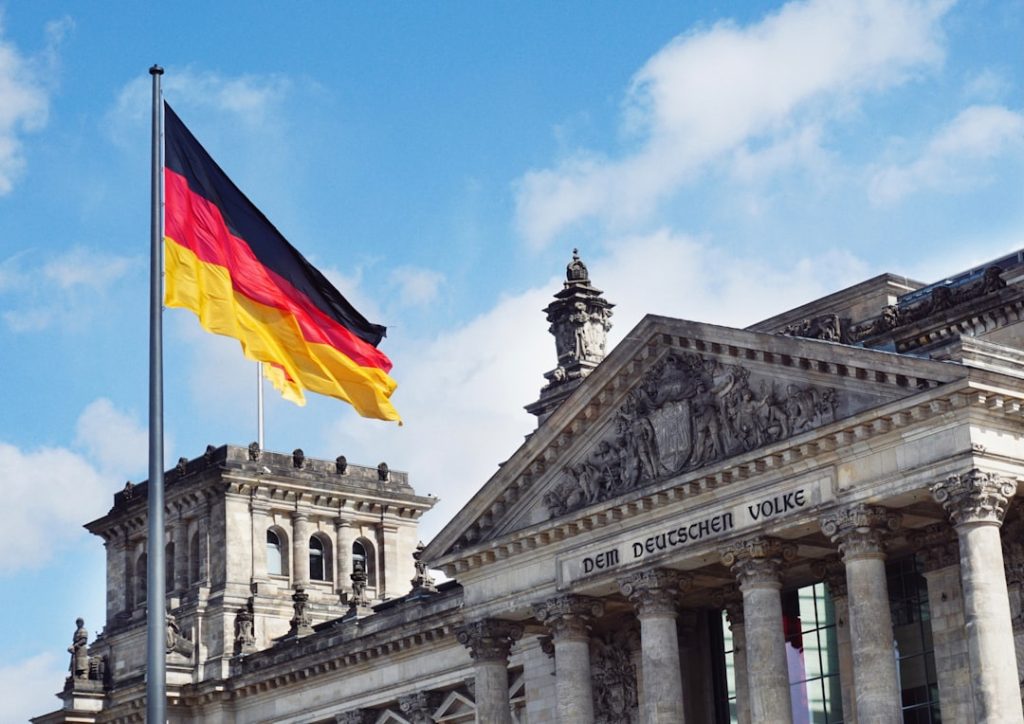
Germany’s far-right Alternative for Germany won the most votes in Mecklenburg-Vorpommern on Sunday. The far-left Die Linke won outright in Berlin on the same day. Chancellor Friedrich Merz called the results a “disaster” for his governing coalition.
In Mecklenburg-Vorpommern, AfD took 38 percent of the vote. That is more than double its previous result there. The party will hold 32 of 79 Landtag seats. The Social Democrats, led by state premier Manuela Schwesig, fell to second place with roughly 35 percent. Merz’s Christian Democrats recorded their worst result in the state since World War II. Turnout hit 78.1 percent, more than a million voters. AfD is not expected to form a government there. Germany’s “firewall” policy bars mainstream parties from coalition with the far right. The SPD, Greens and Die Linke are expected to form a three-party coalition instead.
In Berlin, Die Linke took 25.7 percent of the vote. That put it comfortably ahead of the CDU’s 18.8 percent. It was the party’s first outright win in the city in decades.
“We cannot sugar coat the result in Mecklenburg-Vorpommern,” Merz told reporters at a CDU crisis meeting in Berlin. He called it a disaster, and said the CDU got crushed in the polarization between the Social Democrats and the AfD. Merz said he intended to stay on despite recent speculation he might be ousted. AfD national co-leader Tino Chrupalla called on him to resign. Chrupalla told German broadcaster ZDF that Merz’s statement “really was more than feeble.”
Sunday’s results followed a landslide AfD win in Saxony-Anhalt on September 6. That was the party’s first state election victory of this cycle. Mecklenburg-Vorpommern is its second in two weeks.
🇺🇸 What American readers need to know: AfD is no longer winning isolated protest votes in one region. Two state wins in two weeks mark a party establishing itself as a durable governing force in eastern Germany. One of those wins nearly doubled its prior vote share. That has direct implications for NATO’s most populous European member as it navigates the war in Ukraine and its own defense spending commitments.
Sources: Al Jazeera (Qatar, state-funded/editorially independent — vote shares, Merz and Chrupalla quotes); CNN (US, confirmation — exit polling, turnout, demographic context)
IRAN’S SIX CONDITIONS
Iran’s security chief has given Washington a detailed set of conditions for ending the seven-month war. The list goes well beyond the three demands Tehran has emphasized publicly.
Mohsen Rezaei, secretary of Iran’s Supreme National Security Council, told Al Jazeera in an exclusive interview Saturday that Iran has conveyed the conditions to Washington. Qatari mediators delivered them. Tehran is awaiting a response from President Trump, Rezaei said. In public remarks, Rezaei has repeatedly named three of the conditions: an end to the war on all fronts, the release of Iran’s frozen funds, and an end to the US naval blockade of Iranian ports. Al Jazeera reported that the full list Tehran submitted runs to six items. The additions are an end to fighting specifically in Lebanon, an end to US interference in Iran’s internal affairs, an end to US cooperation with Iran’s domestic opposition, and an end to all US attacks on Iranian territory.
Rezaei did not rule out a further US strike, calling the possibility likely based on Iranian military assessments. He warned that rejecting Iran’s terms could lead to a wider war. “It is in Washington’s interest to accept these conditions,” Rezaei said. He also said Iran had recently test-fired a multi-warhead antiship missile near a US vessel, with the warheads potentially subject to further development. Rezaei said Iran’s nuclear doctrine could eventually change if the war continues. A religious decree issued by Supreme Leader Ali Khamenei currently bars weapons development.
A 60-day memorandum of understanding between Washington and Tehran was signed in June. It expired without producing a lasting settlement. Attacks have intensified since around the Strait of Hormuz, which Iran has in effect closed to shipping. The US maintains its blockade of Iran’s southern ports. Trump told Axios on Thursday he was weighing whether to resume large-scale strikes on Iran.
🇺🇸 What American readers need to know: Most American outlets are still reporting Iran’s position as three demands. Al Jazeera’s own interview with the man who delivered them to Qatar shows six. Two are new: a demand tied to Lebanon and one that the US stop backing Iran’s domestic opposition. Readers relying on domestic coverage alone are getting an incomplete account of what Tehran says it needs before it will talk.
Sources: Al Jazeera (Qatar, state-funded/editorially independent — full six-condition list, Rezaei quotes, MoU history); Al Jazeera (Qatar, state-funded/editorially independent — original interview, antiship missile test claim); Ynetnews (Israel — Trump’s Axios remarks, “decisive war” warning)
NUMBERS AT PUBLICATION
🇮🇷 Iran: 3,684 killed
🇱🇧 Lebanon: 8,953 killed, 30,643
🇮🇱 Israel: 1,200+ killed, ~5,400 wounded (includes 472 killed, 3,004 wounded in Gaza)
🇺🇸 US military: 23 killed, 794 wounded
🇵🇸 Gaza: 1,358 Palestinians killed, 4,541 wounded, since the October 10, 2025 “ceasefire”; 74,008+ Palestinians killed (since Oct. 2023)
🇵🇸 West Bank: 322 killed (incl. 74 children), 5,927 wounded (incl. 946 children), since January 2025
🛢️ Brent crude: $101.80/barrel
⛽ US gas: $4.48/gallon
Sources: HRANA (Iran), Lebanon MOPH (Lebanon), INSS (Israel), DCAS (US military, disputed), OCHA / gazacasualties.org (Gaza), OCHA West Bank Monthly Snapshot (West Bank), OilPrice.com (Brent), AAA (US gas).
“Whenever the people are well informed, they can be trusted with their own government.” — Thomas Jefferson, 1789