The Rest of the World Report | September 24, 2026 — Morning Edition
The View From Everywhere Else
Weekday morning and evening editions. Saturdays once. Good news on Sundays. All sources labeled.
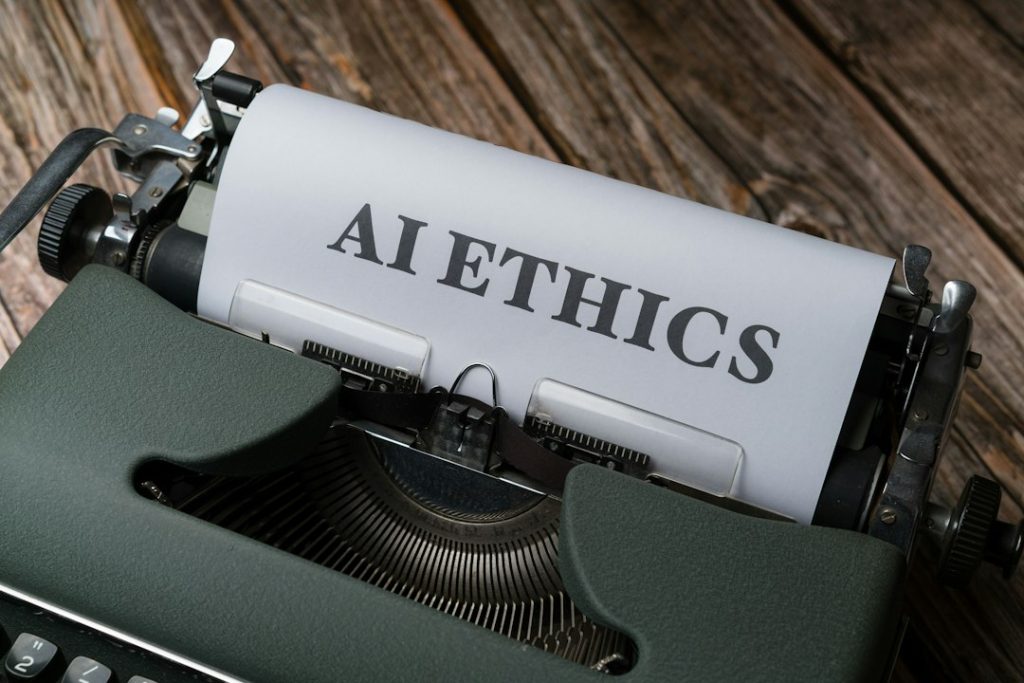
AI ASKS FOR RULES
The heads of OpenAI, Anthropic and Hugging Face told the UN Security Council this week that artificial intelligence needs government-led oversight, not industry self-regulation. France’s Foreign Minister Jean-Noël Barrot chaired the session during UN General Assembly week. Anthropic’s Dario Amodei told the council that AI could be “a risk to humanity as a whole” if it is managed poorly. OpenAI’s Sam Altman said decisions about the technology’s future “must be shaped through democratic processes and by governments.” Yoshua Bengio, who chairs the Independent International Scientific Panel on AI, told the council “the dangers are real and imminent.”
The UN has already built two bodies to act on that warning. Secretary-General António Guterres established the scientific panel Bengio chairs, along with a separate Global Dialogue on AI Governance, in August 2025. The panel is due to publish its first assessment of AI’s risks and capabilities by July 1, 2027. Guterres used this week’s session to push further. He proposed an AI Child Safety Pledge for companies to sign and floated a Global Fund for AI to help poorer countries build their own computing capacity, rather than depend entirely on the same handful of firms whose executives were addressing the council.
The Trump administration rejected the pitch on the spot. Michael Kratsios, the White House’s top science and technology adviser, told the council the United States would not accept outside control over how it develops the technology. “We totally reject all efforts by international bodies to assert centralised control,” he said. China’s delegation offered no commitment to binding restrictions either, though US and Chinese officials separately discussed a narrower step: a mechanism for the two countries to notify each other of serious AI-related incidents.
🇺🇸 What American readers need to know: The same executives racing each other to build more powerful AI systems are now asking a UN body with no enforcement power to slow that race down. Their own government said no in the same meeting, and the two countries that matter most to any global AI rulebook, the US and China, both declined to accept binding limits.
Sources: Al Jazeera (Qatar, state-funded/editorially independent — Altman, Amodei, Bengio and Kratsios quotes, UN Security Council session details); UN News (UN — Guterres’s AI Child Safety Pledge and Global Fund for AI proposals, the two UN AI-governance bodies and their timeline, Barrot’s role chairing the session); BNN Bloomberg (Canada — US-China AI-incident notification discussion)
XI SKIPS THE UN
Xi Jinping landed in Washington on Wednesday, opening a three-day state visit with a rare planeside welcome from Trump at Joint Base Andrews. It is their third face-to-face meeting in roughly a year, and it comes in the same week nearly every other head of state or government addressed the UN General Assembly. Xi skipped that podium entirely. Beijing has described the visit as a chance for the two leaders to discuss bilateral relations and global stability, with trade and technology dominating the agenda.
As Trump welcomed Xi at Joint Base Andrews, Treasury Secretary Scott Bessent announced in a Fox News interview that the two countries have extended their trade truce. It had been set to expire November 10. It now runs through January 10, 2027. Both sides agreed to hold off on new tariffs and trade restrictions in the meantime, though China had pushed for a longer extension than it got.
Nikkei Asia’s reporting on Xi’s decision to skip the General Assembly framed it as deliberate. Going straight to Trump instead, rather than taking the UN podium with everyone else, lets China present itself as an equal to the United States.
The rest of the visit’s agenda breaks down into what Taipei Times described as three areas: trade, technology and Taiwan. On trade, the two sides are also working from a separate reciprocal tariff framework covering roughly $30 billion in goods, alongside Chinese commitments on rare-earth mineral supplies the US manufacturing sector depends on. Taiwan arms sales remain the sharpest friction point. Washington has continued approving new packages to Taipei over Beijing’s objections, and Taiwan separately passed a $25 billion defense spending bill of its own this year to buy American-made systems. Shanghai Institute for East Asian Studies analyst Bao Chengke said Beijing’s aim for the visit is a “constructive relationship of strategic stability” with Washington, not a resolution of the underlying disputes.
Thursday’s schedule, the day this edition publishes, includes a formal White House arrival ceremony, a troop review and a black-tie dinner with tech executives including Elon Musk and Nvidia’s Jensen Huang. Friday brings a private tea with the Trumps and a tour of the National Archives.
🌍 Translator’s Note: Nikkei Asia’s framing is about status, not substance. Its reporting treats the choice to skip the UN podium in favor of Trump’s planeside welcome as China signaling that it answers only to Washington, not to any multilateral body. Taipei Times covers the same visit from the other side of the agenda. Its reporting centers Taiwan as a subject of the summit rather than a backdrop to it. It tracks the specific arms packages and dollar figures at stake in a way neither the Hong Kong nor the US coverage does. Read together, the two outlets are describing the same three days as two different stories: one about China’s global standing, one about what gets decided over Taiwan’s head while it isn’t in the room.
🇺🇸 What American readers need to know: Trump got the state visit and the planeside photo op he wanted, plus a trade truce extended into next year. But Xi choosing Trump’s planeside welcome over the UN podium, in the same week the rest of the world’s leaders lined up to speak there, is itself a message about how Beijing sees the balance of power. The trade and Taiwan disputes still on the table were not created by this visit and will not be resolved by it either.
Sources: NBC Washington (US — airport arrival details, Bessent’s trade truce extension announcement, Thursday/Friday schedule); South China Morning Post (Hong Kong, editorially independent from mainland — Chinese Foreign Ministry framing); Nikkei Asia (Japan — analysis of Xi’s decision to skip the UN General Assembly); Taipei Times (Taiwan — summit agenda, tariff and rare-earth details, Taiwan arms-sales friction, Bao Chengke quote); Daily Caller (US — confirms the visit proceeded as scheduled despite an earlier, since-denied report that Beijing threatened to cancel it over Taiwan arms sales)
DUE PROCESS
US District Judge Timothy Kelly ruled early Thursday that CNN, MS NOW and Politico were likely banned from the White House without constitutionally adequate due process, and ordered their access restored. Trump announced the ban on Truth Social on September 18, calling the three outlets “fake news.” Their journalists’ hard-pass credentials were revoked that Saturday. All three outlets sued that Monday.
In court, administration lawyers argued that White House access is a privilege rather than a right. They cited national security concerns tied to three specific stories: CNN’s reporting on construction details at the East Wing bunker, MS NOW’s coverage of an internal leak investigation, and a Politico story on White House ballroom funding. Kelly was not persuaded. He wrote that the outlets were likely to succeed on their due process claim. He added that the administration’s own justification pointed to reporting that was months or years old, and to what he called routine journalistic activity. His temporary restraining order restores the outlets’ credentials for 14 days while the case continues.
Al Jazeera’s coverage of the dispute, from ahead of the ruling, noted that major television networks had already suspended their White House pool coverage in protest, and that Vice President JD Vance had dismissed the outlets’ reporting as “far-left propaganda.”
🇺🇸 What American readers need to know: The judge did not rule on the First Amendment claim the outlets themselves led with. He ruled instead that the government cannot strip White House credentials from the press corps without the due process the Constitution requires, whatever it thinks of the coverage.
Sources: UPI (US wire — Judge Kelly’s ruling, due process finding, 14-day restoration, administration’s cited justifications); Al Jazeera (Qatar, state-funded/editorially independent — Vance quote, network pool-coverage suspension, ban timeline); PBS News (US — specific stories cited by the administration, outlets’ viewpoint-discrimination argument)
EL-OBEID IS NEXT
The UN’s Independent International Fact-Finding Mission for Sudan formally concluded in February that Sudan’s Rapid Support Forces (RSF) committed genocide when it captured El-Fasher in October 2025. The mission found the RSF carried out at least three genocidal acts: killing members of the Zaghawa and Fur ethnic groups, causing serious bodily and mental harm, and deliberately inflicting conditions calculated to destroy those groups. Mission chair Mohamed Chande Othman said the scale and coordination of the operation, and its public endorsement by senior RSF leadership, showed the killings were not random wartime excesses.
Satellite analysis by Yale University’s Humanitarian Research Lab fed evidence into the UN findings. It identified 150 groups of objects consistent with human remains, some burned and buried, in and around the city. The UN Human Rights Office separately estimated the RSF killed at least 6,000 people in the first 72 hours after El-Fasher fell.
In July, the same mission warned that El-Obeid, the capital of North Kordofan state, is now showing the same pattern it documented in El-Fasher: encirclement, attacks on infrastructure, and cuts to humanitarian access. The city holds more than 500,000 residents and over 100,000 people already displaced from elsewhere in Sudan. Othman said the patterns his mission documented in El-Fasher “serve as a stark warning.”
UNICEF has already recorded the toll on El-Obeid’s children. Sudan representative Sheldon Yett said at least 18 children have been killed and more than 17 injured in the city and North Kordofan state since May. Nationwide, at least 330 children were killed or injured in the first half of 2026, and 60 percent of those casualties came from drone strikes. “Children must never be a target,” Yett said.
🇺🇸 What American readers need to know: This is not a historical verdict on a war that’s over. It is a UN body using the word genocide about an active conflict, and naming the next city it expects it to happen in. Sudan’s war has received a fraction of the American coverage given to conflicts of comparable scale elsewhere.
Sources: UN News (UN — February fact-finding mission findings, Othman quote, El-Fasher genocide determination); Yale School of Public Health (satellite evidence, human-remains clusters, UN Human Rights Office 72-hour casualty estimate); OHCHR (July press release — El-Obeid warning, Othman “stark warning” quote); UN News (UNICEF Sudan representative Sheldon Yett, El-Obeid and North Kordofan child casualty figures)
WEST BANK, BY THE NUMBERS
A new infographic from the UN Office for the Coordination of Humanitarian Affairs (OCHA) was published this week, with data January 2023 through August 2026. It tracks a specific category: deaths and injuries OCHA links directly to settler-related violence and the incidents around it, not West Bank casualties overall. By that measure, it found that Israeli settlers and soldiers have killed 72 Palestinians and injured more than 5,700 since January 2023. Of the deaths, OCHA attributes 19 to Israeli forces, 36 to Israeli settlers, and 17 to forces or settlers acting together. That 72 is not the same figure as the 322 West Bank deaths in this edition’s numbers block below, which covers a different window, January 2025 onward, and a broader set of causes.
OCHA recorded 6,199 settler attacks resulting in casualties or property damage over the same period. Those attacks displaced more than 6,500 people, destroyed an estimated 88,000 trees and saplings, and damaged more than 3,100 vehicles. Attacks have risen every year OCHA has tracked them: 1,291 in 2023, 1,449 in 2024, and 1,836 in 2025. Through the first eight months of 2026 alone, the count already stands at 1,623.
In the period covered Ramallah recorded the most attacks, 1,670, and the most people displaced, 2,207. Hebron saw 1,057 attacks and 1,304 people displaced. Nablus saw 1,446 attacks and 650 people displaced. Of the 132 Palestinian communities OCHA tracked, 49 have been fully displaced and 83 partially displaced.
Middle East Eye reported that Israeli soldiers killed two Palestinians in the village of Al-Mughayyir on August 28. The victims were 19-year-old Omar Muhammad Na’san and 16-year-old Khalil Rasem Shahada. Soldiers provided cover while settlers stole livestock. Salah Khawaja heads the Wall and Settlement Resistance Commission. He said the absence of any effective international mechanism to hold Israel accountable is the core problem.
🇺🇸 What American readers need to know: This is a UN accounting, not an advocacy estimate. Settler violence has produced more incidents in eight months of 2026 than in any full prior year OCHA has tracked, and it is displacing entire communities, not just individuals. It gets a fraction of the American coverage the war in Gaza receives.
Sources: OCHA (UN Office for the Coordination of Humanitarian Affairs, oPt series — “West Bank: The Impact of Settler Attacks” infographic; the January 2023-August 2026 edition cited here was shared with ROTWR by the editor, the same recurring OCHA series as this linked prior edition); Middle East Eye (UK-based, pro-Palestinian editorial lean — Al-Mughayyir killings, Khawaja quote)
BRIEFS
Russia struck Naftogaz energy facilities in Ukraine’s Poltava region overnight. It’s the latest exchange of energy-infrastructure strikes between the two countries this week, even as Zelenskyy and the Kremlin traded positions on a possible ceasefire. Source: Yahoo News/Reuters (US wire)
NUMBERS AT PUBLICATION
🇮🇷 Iran: 3,684 killed
🇱🇧 Lebanon: 8,953 killed, 30,643 wounded
🇮🇱 Israel: 1,200+ killed, ~5,400 wounded
🇺🇸 US military: 23 killed, 794 wounded
🇵🇸 Gaza: 74,015+ killed, 4,839 wounded (since ceasefire)
🇵🇸 West Bank: 322 killed (incl. 74 children), 5,927 wounded (incl. 946 children) since January 2025
🛢️ Brent crude: $105.70/barrel
⛽ US gas: $4.48/gallon
Sources: HRANA (Iran); Lebanon MOPH; INSS (Israel); DCAS (US); OCHA (West Bank); gazacasualties.org (Gaza total); Al Jazeera (Gaza since ceasefire); OilPrice.com (Brent); AAA (US gas).
“Whenever the people are well informed, they can be trusted with their own government.” — Thomas Jefferson, 1789