The Rest of the World Report | September 25, 2026 — Evening Edition
The View From Everywhere Else
Weekday morning and evening editions. Saturdays once. Good news on Sundays. All sources labeled.
THE MECCA PACT CONVENES
The military chiefs of Saudi Arabia, Türkiye and Pakistan met in Riyadh on Friday, turning a defense pact that had existed mostly on paper into something with generals and a plan attached to it.
General Fayyadh bin Hamed Al-Ruwaili, Saudi Arabia’s chief of general staff, hosted General Selcuk Bayraktaroglu of Türkiye and Field Marshal Asim Munir of Pakistan. This morning’s edition reported only that the three countries’ foreign ministers had announced plans for this meeting. It happened. The chiefs reaffirmed the Mecca Joint Defence Agreement’s core clause, that an attack on one signatory is an attack on all three, and committed to “immediately begin” converting that pledge into practical military cooperation.
The alliance is also becoming a standing institution rather than a one-time pact. The three countries are setting up a secretariat based in Saudi Arabia, expanding joint military cooperation and deepening defense industry collaboration between them.
Behind the announcement sits an active war. Houthi attacks on Saudi Arabia have escalated sharply this month, and fighting inside Yemen between Houthi and government forces killed at least 150 people in a single day this week. Turkish Foreign Minister Hakan Fidan said Wednesday that Turkish support for Saudi Arabia would likely focus on “certain technical areas,” a phrase that stopped short of promising troops or direct combat involvement.
Pakistan and Türkiye’s own public accounts of the Riyadh meeting notably avoided any direct mention of the Houthis, even as the meeting was called specifically over Houthi attacks on Saudi Arabia.
🌍 Translator’s Note: Saudi and Turkish coverage of Friday’s meeting described it as a straightforward act of alliance solidarity, the three chiefs reaffirming a mutual-defense clause and moving toward institutionalizing it. Al Jazeera’s reporting on the same meeting struck a more cautious note, pointing out that Pakistan and Türkiye’s own statements stopped short of naming the Houthis, a sign the two countries are moving carefully rather than rushing into a shooting war with Iran-backed forces on Saudi Arabia’s behalf. Both things are true. The alliance is real and institutionalizing. It is also, on the evidence of what its own members are and aren’t willing to say publicly, more cautious than the “mutual defense” language suggests.
🇺🇸 What American readers need to know: Three of Washington’s own regional security partners have now formalized a joint military structure aimed at an Iran-backed force, entirely outside American involvement. If the alliance follows through on “immediately” converting its pledges into action, it would be the first real test of a Muslim-majority mutual-defense bloc responding collectively to a Houthi threat without the US directing it.
Sources: Al Arabiya (Saudi Arabia — meeting outcome, mutual defense reaffirmation, “immediately begin” commitment); TRT World (Türkiye, state-affiliated — named chiefs, secretariat and institutionalization details); Al Jazeera (Qatar, state-funded/editorially independent — Fidan quote, cautious framing, Houthi omission); Dawn (Pakistan — foreign ministers’ preparatory meeting)
THE BORDER WAR
Pakistani forces killed several Afghan Taliban fighters Friday in the Gulistan border area, the latest exchange in the worst Pakistan-Afghanistan fighting since February.
Pakistan’s Information Minister, Attaullah Tarar, described the clash as a foiled attempted Afghan incursion. It followed Pakistani airstrikes a day earlier on Kandahar, Paktia and Khost provinces inside Afghanistan, which Tarar said targeted “terrorist hideouts and support infrastructure including drone launching and storage sites.” Pakistan says Afghanistan launched drones into Pakistani territory earlier in the week. Afghan government spokesman Zabihullah Mujahid denied it, saying the Taliban does not harbor anti-Pakistan groups.
Neither government has backed down publicly, and the exchange of strikes has continued for several days now. China, Türkiye, Qatar and Saudi Arabia have been mediating between Islamabad and Kabul. Friday’s fighting is a direct threat to that effort, since it came after, not before, the airstrikes it was meant to help prevent.
🌍 Translator’s Note: Al Jazeera’s coverage of Friday’s fighting placed it explicitly against the mediation effort, framing the strikes and border clashes as a test of whether Chinese, Turkish, Qatari and Saudi diplomacy can actually hold two long-hostile neighbors back from a wider war. That framing, mediation under live fire, has had limited pickup in American coverage, which has largely treated this as a bilateral Pakistan-Afghanistan story rather than one with four other governments actively trying to stop it from escalating further.
🇺🇸 What American readers need to know: Two of the region’s most consequential governments are exchanging airstrikes and border fire in their worst clash since February, while four other countries work to mediate a fight the United States has no direct hand in and little ability to influence. It is a live illustration of how much regional security architecture now runs entirely outside Washington.
Sources: Al Jazeera (Qatar, state-funded/editorially independent — Gulistan clash, Tarar quote, Mujahid denial, mediation context); CBC News (Canada, public broadcaster — airstrike locations, escalation timeline)
WATCH LIST
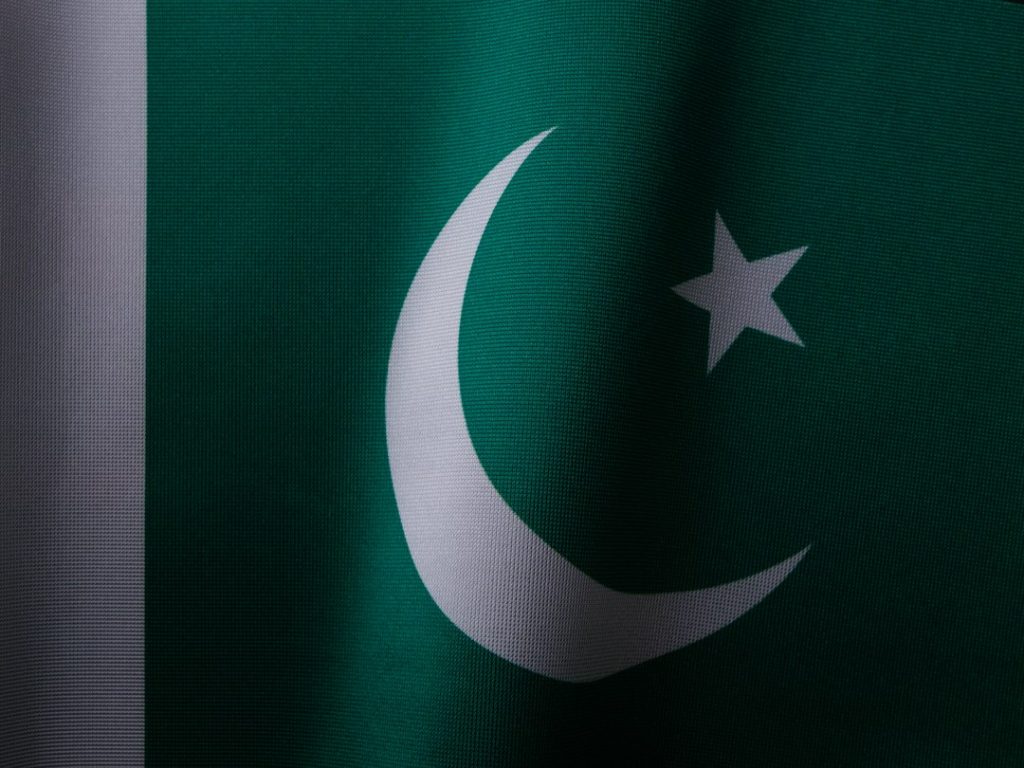
Pakistan is now carrying two separate military commitments at once. One is the Mecca Pact obligation to Saudi Arabia. The other is the shooting war with Afghanistan. Neither story mentions the other, because they are genuinely different developments involving different neighbors. But it is worth watching what happens when one country is asked to carry both.
Regional analysts were already questioning Pakistan’s capacity to make good on the Mecca Pact commitment before this week’s Afghanistan fighting started. Kamran Bokhari told Al-Monitor this month that Pakistani forces are “stretched,” pointing to Pakistan’s existing deployments in Saudi Arabia alongside its India border tensions and domestic insurgencies. A Pakistani Foreign Ministry spokesman, Sajjad Haider Khan, told Middle East Eye that direct military action against the Houthis “was not under active discussion.” Analyst Qamar Cheema told the same outlet that Pakistan still lacks the institutional groundwork, in his words, for real “inter-military planning and interoperability” with Saudi Arabia and Türkiye.
No outlet has yet reported on the two fronts together, because the Afghanistan fighting is too new. This is ROTWR’s own observation, not a reported one: a military already flagged as stretched thin over one Gulf commitment is now also fighting an active border war, at the same time it just told two allies it would “immediately” convert its pledge into practical cooperation.
Sources: Al-Monitor (US-based, Middle East specialist, centrist — Bokhari quote and analysis); Middle East Eye (UK-based, pro-Palestinian editorial lean — Khan and Cheema quotes, institutional gaps)
TAKING CUBA
The US Army has asked its reserve units to report their availability for a Cuba contingency, with forces possibly needed within 90 to 120 days.
The request, described in an internal Army Reserve message, named specific units that would be needed: a combat sustainment support battalion, an engineer battalion, an expeditionary sustainment command, a medical brigade, a forward resuscitative and surgical detachment, and a military police brigade. It follows earlier reconnaissance of the seafloor and maritime approaches around Cuba and US airpower being placed on heightened readiness. In July, military planners examined a separate option: an Army-led air assault involving thousands of soldiers from the 101st Airborne Division. US Southern Command declined to comment, citing operational security.
The planning sits awkwardly next to what Washington has been saying in public. At the UN this week, Trump called Cuba a failed state and told reporters “Taking Cuba in some form, yeah. Cuba’s going to be next.” Secretary of State Marco Rubio, in the same period, framed the administration’s approach as diplomatic rather than military, saying Cuba has a “golden opportunity” to pursue political transition and that Washington would work with Cuban leaders who had no blood on their hands.
Havana rejects the idea that any real negotiation is happening. Cuba’s Deputy Foreign Minister, Carlos Fernández de Cossío, said Thursday that “there are no advancements,” and that contact between the two governments amounts to routine diplomatic channel work, not talks, while the US keeps imposing new punitive measures on Cubans every week or two. President Miguel Díaz-Canel has separately warned of a “bloodbath” and said Cuba would fight any US military action.
Latin American press picked up the Army planning story within hours of CBS’s report, and reframed it. Infobae’s write-up folded the Pentagon reporting into Trump’s UN remarks and Cuba’s economic decline, an economy that contracted 5 percent in 2025 for a third straight year in the red, treating the military planning as one more front in an active pressure campaign rather than isolated defense readiness. Infobae’s own version did not include any response from the Cuban government at all.
The Caribbean bloc CARICOM staked out a formal position on exactly this scenario earlier this year. A joint statement from the region’s foreign ministers warned that US military action against Cuba would “destabilize the security architecture of the entire Caribbean region,” and affirmed Cuba’s right to import fuel without outside interference. Two CARICOM members, Guyana and Trinidad and Tobago, notably declined to join that statement.
🌍 Translator’s Note: Latin American and Caribbean coverage treats this story as one chapter in an ongoing pressure campaign, not a standalone military story. Infobae’s write-up of the same Army Reserve planning ROTWR is reporting tonight wove in Trump’s “failed state” rhetoric and Cuba’s economic collapse without including Havana’s side at all, coverage that reads more sympathetic to the administration’s narrative than skeptical of it. CARICOM’s standing position runs the opposite direction, casting any US military action as a threat to the whole Caribbean’s security architecture, not just Cuba’s. Both readings exist in the region at once, and neither matches how this is being covered as a Pentagon logistics story in the United States.
🇺🇸 What American readers need to know: The Army is not planning a fantasy. Reserve units have been asked, by name, whether they could deploy within four months. At the same time, the administration’s own secretary of state is describing a diplomatic opening, Havana says no real negotiation exists at all, and the region next door to Cuba is treating this as an active pressure campaign, not a hypothetical. Those positions cannot all be the plan.
Sources: CBS News (US — Army Reserve message, named units, 101st Airborne planning, SOUTHCOM response); Al Jazeera (Qatar, state-funded/editorially independent — Trump “failed state” and Rubio “golden opportunity” remarks); Newsweek (US — Díaz-Canel “bloodbath” warning); Infobae (Argentina, broad Latin American reach, professionally sourced — same-day reframing of the CBS report, economic context); Caribbean Life (Caribbean — CARICOM statement, ministers’ quotes, Guyana/Trinidad and Tobago dissent)
THE REVERSAL
Colombia formally cut diplomatic ties with Iran on Friday, the clearest sign yet that its new government intends to reverse its predecessor’s foreign policy toward the Middle East entirely.
Colombia’s Foreign Ministry described the move as part of its approach to “national and hemispheric security and transnational crime,” without further detail. The decision comes from a government sworn in barely six weeks ago. President Abelardo de la Espriella, a Trump-endorsed candidate who took office August 8, is now moving to restore relations with Israel and open a Colombian embassy in Jerusalem. His predecessor, Gustavo Petro, broke ties with Israel in May 2024 over its military campaign in Gaza and repeatedly called it “genocidal.”
Where Petro spent his term aligning Colombia with governments critical of Israel and the United States, de la Espriella has moved to reverse all of it in his first six weeks: cutting Iran, restoring Israel, and aligning with Washington.
🌍 Translator’s Note: LatinAmericanPost’s coverage framed Friday’s announcement as part of a coordinated diplomatic reset, not an isolated Iran decision, describing Bogotá as simultaneously shutting one door while opening two others, in Washington and in Jerusalem. That framing treats the Iran break as a symptom of a larger alignment shift rather than the story itself, a distinction largely absent from US coverage, which has focused narrowly on the Iran tie cut without placing it against Petro’s own record on Israel.
🇺🇸 What American readers need to know: A major Latin American government just reversed its predecessor’s foreign policy on Iran and Israel within six weeks of taking office. That kind of whiplash is a preview of how fast alignment with Washington can move once a government wants it to, and a reminder of how much of that alignment rests on who happens to be in power rather than on anything more durable.
Sources: LatinAmericanPost (Latin America, professionally sourced — de la Espriella details, Petro contrast, embassy plan); Al Arabiya (Saudi Arabia — Foreign Ministry statement); Al Jazeera (Qatar, state-funded/editorially independent — de la Espriella election, Trump endorsement)
BRIEFS
Gaza’s Health Ministry has now named some of the people behind this morning’s casualty count. The five deaths and 35 injuries reported in this morning’s edition, over the 24 hours ending Friday morning, include Hasan Takreem al-Batta, who died of wounds sustained earlier in central Khan Younis; Rania Salama Saad, killed in the al-Mawasi area of Rafah; and Muhannad Hosni Abu Medyin, shot west of az-Zahra in central Gaza. A fourth person was killed when the Israeli military struck a vehicle near the American Hospital in az-Zawayda. Source: IMEMC (Palestinian, Bethlehem-based — victim names, locations, Health Ministry casualty figures)
Trump and Xi closed out their three-day state visit Friday with tea at the White House and a tour of the National Archives before Xi’s departure. Neither side announced anything new on tariffs, Taiwan or the press-access dispute from earlier this week. Sources: US News (US — Archives tour, departure); Bloomberg (US — no new substantive announcements)
Ethiopia’s rebel coalition now has a name, the Ethiopian Peoples’ Forces Alliance for Survival, and TPLF and allied forces have advanced into several districts of Zone 2 with what one report described as little resistance. Government spokeswoman Billene Seyoum accused alliance members of taking financial backing from Eritrea. Prime Minister Abiy Ahmed was in Djibouti on Thursday launching an infrastructure project, a full day’s schedule that had nothing to do with the war expanding at home. Source: Al Jazeera (Qatar, state-funded/editorially independent — alliance name, Zone 2 advance, Seyoum quote, Abiy’s Djibouti trip)
NUMBERS AT PUBLICATION
🇮🇷 Iran: 3,684 killed
🇱🇧 Lebanon: 8,953 killed, 30,643 wounded
🇮🇱 Israel: 1,200+ killed, ~5,400 wounded
🇺🇸 US military: 23 killed, 794 wounded
🇵🇸 Gaza: 74,056+ killed (total war), 4,916 wounded (since ceasefire)
🇵🇸 West Bank: 322 killed (incl. 74 children), 5,927 wounded (incl. 946 children) since January 2025
🛢️ Brent crude: $104.50/barrel
⛽ US gas: $4.49/gallon
Sources: HRANA (Iran); Lebanon MOPH; INSS (Israel); DCAS (US); OCHA (West Bank); gazacasualties.org (Gaza total); Gaza Health Ministry via WAFA (Gaza since ceasefire); OilPrice.com (Brent); AAA (US gas).
“Whenever the people are well informed, they can be trusted with their own government.” — Thomas Jefferson, 1789