Rest of the World Report | Good News Edition!
GOOD NEWS — September 27, 2026
Five sourced stories from the last week, science, medicine, and a couple of records worth noting.
TWINS, SEPARATED, THRIVING
Hiyab and Wuhbto were born in Ethiopia conjoined at the top of their heads, facing opposite directions. The condition is called craniopagus. It shows up in roughly one out of every 2.5 million births, and fewer than 6% of conjoined twins share it.
The girls arrived at SSM Health Cardinal Glennon Children’s Hospital in St. Louis just before their first birthday. They came through an international humanitarian partnership with the World Pediatric Project. Their biological parents could not travel to the United States, due to visa complications. A team of caregivers took turns holding, rocking and advocating for the girls around the clock.
Doctors spent a year preparing the twins for separation, across roughly six staged surgeries. Each stage slowly disentangled shared blood vessels and expanded skin tissue, protecting blood flow to both brains. The final separation began the morning of Feb. 24 and ran into the early hours of Feb. 25, a 24-hour operation. Dr. Joanna Kemp, a pediatric neurosurgeon at Cardinal Glennon and associate professor at Saint Louis University, led the team. She became the first woman neurosurgeon in American history to complete a craniopagus twin separation.
“So it was kind of two rare things meeting each other,” Kemp said.
Six months later, the twins are recovering in two separate hospital beds for the first time in their lives. Wuhbto has already had a successful cranioplasty to rebuild her skull. Hiyab’s is scheduled for later this fall.
Sources: First Alert 4/KMOV (surgery details, Kemp quote, World Pediatric Project); ABC News (hospital confirmation)
THE CRATER A CAMPER FOUND
In 2024, Joël Lapointe was scouting satellite maps for a campsite in Quebec’s remote Côte-Nord region. He spotted an unusual circular depression near Lake Marsal. He was not a geologist. He reached out to researchers anyway, in both Europe and North America.
That inquiry led a team of French scientists to flag the site as a possible impact structure at a 2024 meeting of the Meteoritical Society. The lead reached Gordon Osinski, a planetary geologist at Western University who directs the Impact Earth crater database. Osinski was skeptical at first, but joined an October 2025 expedition to the lake anyway.
The team arrived by floatplane and waded through 50 meters of water to reach shore, hauling their gear through swampy, bug-choked terrain. By the second day, researchers found shatter cones in the rock. That’s a telltale sign of a meteorite strike, not the volcanic feature the area had long been assumed to be. Osinski called shatter cones the only unmistakable, naked-eye evidence of a meteorite strike.
Rock samples put the impact at roughly 390 million years ago. The crater spans 25 kilometers, making it the largest confirmed impact structure found since 2018. After consulting the Innu Council of Ekuanitshit, whose territory includes the site, researchers named it Uhackatik.
Lapointe was thrilled when scientists confirmed his hunch. He now encourages other amateur observers to trust their instincts, even outside their own field of expertise.
Sources: NASA Earth Observatory (full account, Osinski and Lapointe attribution, technical details)
SOUND, CAUGHT MID-JUMP
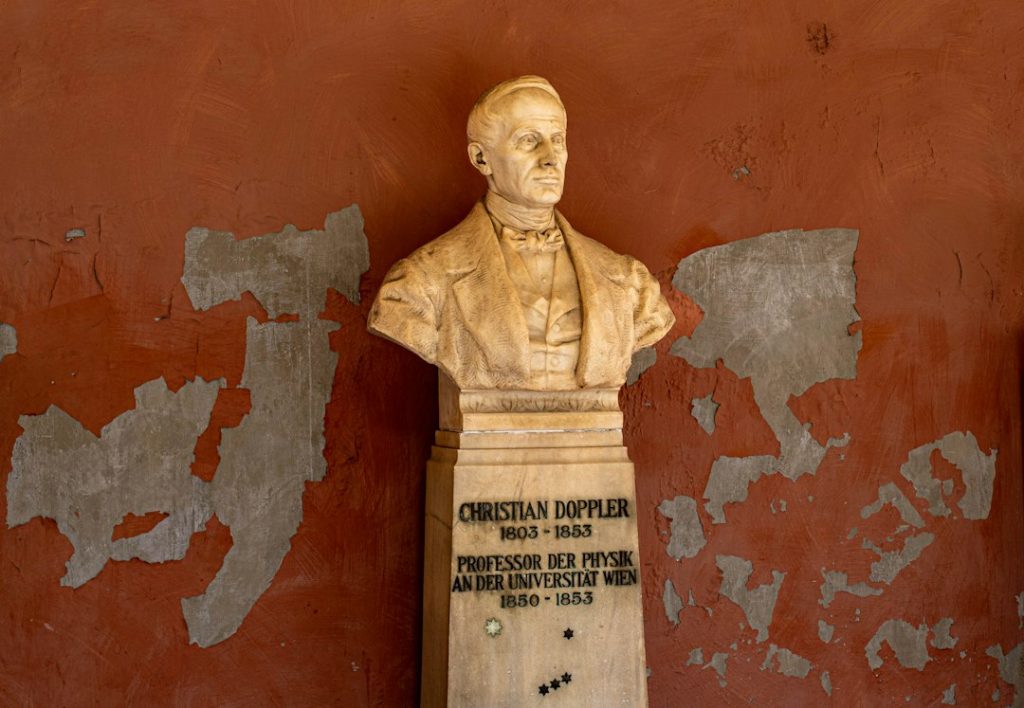
Sound doesn’t fade smoothly at the smallest scale. It jumps.
Physicists have theorized “quantum jumps,” sudden shifts between energy states, since the early 1900s. Scientists confirmed the phenomenon in trapped ions in 1986 and in photons, the particles of light, in 2007. Sound’s turn had never come. A Stanford team led by physicist Amir Safavi-Naeini has now caught it happening in real time, publishing the results in the journal Science.
The researchers built a mechanical resonator, a microscopic structure that vibrates like a tuning fork. It’s small enough that many could fit on a single computer chip. An ordinary tuning fork rings for hours. This one held its vibration for two milliseconds. That gave researchers time for hundreds of measurements. Each reading checked whether a phonon, the smallest possible unit of sound, was present or gone. The team could pinpoint the exact instant it dropped from one energy state to zero.
Safavi-Naeini, an associate professor of applied physics, said the achievement clears a path toward new quantum technologies built on sound rather than light. Study co-authors Takuma Makihara and Erik Szakiel spent months developing a way to pair the resonator with a superconducting qubit. That qubit acts as an electrical detector, reading the resonator’s state without destroying it. The same platform could eventually help correct errors in quantum computers. It might also detect proteins inside living cells, work Safavi-Naeini’s team is already pursuing with Caltech physicist Michael Roukes.
Sources: Stanford Report (full account, quotes, technical details); ScienceDaily (context on quantum jump history)
A RECORD YEAR FOR RENEWABLES
Global renewable power capacity grew by record levels last year. The finding comes from a report by the International Renewable Energy Agency (IRENA), published as world leaders gathered for the United Nations General Assembly. The world added 693 gigawatts of new renewable power in 2025, more than half the installed capacity of the entire United States.
Simon Stiell is executive secretary of the U.N. Framework Convention on Climate Change (UNFCCC). Speaking at an Industry Acceleration Summit event, he said renewables saved humanity almost half a trillion dollars in avoided fossil fuel costs last year. That figure is larger than the combined economic output of more than three-quarters of the world’s countries. “The brute power of market forces is taking hold,” Stiell said.
Renewables were the cheapest source of new electricity in most markets in 2025, the report found. If growth holds at last year’s pace, the world would reach 10.6 terawatts of renewable capacity by 2030. That falls just short of the 11.2-terawatt goal countries set at the 2023 COP28 climate talks. The gap has narrowed from the year before.
David Waskow, director of the international climate initiative at the World Resources Institute, told Agence France-Presse the good news comes with a caveat. Global energy demand keeps rising, driven in part by cooling needs in a warming world and the growth of AI and data centers. Renewables still aren’t displacing enough fossil fuel use to keep pace.
Sources: Agence France-Presse via The Manila Times (IRENA figures, Stiell and Waskow quotes)
MICHIGAN’S RECORD YEAR FOR AID
More than 166,000 Michigan students received a combined $672.5 million in state financial aid during the 2025-26 academic year. The figures come from the state’s Department of Lifelong Education, Advancement and Potential (MiLEAP).
That’s a 159.3% increase in the number of aided students compared with pre-pandemic levels. Total aid awarded has grown by more than $548 million over the same span. Early estimates suggest roughly 230,000 Michigan college students, more than half the state’s total, were eligible for at least one state-funded scholarship in 2025-26. MiLEAP says that’s the largest eligible pool since it began tracking the data.
Dr. Beverly Walker-Griffea, MiLEAP’s executive director, said financial aid can be the difference between a student enrolling and putting their education on hold. Sarah Szurpicki is deputy director of the department’s Office of Higher Education. She said expanding access matters for the state’s workforce as much as for individual students. Michigan’s goal is to get 60% of working-age adults a degree or skills certificate by 2030.
The state’s programs include the Michigan Achievement Scholarship, the Community College Guarantee, Michigan Reconnect and the Tuition Incentive Program. A recent study from the Michigan Center for Data and Analytics tracked Michigan Reconnect graduates. Their median wage rose more than $13,000 from before they enrolled. A year after graduation, they earned $16,500 more than similar workers with only a high school diploma.
Sources: Michigan Department of Lifelong Education, Advancement, and Potential (figures, quotes, program details)
“Whenever the people are well informed, they can be trusted with their own government.” — Thomas Jefferson, 1789