BEFORE OCTOBER 7: PART FOUR, OSLO TO THE BLOCKADE, 1993 TO 2007
OSLO, 1993 TO 1995
On September 9, 1993, Israel and the Palestine Liberation Organization exchanged letters of recognition. The PLO recognized Israel’s right to exist in peace and security, accepted Security Council Resolutions 242 and 338, and renounced terrorism and violence. In return, Israel recognized the PLO as the representative of the Palestinian people.
On September 13, the two signed the Declaration of Principles in Washington. Elections for a Palestinian Council were to be held within nine months of entry into force, and a transitional period would last no more than five years. Permanent status talks were to begin no later than the third year, with Jerusalem, refugees, settlements, security arrangements and borders on the agenda. All of it was to rest on Resolutions 242 and 338.
The five-year clock was to start with an Israeli withdrawal from Gaza and the Jericho area. A withdrawal agreement was due within two months. The withdrawal itself was due within four months of that agreement’s signing.
On October 1, donors meeting in Washington signaled support approaching $2 billion over five years. On December 14, the General Assembly voted 155 to 3, with one abstention, to back the Declaration as an initial step toward peace.
The Gaza and Jericho agreement was signed in Cairo on May 4, 1994. It provided for the withdrawal of Israeli troops, the deployment of Palestinian police and the return of Yasser Arafat to Gaza, and it created the Palestinian Authority.
The next stage came on September 28, 1995. The Interim Agreement dissolved the Israeli civil administration and withdrew the military government, passing powers to a Palestinian Interim Self-Governing Authority. That authority would have an 82-member Council and a head of the executive, both to be elected in January 1996. The transitional period was to run until May 1999 at the latest. On October 1, hundreds of settlers had blocked the main road to the Allenby Bridge. The Knesset approved the agreement on October 5 by 61 votes to 59. Thousands of right-wing Israelis demonstrated outside the building during the vote.
The agreement’s text divides the West Bank into three kinds of area. Article XI places populated Areas A and B under the Council’s jurisdiction in the first phase of redeployment. In Area B, Israel keeps responsibility for security. Area C is everything else. Powers there were to pass gradually to Palestinian jurisdiction, except for issues reserved to permanent status talks. Settlements and military locations stayed outside the Council’s jurisdiction. The article treats the West Bank and Gaza as a single territorial unit, though.
Oslo had opponents on both sides. In Israel, Likud and parties to its right fought it in the Knesset and in the streets. Likud itself was divided. Benjamin Netanyahu, then the opposition leader, joined protests against Rabin and compared the accord to the 1938 Munich agreement. Among Palestinians, Hamas and the Popular Front for the Liberation of Palestine rejected it. Hamas won ground in local elections and at the Islamic University of Gaza. Armed clashes between Islamists and nationalists were frequent.
On November 4, 1995, Prime Minister Yitzhak Rabin was assassinated at a pro-government rally in Tel Aviv. The assassin, Yigal Amir, opposed Rabin’s peace initiative. He believed withdrawal from the West Bank would deny Jews their biblical heritage. The Secretary-General condemned the killing as an outrageous act of terror. On November 6, the Security Council observed a minute of silence. Its president said Rabin had “paid the ultimate price for peace.”
Sources: UN Information System on the Question of Palestine: Yearbook of the United Nations 1993, Middle East (excerpts) (September 9 letters, Declaration of Principles terms, September 13 signing, withdrawal timetable); UN Information System on the Question of Palestine: General Assembly Resolution 48/58 (1993) (December 14, 1993 text); UN Information System on the Question of Palestine: Yearbook of the United Nations 1994 (excerpts) (May 4, 1994 Gaza and Jericho agreement); UN Information System on the Question of Palestine: Yearbook of the United Nations 1995, Middle East (Interim Agreement, 82-member Council, January 1996 elections, Rabin assassination, Secretary-General’s statement); Uppsala Conflict Data Program: Israeli-Palestinian Interim Agreement on the West Bank and the Gaza Strip, English text (Article XI, Areas A, B and C, settlements and military locations); UN Information System on the Question of Palestine: Security Council tribute to Yitzhak Rabin, 3589th meeting, November 6, 1995 (date of assassination, minute of silence, President’s statement); UN Digital Library: General Assembly resolution 48/58 (1993) (December 14, 1993, 155 in favor, 3 against, 1 abstention); Jewish Virtual Library: Summary of Co-Sponsors at the Conference to Support Middle East Peace (October 1, 1993 pledges); UN Information System on the Question of Palestine: Chronological Review of Events, October 1995 (Knesset vote, settler protests, demonstration); Jewish Virtual Library: The Assassination of Yitzhak Rabin (Amir’s opposition to the peace initiative); Engelsberg Ideas: How the Oslo Accords unravelled (Likud divisions, Netanyahu’s protests, Hamas and PFLP opposition)
THE OSLO YEARS ON THE GROUND
On February 25, 1994, an armed Israeli settler killed Palestinian worshippers at the Ibrahimi Mosque in Hebron. On March 18, the Security Council condemned the massacre and its aftermath, which it said took the lives of more than fifty Palestinian civilians. Israel was called on to confiscate arms to prevent illegal violence by settlers. The United States abstained on two preambular paragraphs, but the rest passed unanimously.
Attacks on Israelis followed. Hamas vowed to avenge Hebron, and a car bomb at a bus stop in Afula killed eight people on April 6, 1994. A week later a bomber killed five on a commuter bus in Hadera. Hamas claimed both. On October 19, a bomber killed 22 on a Tel Aviv bus, and Hamas claimed that one too. Then, on January 22, 1995, two bombs went off at the Beit Lid junction. Israel’s first count was 19 dead and 66 wounded. Later tallies run to 21 or 22. Islamic Jihad claimed it. By then Israel had told the United Nations that 110 Israelis had died in 49 separate incidents since the Declaration of Principles was signed.
The attacks peaked in early 1996. A bomb on a Jerusalem bus killed 26 people on February 25. Another Jerusalem bus bombing killed 19 on March 3, and the next day a bomb at Tel Aviv’s Dizengoff Center killed at least 13 and wounded 130. All three were attributed to Hamas. Leaders of 27 nations met at Sharm el-Sheikh on March 13 to discuss terrorism and peace. On March 31, the Israeli cabinet extended the closure of the West Bank and Gaza indefinitely.
Two months later, on May 29, Benjamin Netanyahu, who opposed Oslo, defeated Prime Minister Shimon Peres. The vote was 50.4 percent to 49.5, a margin of 29,457 out of about three million cast.
Palestinians were dying as well. B’Tselem counts Palestinians killed in the occupied territories, East Jerusalem included. Between September 14, 1993 and September 28, 2000, Israeli security forces killed 306 of them, and 44 were under 17. Israeli civilians killed another 61, 10 of them under 17. The worst year was 1994, with 106 killed by security forces and 38 by civilians. By 1996 those figures were 69 and 3. In 1999 they were 8 and none.
Daily life got harder too. The Secretary-General’s report for 1997 describes a general closure in place since March 1993. Periodic comprehensive closures meant a complete denial of movement on 353 calendar days through mid-June 1997. Incomes had fallen since Oslo. A UN regional commission, ESCWA, put West Bank income at $950 a year, down from $1,800, and Gaza at $600, down from $1,200. Unemployment ran 50 to 60 percent in Gaza and 24 percent in the West Bank. The violence did not stop either. On March 21, 1997, a Tel Aviv cafe bombing killed three women and wounded more than 40, Israel told the Secretary-General. The report says Hamas claimed responsibility.
Settlement continued. Peace Now counts the settler population of the West Bank, not including East Jerusalem, at 105,400 in 1992 and 198,300 in 2000. ESCWA’s report records that Netanyahu, elected in May 1996, began building where construction had been frozen, and it lists his announcement of 35 new decisions to expand settlement. On March 18, 1997, work began on a new settlement at Jebel Abu Ghneim, south of East Jerusalem. The General Assembly met in emergency session and voted 134 to 3, with 11 abstentions, for Resolution ES-10/2 on April 25. Israel, Micronesia and the United States voted no. The Special Committee to Investigate Israeli Practices later reported what it had been told: 194 settlements established, 67 of them expanded or built after the Oslo agreements.
Jerusalem drew a Council response in September 1996. On September 24, Israel opened a new entrance to a tunnel beside the Western Wall. Israeli officials described it as an extension of an existing tunnel by about 400 meters that had uncovered relics some 2,500 years old. The Arab League described the opening as an entrance under the Western Wall of the Al-Aqsa Mosque. Palestinians protested, the protests turned into fighting, and by September 27 press reports compiled by the UN counted 52 Palestinians and 14 Israelis dead. The Council voted 14 to none on September 28, with the United States abstaining. It noted the high number of Palestinian civilian deaths and injuries and called for the cessation and reversal of all acts that aggravated the situation.
Three agreements tried to restart the process. The Hebron Protocol, signed on January 17, 1997, set timetables for further Israeli redeployment in the West Bank and for resuming permanent status talks. On October 23, 1998, Yasser Arafat and Netanyahu signed the Wye River Memorandum in Washington. It provided for redeployment from 13 percent of the West Bank, set security steps for both sides and renewed talks on safe passage between the West Bank and Gaza. The Sharm el-Sheikh Memorandum followed on September 4, 1999. It set three further redeployments, the last due January 20, 2000, which would bring the additional territory transferred to 11.1 percent of the West Bank. It also provided for the release of 350 Palestinian prisoners and named September 13, 2000 as the target date for a final status agreement.
Sources: UN Information System on the Question of Palestine: Security Council Resolution 904 (1994) (March 18, 1994 text, vote, more than fifty killed); UN Information System on the Question of Palestine: Yearbook of the United Nations 1994 (excerpts) (Hebron massacre, Afula and Hadera attacks); UN Information System on the Question of Palestine: Yearbook of the United Nations 1995, Middle East (Beit Lid bombing, Israel’s report of 110 killed); UN Information System on the Question of Palestine: Chronological Review of Events Relating to the Question of Palestine, March 1996 (March 3 and 4 bombings, Sharm el-Sheikh summit, March 31 closure decision); UN Information System on the Question of Palestine: Yearbook of the United Nations 1997 (closure days, March 21 Tel Aviv attack and Hamas claim, Jebel Abu Ghneim, Resolution ES-10/2 vote, Hebron Protocol); UN Information System on the Question of Palestine: ESCWA report, Economic and social repercussions of Israeli settlements, A/52/172, July 22, 1997 (income, unemployment, settler totals, Netanyahu’s settlement decisions); UN Information System on the Question of Palestine: Security Council Resolution 1073 (1996) (September 28, 1996 text and vote); UN Information System on the Question of Palestine: Security Council press release on Resolution 1073 (Arab League letter, concern over Palestinian civilian casualties); UN Information System on the Question of Palestine: Yearbook of the United Nations 1998 (excerpts) (Wye River Memorandum terms, Special Committee’s settlement count); Peace Now: Israeli Settler Population Since 1967 (settler population by year, not counting East Jerusalem); UN Information System on the Question of Palestine: Chronological Review of Events, April 1994 (Afula and Hadera attacks, Hamas claim and stated motive); JTA: list of suicide bombings since the Declaration of Principles, 1994 to 1997 (attack dates, tolls and groups, 1994 to 1996); UN Information System on the Question of Palestine: Israel’s letter on the Tel Aviv bus attack, October 19, 1994 (22 killed, Hamas claim); UN Information System on the Question of Palestine: Israel’s letter on the Beit Lid attack, January 1995 (first count, Islamic Jihad claim); Center for Online Judaic Studies: Terror victims at Beit Lid (later count); UN Information System on the Question of Palestine: Chronological Review of Events, September 1996 (Israeli explanation of the tunnel, casualty counts); JTA: 1996 Israeli elections results (prime ministerial vote); This Day in Palestine: Israel’s Elections and Their Implications (Netanyahu’s opposition to Oslo); B’Tselem: Palestinians killed in the Occupied Territories, by year (killings by security forces and civilians, September 1993 to September 2000; totals are the sum of the yearly rows); Jewish Virtual Library: Sharm el-Sheikh Memorandum, September 1999 (redeployments, prisoners, final status target)
CAMP DAVID AND THE SECOND INTIFADA
In July 2000, President Bill Clinton hosted Israeli Prime Minister Ehud Barak and PLO Chairman Yasser Arafat at Camp David. They failed to reach a comprehensive agreement, but they committed to keep working toward one on all permanent status issues.
Accounts of what was offered differ. Robert Malley and Hussein Agha, who wrote an account of the talks, say Barak made no written offer. The proposals on the table were American. They gave Palestine sovereignty over 91 percent of the West Bank, with Israel annexing 9 percent and Palestine receiving land inside Israel equal to 1 percent. In Jerusalem, Palestine would get the Muslim and Christian quarters of the Old City and a loosely defined custodianship of the Haram al-Sharif. On refugees, the proposals offered only a satisfactory solution. The Palestinians found the ideas inadequate and made no counterproposal at the summit. Their delegation held to the 1967 line as the basis for territory and to sovereignty over the Haram.
Barak told the historian Benny Morris a different story. A proposal of 92 percent of the West Bank, he argued, could not leave the Palestinians in disconnected cantons. Arafat kept saying no and never made a counterproposal. And Israel, Barak said, could not allow even one refugee back on the basis of a right of return.
On September 28, Likud leader Ariel Sharon visited the Haram al-Sharif in East Jerusalem, the site Jews call the Temple Mount. UN documents hold two accounts of what followed. Palestine’s observer wrote on September 29 that Sharon led a group of parliamentarians on a provocative visit, and that Israeli security forces fired rubber bullets and live ammunition that day. Five Palestinian civilians were killed and about 200 wounded, he wrote. Israel’s account, in an October 2 letter, begins elsewhere. Muslim worshippers threw rocks at Jewish worshippers at the Western Wall, and the crowd then tried to force its way out through the Mughrabi gate. Israeli forces moved in to push it back and showed restraint, the letter says. Israel blamed incitement by the Palestinian Authority.
Press reports compiled by the UN recorded at least 108 dead and some 3,000 injured by mid-October. On October 7, the Council voted 14 to none, with the United States abstaining, to deplore the provocation of September 28 and the violence that followed. The text condemns acts of violence, “especially the excessive use of force against Palestinians,” notes over 80 Palestinian deaths and calls for the violence to cease. On October 16 and 17, leaders met at Sharm el-Sheikh, where Clinton announced agreement to end the violence, form a fact-finding committee and find a path back to negotiations.
On December 23, 2000, Clinton put his own parameters on the table. The Palestinian state would get 94 to 96 percent of the West Bank, with Israel annexing the rest and compensating with a swap of 1 to 3 percent. Arab areas of Jerusalem would be Palestinian and Jewish areas Israeli. The Palestinians would hold sovereignty over the Haram and Israel over the Western Wall. Refugees would have five destinations, including the Palestinian state and Israel, though Israel would not accept a right of return. Israeli forces would stay at fixed Jordan Valley sites for 36 months under an international force.
Talks resumed at Taba from January 21 to 27, 2001. A European Union envoy, Ambassador Moratinos, wrote a summary that both parties regarded as “relatively fair.” Both sides accepted the June 4, 1967 lines as the basis for the border. Israel sought to annex about 6 percent plus a 2 percent lease, and the Palestinian map offered 3.1 percent. Both accepted two capitals in Jerusalem, but the Haram and the Western Wall stayed unresolved. On refugees, the Palestinians insisted on a right of return. Israel proposed a menu of return and resettlement options, including a 15-year absorption plan that began with 25,000 people in three years. The summary lists serious gaps. No comprehensive agreement came.
The fact-finding committee reported on April 30, 2001. George Mitchell chaired it, and its members were Suleyman Demirel, Thorbjoern Jagland, Warren Rudman and Javier Solana. The committee wrote that “The Sharon visit did not cause the ‘Al-Aqsa Intifada.’” The visit was poorly timed, it added, and its effect should have been foreseen. It found no persuasive evidence that the Palestinian Authority planned the uprising, and no evidence of a deliberate Israeli plan to respond with lethal force. It recommended an unconditional end to violence and a resumption of security cooperation. It also recommended that Israel freeze all settlement activity, including natural growth.
The bombings continued. On June 1, 2001, a suicide bomber killed 20 people and wounded 90 near a Tel Aviv nightclub. On August 9, a bomber killed 15 and injured 130 in a Jerusalem restaurant. On December 1 and 2, bombs in Jerusalem and on a Haifa bus killed 26 Israelis, Israel told the Council. Hamas claimed responsibility. By March 12, 2002, the Secretary-General’s count stood at some 1,200 Palestinian and about 350 Israeli deaths since September 2000.
That same day the Council voted 14 to none, with Syria abstaining. It affirmed a vision of a region where “two States, Israel and Palestine,” live side by side within secure and recognized borders. On March 27 and 28, the Arab League summit in Beirut adopted the Arab Peace Initiative. It offered normal relations with Israel in return for full Israeli withdrawal from territories occupied since June 1967 and an independent Palestinian state with East Jerusalem as its capital.
On March 27, a bomber killed 30 people at a hotel in Netanya during the Passover holiday. Two days later Israel launched Operation Defensive Shield and reoccupied almost all the major Palestinian cities, villages and refugee camps in the West Bank.
Jenin drew the Council’s attention. On April 19 it unanimously welcomed the Secretary-General’s plan for a fact-finding team on the refugee camp. Israel raised concerns, and the Secretary-General disbanded the team on May 3. His report put Palestinian deaths in the camp at no fewer than 52, perhaps half of them civilians, and Israeli soldiers killed at 23. About 200 armed men were in the camp. Israel said 28 suicide attacks were planned and launched from Jenin, and that it took all possible measures to protect civilians. The report also records allegations of unlawful killings and disproportionate force.
Human Rights Watch reached its own count. Of 52 Palestinians killed, at least 22 were civilians and at least 27 were suspected armed fighters. Three could not be determined. It found no evidence of a massacre of hundreds, but said the evidence suggested Israeli forces committed war crimes.
By July 2007, the UN humanitarian office, drawing on B’Tselem data, counted 4,228 Palestinians and 1,024 Israelis killed since September 2000. About 69 percent of the Israelis were civilians. Among Palestinians killed by Israeli forces whose status was known, 59 percent were civilians.
Sources: UN Information System on the Question of Palestine: Yearbook of the United Nations 2000, Middle East (excerpts) (Camp David summit, Palestinian and Israeli accounts of September 28 and 29, letters A/55/432 and A/55/441); UN Information System on the Question of Palestine: Chronological Review of Events, October 2000 (casualty reports, Sharm el-Sheikh summit); UN Information System on the Question of Palestine: Security Council press release on Resolution 1322 (2000) (vote, text, over 80 Palestinian deaths); UN Information System on the Question of Palestine: Yearbook of the United Nations 2001, Middle East (June 1 and August 9 bombings); UN Information System on the Question of Palestine: Report of the Sharm el-Sheikh Fact-Finding Committee, April 30, 2001 (members, findings, recommendations); UN Information System on the Question of Palestine: Yearbook of the United Nations 2002, Middle East (excerpts) (death totals, Arab Peace Initiative, reoccupation of West Bank cities, votes on Resolutions 1402, 1403 and 1405); UN Information System on the Question of Palestine: Security Council Resolution 1397 (2002) (March 12, 2002 text and vote); UN Information System on the Question of Palestine: Security Council Resolution 1405 (2002) (April 19, 2002 text and vote); UN Information System on the Question of Palestine: Report of the Secretary-General on Jenin, A/ES-10/186 (deaths, armed men, Israeli cooperation, allegations); New York Review of Books: Robert Malley and Hussein Agha, Camp David: The Tragedy of Errors (the American proposals and the Palestinian response); Americans for Peace Now: Camp David, The Tragedy of Errors (Barak’s account placing blame on Arafat); New York Review of Books: Benny Morris, Camp David and After, an interview with Ehud Barak, June 13, 2002 (Barak’s account: 92 percent, no counterproposals, refugees); Israel Education: The Clinton Parameters, December 23, 2000 (territory, Jerusalem, refugees, security); UN Information System on the Question of Palestine: Moratinos non-paper on Taba, January 27, 2001 (non-UN document) (positions on territory, Jerusalem, refugees, gaps); UN Information System on the Question of Palestine: Israel’s letter of December 4, 2001 (December 1 and 2 attacks, Hamas claim); Jewish Virtual Library: Operation Defensive Shield (March 27 attack, operation dates, Israeli soldiers killed in Jenin); Israel Education: March 29, 2002 (Israeli cabinet approval of the operation); Human Rights Watch: Jenin, Israel’s military operations (report, May 2002) (52 dead, at least 22 civilians, at least 27 suspected armed, 3 undetermined); Human Rights Watch: Jenin, war crimes investigation needed, May 2002 (no massacre, war crimes evidence); UN Information System on the Question of Palestine: OCHA, Israeli-Palestinian fatalities since 2000 (totals through July 2007)
THE WALL AND THE WITHDRAWAL
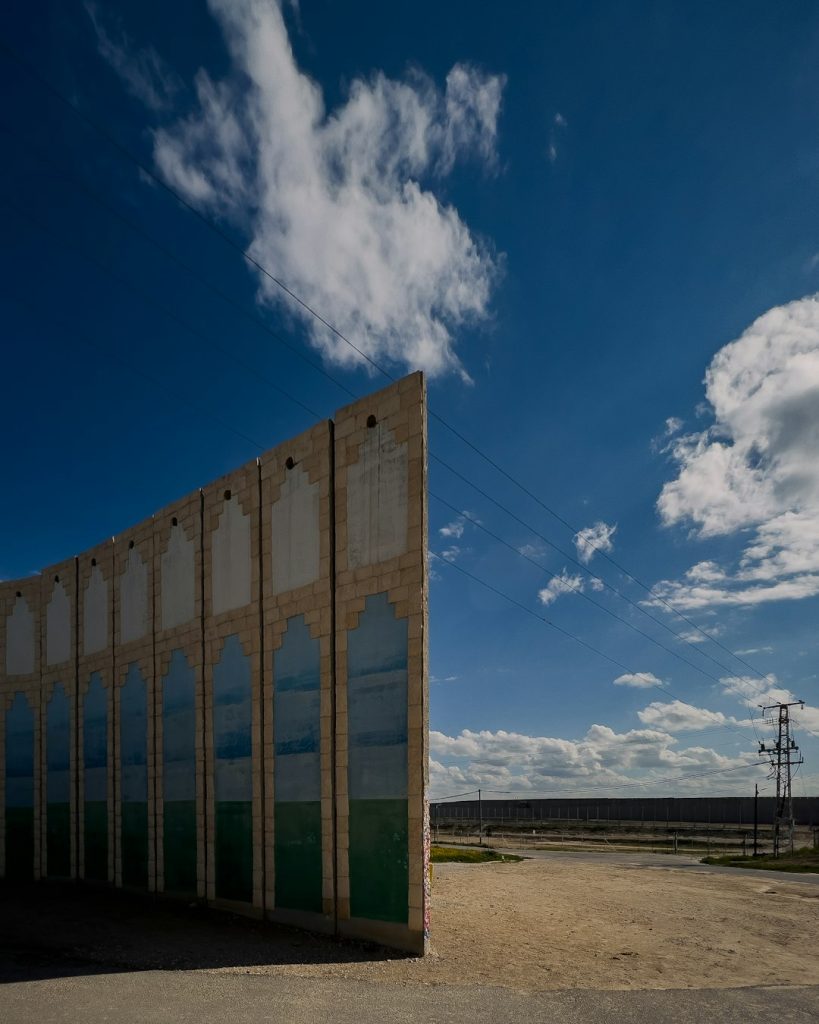
Israel’s Cabinet first approved a barrier plan in July 2001, and the International Court of Justice records the sequence in its 2004 advisory opinion. On April 14, 2002, the Cabinet decided on 80 kilometers of what Israel calls a “security fence.” On June 23 it approved a continuous fence in the West Bank, and on October 1, 2003, a full route. The Secretary-General’s report described one continuous line of 720 kilometers.
Israel’s stated purpose was to halt infiltration. In a case brought by Palestinian villagers, the Israeli High Court of Justice recorded the State’s figures. Between July 2000 and April 2004, the State said, there were 780 attacks inside Israel and 8,200 in the West Bank. They killed 900 Israeli citizens.
The route is the dispute. The Secretary-General’s report, as cited by the ICJ, puts about 975 square kilometers of the West Bank, 16.6 percent, between the Green Line and the wall. That area is home to 237,000 Palestinians. About 320,000 Israeli settlers, 178,000 of them in East Jerusalem, would live on the same side as Israel. In October 2003, Israel declared the area between the line and the wall a closed area, so residents needed permits and Israeli citizens did not.
On June 30, 2004, the Israeli High Court ruled on the route near Beit Sourik. The Court accepted that military and security considerations had driven the barrier, and that the military commander could seize land for military purposes. It still found the route disproportionate and voided seven of eight seizure orders in whole or in part.
The ICJ gave its opinion on July 9, 2004, on a request the General Assembly made on December 8, 2003. By 14 votes to one, with Judge Buergenthal voting no, the Court held that the wall, built inside the occupied territory, was contrary to international law. The Fourth Geneva Convention applied in the territories Israel occupied in 1967, it found, and Israel’s settlements breach Article 49, paragraph 6. It was not convinced that the specific route was necessary for Israel’s security aims. It also rejected Israel’s claim of self-defense under Article 51, because Israel does not say the attacks come from another state and the threat originates inside the occupied territory.
The Court also addressed the violence against Israelis. Israel faces “numerous indiscriminate and deadly acts of violence” against its civilians, the Court wrote. Israel has the right and the duty to respond, but the measures it takes must conform to international law.
Then the Court set out the consequences for the wall. Israel must stop building it and dismantle the structure inside occupied territory. Israel must make reparation for the damage the construction caused. And every other state is obliged not to recognize the illegal situation the construction created.
Israel revised the route in February 2005. The cabinet approved the change on February 20 and the Defense Ministry published a map, which the UN humanitarian office used to calculate a barrier of 670 kilometers. About 10.1 percent of the West Bank, East Jerusalem included, would lie between the barrier and the Green Line, or 6.8 percent without two sections still pending. The office counted 49,400 Palestinians in that area, not counting East Jerusalem, and about 170,000 Israeli settlers in 56 settlements.
Israel meanwhile planned to leave Gaza. The Congressional Research Service reports two reasons from Prime Minister Ariel Sharon. The first was security. In December 2003, Sharon said Israel would pull back on its own if the Palestinian Authority did not take action against groups such as Hamas, which he called terrorists, and meet its commitments under the Road Map, the framework for a two-state solution. The second was demographic. He wanted to preserve Israel’s Jewish and democratic identity. The Knesset approved the plan on October 26, 2004, by 67 votes to 45 with 7 abstentions, and passed the implementation law on February 16, 2005, by 59 votes to 40. Between August 17 and 23, 2005, Israel evacuated 21 Gaza settlements and about 8,500 settlers, along with four small settlements in the northern West Bank. Its forces finished leaving Gaza on September 12.
Israel kept control of the perimeter. Under the plan it would guard Gaza’s land perimeter, hold exclusive authority over its airspace and act at sea. The UN’s November 2005 bulletin records Israel in control of the borders, including the territorial sea and airspace. On November 15, Israel and the Palestinian Authority signed the Agreement on Movement and Access. The Rafah crossing with Egypt opened on November 25.
Goods moved far less freely than the agreement promised. By April 26, 2006, the UN humanitarian office counted Karni, Gaza’s main goods crossing, closed on 55 of the first 116 days of the year, or 47 percent. In all of 2005 it had been closed 18 percent of the time. The agreement set a target of 150 truckloads of exports a day by the end of 2005, but in April 2006 about six or seven left Gaza daily. Between March 28 and April 22, the same office counted 126 rockets fired from Gaza toward Israel and 4,144 Israeli artillery shells fired into Gaza.
On January 25, 2006, Palestinians voted for a new legislature, with 77 percent turnout. Hamas won 44.45 percent of the national list vote and 74 of 132 seats. Fatah won 41.43 percent and 45 seats, and others took 13. About 1,000 international observers called the campaign relatively calm. On January 27, President Bush said the United States would not deal with Hamas unless it changed course. On January 30, the Middle East Quartet set its conditions. The Quartet is made up of the United Nations, the European Union, Russia and the United States. Any future Palestinian government must commit to non-violence, recognition of Israel and acceptance of previous agreements, including the Road Map. The Quartet also said settlement expansion must stop and voiced concern about the route of the barrier. The United States and the European Union halted the transfer of aid funds to the Palestinian Authority, and in March the European Union urged Hamas to give up violence and recognize Israel.
Sources: UN General Assembly: Advisory Opinion of the International Court of Justice, Legal Consequences of the Construction of a Wall in the Occupied Palestinian Territory, A/ES-10/273, July 13, 2004 (barrier chronology, route, closed area, Court’s findings, dispositif and vote, Israel’s Article 51 argument); Beit Sourik Village Council v. The Government of Israel, HCJ 2056/04, Israeli High Court of Justice, June 30, 2004 (Max Planck Encyclopedia of Comparative Constitutional Law copy) (State’s attack figures, security purpose, commander’s authority, seizure orders voided); Congressional Research Service: Israel’s Disengagement from Gaza (RS22000) (Sharon’s reasons, the Road Map as a two-state framework, settlements and settlers evacuated, dates, retained control); UN Information System on the Question of Palestine: DPR Bulletin, November 2005 (Agreement on Movement and Access, Rafah opening, Israeli control of borders); UN Information System on the Question of Palestine: DPR Bulletin, January 2006 (turnout, seat totals, observers, Quartet statement and its four members); UN Information System on the Question of Palestine: OCHA barrier projections, February 2005 (revised route, area and population figures, February 20 cabinet approval); Jewish Virtual Library: Knesset approves disengagement plan, October 2004 (67 to 45 vote); Jewish Virtual Library: Knesset approves disengagement implementation law, February 2005 (59 to 40 vote); UN Information System on the Question of Palestine: OCHA Gaza Strip situation report, April 26, 2006 (Karni closures, exports target); UN Information System on the Question of Palestine: OCHA Gaza Strip situation report, May 3, 2006 (rockets and artillery, March 28 to April 22); IEMed: The Year of the Victory of Hamas (list vote shares, seats, turnout, aid halt, European Union demands); Al Jazeera: Bush warns Hamas of aid freeze, January 28, 2006 (Bush statement)
HAMAS, FATAH AND THE BLOCKADE
On June 25, 2006, Palestinian fighters attacked inside Israel, killing two Israeli soldiers and capturing Corporal Gilad Shalit. Three days later Israel launched Operation Summer Rains, bombarding bridges, roads and the only power station in Gaza. The UN counted about $15 million in damage from the strike on the power plant. Israel also arrested 64 Hamas officials, including eight Palestinian Authority ministers. By August 7, the UN counted 184 Palestinians killed, 42 of them children, and 650 injured. One Israeli soldier was killed and 25 Israelis were injured. For all of 2006, B’Tselem counts 660 Palestinians killed by the Israeli army and 23 Israelis killed by Palestinians.
Rocket fire from Gaza continued. The Intelligence and Terrorism Information Center, an Israeli intelligence-affiliated group, counts 2,383 rocket hits on Israel from 2000 to November 2007. Its tally of Israeli civilians killed by rockets since 2001 is ten, nine of them in Sderot, with 433 wounded. Sderot absorbed 45 percent of the rockets that landed in inhabited areas.
Hamas and Fatah agreed on a deal in Mecca on February 8, 2007, committing both sides to a national unity government and an end to Palestinian bloodshed. The government took office on March 17 and did not hold. Between June 9 and 15, Hamas’s military wing and its Executive Force seized Gaza. UN Special Coordinator Michael Williams briefed the Security Council on June 20. Hamas operations were well planned and executed, he told it, with summary executions and attacks on hospitals. In the past month, 218 Palestinians had been killed and 910 injured in internal violence. Human Rights Watch found that Hamas and Fatah forces alike summarily executed captives and killed people who were not fighting. It documented Hamas fighters throwing a bound man from a 15-story building in Gaza City, and Fatah gunmen throwing a Hamas-supporting preacher from another high-rise.
On June 14, President Mahmoud Abbas dismissed Prime Minister Ismail Haniyeh, dissolved the government and declared a 30-day state of emergency. Salam Fayyad became prime minister of an emergency government of 11 independents. Williams told the Council that the United States and the European Union would resume direct assistance to the Palestinian Authority. He also warned that commercial stocks of flour and rice would begin to run out in three weeks unless imports resumed.
The Karni and Rafah crossings stayed closed. Under-Secretary-General Lynn Pascoe told the Council on September 20 that they had been shut since the Hamas takeover in mid-June. Ten rockets were fired at Sderot in the first two days of the school year. On September 11, an Islamic Jihad rocket struck an Israeli army base at Zikim and injured 44 soldiers. In the reporting period, 20 Palestinians were killed and 89 injured.
Israel’s Security Cabinet adopted its decision on Gaza on September 19. The text calls Hamas a terrorist organization that had taken control of Gaza and “turned it into hostile territory,” and cites continued rocket fire at Sderot and other communities. The cabinet decided on continued military operations and on sanctions: restricted passage of goods, reduced fuel and electricity, and limits on the movement of people. The sanctions would proceed after a legal examination, with regard to humanitarian aspects and the intention to avoid a humanitarian crisis.
Secretary-General Ban Ki-moon responded the same day. Interrupting electricity and fuel, he said, contravened Israel’s obligations under international humanitarian and human rights law toward civilians. He called the rocket fire from Gaza unacceptable and added “I understand Israel’s security concerns over this matter.” He noted 1.4 million people live in Gaza. The Bureau of the UN Committee on the Exercise of the Inalienable Rights of the Palestinian People called the decision collective punishment.
The Secretary-General’s report put numbers on the closure. Eighty percent of Gaza’s population relied on UN food assistance. About 90 percent of industrial capacity had been suspended, and more than 70,000 workers had been laid off since June. Foodstuffs entered at about 27 fewer truckloads a day in August than in July.
Sources: Al Jazeera: Timeline, Hamas in Power (Shalit capture, Operation Summer Rains, Mecca agreement, unity government); Intelligence and Terrorism Information Center: Rocket threat from the Gaza Strip, 2000-2007 (rocket hits, civilian deaths and wounded, Sderot share); UN Information System on the Question of Palestine: Security Council verbatim record, 5701st meeting, June 20, 2007 (June 9 to 15 takeover, Abbas decisions, casualty count, food stocks); UN Information System on the Question of Palestine: DPR Bulletin, September 2007 (Pascoe briefing, closures, rocket incidents, Secretary-General’s report figures, Committee statement); UN Information System on the Question of Palestine: Israeli Security Cabinet declares Gaza hostile territory, September 19, 2007 (decision text, rationale, measures); UN Information System on the Question of Palestine: Statement by the Secretary-General on Gaza, September 19, 2007 (obligations, rocket fire, 1.4 million); UN Information System on the Question of Palestine: OCHA Gaza Strip situation report, August 7, 2006 (Summer Rains casualties, power plant damage); The Daily Star: Israeli army killed 660 Palestinians in 2006, B’Tselem (2006 totals); UN Information System on the Question of Palestine: The Mecca Agreement (non-UN document) (unity government, ban on bloodshed); Human Rights Watch: Gaza, armed Palestinian groups commit grave crimes, June 12, 2007 (executions and killings by both sides)
Tomorrow: Part Five brings the story to the present. It starts with the Gaza wars of 2008 to 2021, then turns to the West Bank and Jerusalem. It covers October 7, 2023, and the war that followed. It ends with the legal record, and with ROTWR’s own statement on the war in Gaza.