ROTWR SPECIAL REPORT: BEFORE OCTOBER 7 – Part Five
2008 TO THE PRESENT
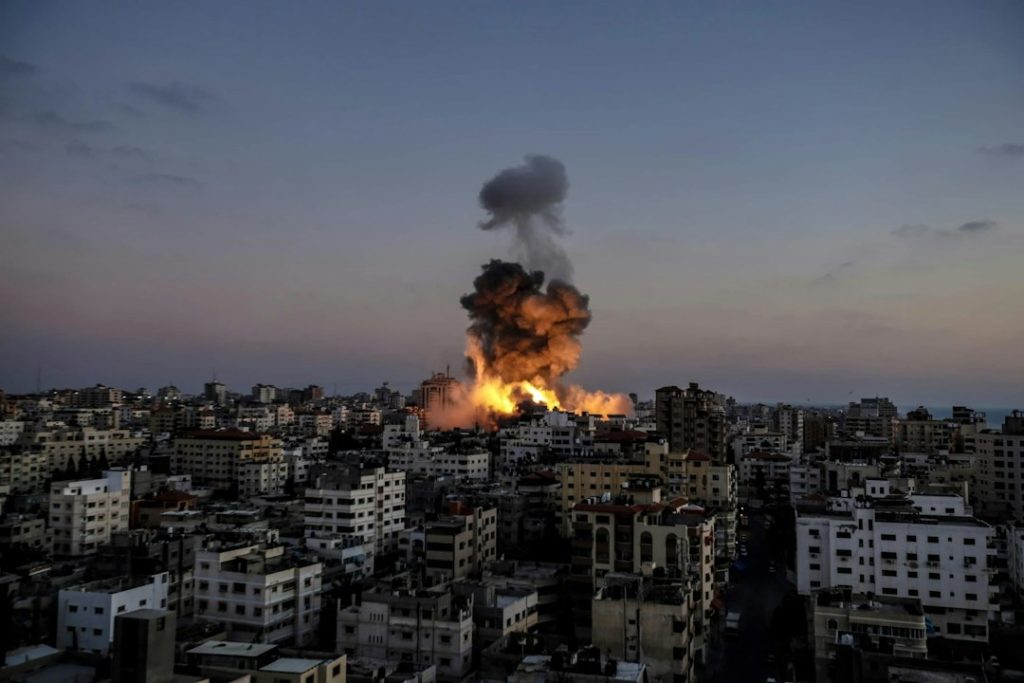
THE GAZA WARS, 2008 TO 2021
Israel’s operation in Gaza ran from December 27, 2008 to January 18, 2009. The UN Office for the Coordination of Humanitarian Affairs, known as OCHA, recorded the toll in its mid-year review. More than 1,300 Palestinians were killed, 300 of them children, and over 5,000 were injured. Thirteen Israelis were killed, three of them civilians, and 518 were injured, 182 of them civilians. Tens of thousands of houses and buildings were destroyed or damaged.
On January 8, 2009, the Security Council adopted Resolution 1860 by 14 votes to none, with the United States abstaining. It called for an “immediate, durable and fully respected ceasefire” leading to full withdrawal of Israeli forces. It also called for unimpeded humanitarian aid, the sustained reopening of crossings, and action by states to prevent illicit arms trafficking into Gaza.
A UN Human Rights Council fact-finding mission produced what became known as the Goldstone Report. The mission said more than 1,400 people were killed in the operation. It concluded that Israel committed war crimes and possibly crimes against humanity. Palestinian rocket and mortar fire also constituted war crimes, it found, and might amount to crimes against humanity. If credible investigations did not follow within six months, it recommended referral to the International Criminal Court. Israel rejected the report. It said the mission had a “one-sided mandate” and that Hamas operated within and behind the civilian population.
The next large round came in November 2012. The UN High Commissioner for Human Rights reports that 174 Palestinians were killed from November 14 to 21, 101 of them civilians and 33 of them children. Three Israeli soldiers and four Israeli civilians were killed. Palestinian armed groups fired over 1,500 rockets at Israel.
In 2014 Israel launched Operation Protective Edge. Israel’s military advocate general’s office says the operation responded to increasing rocket and mortar fire from Gaza in June and early July, and that Israeli forces neutralized 32 cross-border assault tunnels. The UN independent commission of inquiry counted 2,251 Palestinians killed, 1,462 of them civilians, including 551 children and 299 women. It counted 67 Israelis killed, six of them civilians. The commission found that Israeli attacks on residential buildings killed entire families and that ground operations levelled urban neighborhoods. It also found that Palestinian armed groups fired rockets and mortars toward Israel and used attack tunnels. Impunity prevailed for Israeli violations, it said, and Palestinian investigations were woefully inadequate.
From March 30 to December 31, 2018, Palestinians in Gaza held demonstrations at the border fence. A UN commission of inquiry counted 189 Palestinians killed at the demonstration sites, 183 of them by live ammunition. The dead included 34 children, two journalists and three paramedics. Live ammunition wounded 6,103 people and led to 122 amputations. One Israeli soldier was killed, on July 20, outside the protest sites. The commission found that live ammunition was used unlawfully against demonstrators except in two incidents, and that Hamas leaders encouraged or defended the use of incendiary kites and balloons. Israel’s position was that the demonstrations posed security threats linked to armed groups. It defended rules permitting lethal force against main inciters.
OCHA called the escalation of May 10 to 21, 2021, the gravest since 2014. It reports, citing the UN human rights office, that 256 Palestinians were killed in Gaza, including 66 children and 40 women. In Israel, 13 people were killed, including two children and six women.
Sources UNISPAL | UNISPAL | UNISPAL | Jewish Virtual Library | UNISPAL | UNISPAL | IDF Military Advocate General’s Corps | right-docs.org | OCHA
THE WEST BANK AND JERUSALEM
On June 14, 2009, Prime Minister Benjamin Netanyahu gave a speech at Bar-Ilan University in which he accepted a Palestinian state, on conditions. The territory under Palestinian control must be demilitarized. Palestinians must recognize Israel as the state of the Jewish people. Jerusalem must remain Israel’s united capital, and the refugee problem must be solved outside Israel’s borders. On settlements, he said Israel had “no intention of building new settlements or of expropriating additional land for existing settlements.” He added that residents needed to live normal lives.
Interior Ministry figures show what followed. The West Bank settler population, excluding East Jerusalem, rose by more than 50,000, or 18 percent, from early 2009 to the end of 2011. It stood above 342,000. The figures exclude about 200,000 Jews in East Jerusalem.
On November 29, 2012, the General Assembly voted 138 to 9, with 41 abstentions, to give Palestine non-member observer State status. The resolution kept the PLO’s role as the representative of the Palestinian people.
On December 23, 2016, the Security Council adopted Resolution 2334 by 14 votes to none, with the United States abstaining. The resolution said Israeli settlements in territory occupied since 1967, including East Jerusalem, have no legal validity and are a flagrant violation of international law. It demanded that Israel immediately and completely cease settlement activities. The Council would not recognize changes to the June 4, 1967 lines, it said, other than those agreed by the parties. It also called for steps to prevent violence against civilians, including terror, and asked both sides to refrain from provocative actions and incitement. In Council debates in 2016, Israel’s representative said the Palestinians had refused to come to the negotiating table. He asked the Council to call on them to condemn terror attacks.
On December 21, 2017, the General Assembly adopted Resolution ES-10/19 on Jerusalem by 128 votes to 9, with 35 abstentions. Guatemala, Honduras, Israel, the Marshall Islands, Micronesia, Nauru, Palau, Togo and the United States voted no. The resolution says decisions that purport to alter the character, status or demographic composition of Jerusalem have no legal effect, are null and void and must be rescinded.
The Israeli government that took office in December 2022 adopted guidelines on the territories. They state that the Jewish people “has an exclusive and inalienable right to all parts of the Land of Israel.” They also envision settlement in Judea and Samaria, the Israeli government’s name for the West Bank.
The European Union cites Israel’s Central Bureau of Statistics for 478,600 settlers in the West Bank and around 236,000 in East Jerusalem. Its report counts 146 settlements and 191 outposts in the West Bank. Citing Peace Now and Ir Amim, it counts 30,682 housing units advanced in 2023, 18,333 of them in East Jerusalem. The EU’s position is that settlements are illegal under international law.
The Secretary-General’s report of September 27, 2023 covers June 15 to September 19. In that period it records 68 Palestinians killed, 18 of them children, and 2,830 injured. It records 10 Israelis killed, including two children and three security personnel, and 122 injured. It counts 238 structures demolished or seized, displacing 183 people, and 600 settler attacks on Palestinians since the start of the year. It reports 1,264 Palestinians in administrative detention, which means detention without charge or trial, the highest number in over a decade. OCHA reports an average of three settler attacks a day in 2023, up from two a day in 2022.
Sources Al Jazeera | Times of Israel | Jewish Virtual Library | UNISPAL | UNISPAL | un-project.org | Jewish News Syndicate | European Union (via UNISPAL) | UNISPAL | OCHA
OCTOBER 7, 2023
On October 7, 2023, Hamas and other Palestinian armed groups attacked southern Israel from Gaza. The UN Human Rights Council’s Commission of Inquiry says at least 1,000 attackers crossed into Israel. It lists 24 localities, along with military bases and public spaces, and cites an Israeli Army spokesperson announcing that 2,200 rockets and mortars had been fired by 10:26 that morning.
The Commission says members of the armed groups killed more than 1,200 people. At least 809 were civilians, including at least 280 women and 40 children. The dead included 314 Israeli military personnel and 68 foreign nationals. At the Nova music festival, 364 people were killed. The Commission also describes attacks on public shelters along Road 232.
Israel’s own count moved. On November 10, Foreign Ministry spokesperson Lior Haiat told journalists the official toll was around 1,200. The earlier figure had been about 1,400. Israeli media attributed the change to remains that were first misidentified. Haiat said it was an updated estimate and not final.
The Commission says at least 252 people were abducted to Gaza, including 90 women and 36 children. It concluded that Hamas and other armed groups were responsible for war crimes, including intentionally directing attacks against civilians, murder, torture, outrages upon personal dignity and taking hostages. On sexual violence, it identified patterns indicative of it, perpetrated in similar ways in several locations, primarily against Israeli women. It noted the absence of forensic evidence, and said Israeli authorities had focused on identifying and burying the large number of bodies. It also said it had not met any survivors despite its attempts, and that some survivors were receiving treatment and were not ready to speak with outside parties. Israel’s representative said the report failed to address the testimony of released hostages.
Hamas military commander Mohammed Deif announced the operation in a recorded statement that day. “They attacked and desecrated Al-Aqsa, and we had previously warned them,” he said. He called on Palestinians in the Negev, the Galilee and the Triangle, regions inside Israel, to confront Israel. He told them to take up guns, and knives if they had no guns.
On January 21, 2024, Hamas published a document titled “Our Narrative: Operation Al-Aqsa Flood.” It calls the attack a “necessary step and a natural reaction” to Israeli policies. The document says Hamas fighters targeted only soldiers and armed people. It describes civilian deaths as accidental and denies that Hamas fighters attacked civilians.
Israel’s response began within two days. On October 9, Defense Minister Yoav Gallant announced a complete siege of Gaza. “No electricity, no food, no water, no gas,” he said. Secretary-General Antonio Guterres said he was deeply distressed by the decision, and that the humanitarian situation had been dire before the hostilities.
On October 13, the Israeli military told UN staff that the population north of Wadi Gaza, which cuts across the middle of the Strip, should move south within 24 hours. The UN put that at about 1.1 million people and appealed for the order to be rescinded. A UN spokesperson cited the Palestinian Ministry of Health for 447 children killed in Gaza by that date, and said the real number was likely higher.
On October 24, Guterres addressed the Security Council. He said he had unequivocally condemned the October 7 acts of terror, and that the Hamas attacks “did not happen in a vacuum.” He described 56 years of occupation, settlement expansion, displacement and home demolitions. The grievances of the Palestinian people could not justify the attacks, he said, and the attacks could not justify collective punishment of the Palestinian people. Israel’s ambassador to the UN, Gilad Erdan, said the remarks expressed understanding for terrorism. He called for Guterres to resign. The next day, Guterres said he was shocked by the misrepresentations of his statement, and that it was the opposite of justifying terror.
Sources UNISPAL | UN Human Rights Council (via UNISPAL) | NPR via Marfa Public Radio | IANS | Anadolu Agency | The Jewish Chronicle | Gulf News | Anadolu Agency | UN Geneva | Poder360 | Ynet | Coventry City of Peace | Malay Mail
THE WAR IN GAZA
On October 27, 2023, Israel expanded its ground operation in Gaza. The Israeli military said armored and infantry forces were fighting several Hamas squads in northern Gaza, while a communications blackout largely cut off Gaza’s 2.2 million residents. Prime Minister Benjamin Netanyahu said the war would be “long and difficult.” He told families of the hostages that more pressure on Hamas could improve the chances of their release.
A ceasefire took effect on January 19, 2025. Its first phase ran 42 days and provided for the release of 33 hostages and hundreds of Palestinian prisoners, with Israeli forces pulling back into a buffer zone. Gaza’s Health Ministry then put the war’s toll at more than 46,000 Palestinians killed.
On March 18, 2025, Israel resumed airstrikes across Gaza, and the Health Ministry counted at least 404 killed that day. Netanyahu’s office said Israel would “act against Hamas with increasing military strength.” Hamas refused Israel’s demand to change the agreement and said both sides should follow the original deal.
On May 19, 2025, Israel agreed to allow limited aid into Gaza after what the UN’s relief chief described as 11 weeks of complete blockade. On August 22, the Integrated Food Security Phase Classification, known as the IPC, confirmed famine in Gaza Governorate. It estimated that 514,000 people, nearly a quarter of Gaza’s population, were experiencing famine, and projected that the number would reach 641,000 by September 30. The analysis was based on phone interviews conducted between July 30 and August 4.
Israel rejected the finding. COGAT, the Israeli defense ministry unit that coordinates civilian affairs in the territories, said the report relied on “biased and self-interested sources originating from Hamas” and that food prices had fallen in recent weeks. The Foreign Ministry said there is no famine in Gaza.
A later IPC analysis, issued on December 19, 2025, said famine conditions had been pushed back, though gains remained fragile, OCHA reports. It projected about 1.6 million people in Crisis or worse on the IPC’s scale of hunger severity through April 2026. About 571,000 were in Emergency conditions and about 1,900 in Catastrophe.
OCHA reports that as of February 12, 2026, the Gaza Ministry of Health counted 72,045 Palestinians killed and 171,686 injured. The Ministry added 259 of those deaths retroactively between January 23 and February 6. In May 2024 the UN clarified how the ministry keeps its tallies: one total, and a smaller list of fully identified dead. As of April 30, 2024, that was 34,622 total and 24,686 identified.
In January 2026, a senior Israeli military official, speaking anonymously, put the toll at about 71,000 and said he had not determined the split between combatants and civilians. The military then said the details published “do not reflect official IDF data.” A study in The Lancet estimated 64,260 deaths from traumatic injury through June 30, 2024. The Health Ministry had reported 37,877 for that date.
On the Israeli side, OCHA counted 471 soldiers killed and 2,992 injured as of December 17, 2025, since the ground operation began.
An OCHA official said in July 2024 that about 90 percent of Gaza’s population had been displaced at least once, some of them up to ten times. In February 2026, OCHA estimated that 1.4 million of 2.1 million people lived in about 1,000 displacement sites. In September 2026, it counted 451 sites at high risk of flooding, hosting about 464,402 people.
A new ceasefire took effect on October 10, 2025, the Israeli military said. The first phase called for the release of all 20 living hostages, about 250 Palestinian prisoners and 1,700 detainees from Gaza. On November 17, the Security Council adopted Resolution 2803 by 13 votes to none, with two abstentions. It endorsed the Comprehensive Plan to End the Gaza Conflict and authorized a Board of Peace and a temporary International Stabilization Force.
In September 2026, the UN Special Coordinator’s office reported on where the ceasefire stands. The truce ended large-scale hostilities and brought the return of all remaining Israeli hostages and their remains, it says. Violence has not stopped. Around two-thirds of Gaza remains inaccessible or under severe restrictions. The Palestinian technocratic committee has not yet entered Gaza, the Stabilization Force has not deployed, and the UN’s 2026 Flash Appeal, its emergency funding request, is 40 percent funded.
OCHA’s report of September 25, 2026 cites the Ministry of Health for 1,402 Palestinians killed and 4,881 injured since the ceasefire. Food assistance covers about 50 percent of minimum caloric needs for the households it reaches.
Sources Axios | Boston.com | PBS NewsHour | United Nations | Times of Israel | UNISPAL | UNISPAL | UNISPAL | CNN via KVIA | Jewish Weekly | Al Jazeera | Gulf Times | East County Magazine | UN Security Council Resolutions (unscr.com) | UNISPAL | OCHA
THE LEGAL RECORD
On July 19, 2024, the International Court of Justice, the UN’s principal judicial organ, gave an advisory opinion on Israel’s policies and practices in the occupied Palestinian territory. By 11 votes to 4, the Court held that Israel’s continued presence there is unlawful and that Israel must end it as rapidly as possible.
The Court found that settlements in the West Bank and East Jerusalem have been established and maintained in violation of international law, and that Israel’s policies amount to annexation of large parts of the territory. It found “systemic discrimination based on, inter alia, race, religion or ethnic origin.” It also found violations of Article 3 of the Convention on the Elimination of All Forms of Racial Discrimination, the article on racial segregation and apartheid. By 14 votes to one, it held that Israel must stop new settlement activity, evacuate settlers and make reparation. By 12 votes to three, it held that other states must not recognize the situation or aid it.
Prime Minister Benjamin Netanyahu responded the same day. “No absurd opinion in the Hague can deny this historical truth,” he said. Foreign Ministry spokesperson Oren Marmorstein called the opinion one-sided, saying it ignored the historical rights of the Jewish people and was detached from present reality. On September 18, 2024, the General Assembly adopted a resolution on the opinion’s legal consequences by 124 votes to 14, with 43 abstentions.
On October 22, 2025, the Court gave a second opinion, on Israel’s obligations toward the UN and relief agencies. It found that the population of Gaza was inadequately supplied. Israel must agree to and facilitate relief schemes provided by the UN, including UNRWA, the UN agency for Palestinian refugees, it held. An occupying power cannot invoke security to suspend all humanitarian activity. The Court also recalled the prohibition on starving a civilian population as a method of warfare.
South Africa filed its case under the Genocide Convention on December 29, 2023. On January 26, 2024, the Court indicated provisional measures, which are emergency orders issued while a case is pending. By 15 votes to two, it ordered Israel to take all measures within its power to prevent acts within the scope of Article II of the Convention, which defines genocide. It also ordered Israel to prevent and punish incitement to genocide, to enable urgently needed humanitarian assistance, and to preserve evidence and report within a month. The Court did not rule that genocide has occurred.
On March 28, 2024, the Court modified the measures. Palestinians in Gaza, it observed, were no longer facing only a risk of famine. It said “famine is setting in.” By a unanimous vote, it ordered Israel to ensure the unhindered provision of humanitarian assistance at scale, in cooperation with the UN. It also ordered Israel’s military not to violate the rights of Palestinians under the Convention.
On May 24, 2024, the Court ordered Israel to halt its offensive in the Rafah Governorate, and any other action there that may inflict on Palestinians conditions of life that could bring about their physical destruction in whole or in part. It ordered Israel to keep the Rafah crossing with Egypt open and to allow UN-mandated investigators into Gaza. Each vote was 13 to two. The Court found a further risk of irreparable prejudice to the plausible rights claimed by South Africa, and a “real and imminent risk” that the prejudice would occur before a final decision.
Israel’s deadline to file its response was extended twice. It moved from July 28, 2025 to January 12, 2026 and then to March 12, 2026. Israel filed its Counter-Memorial, its formal written response, on March 12, 2026. It includes objections to the Court’s jurisdiction and asks for South Africa’s allegations to be dismissed.
On May 21, 2026, the Court fixed the next deadlines. South Africa’s Reply is due November 22, 2027, and Israel’s Rejoinder May 22, 2029. Written pleadings will not finish until then, so a ruling on the merits is years away. South Africa’s Presidency said “self-defence is not a defence to genocide, there is none.” It also said Israel remains bound by the three provisional measures orders.
On November 21, 2024, the International Criminal Court issued arrest warrants for Netanyahu and former Defense Minister Yoav Gallant. The judges found reasonable grounds to believe each bears criminal responsibility for the war crime of starvation as a method of warfare, and for the crimes against humanity of murder, persecution and other inhumane acts. The period covered runs from October 8, 2023 to May 20, 2024. The Court also issued a warrant for Hamas military commander Mohammed Deif, covering crimes against humanity and war crimes including murder, extermination, torture, rape and hostage-taking. The Court said his status was unknown as of November 15, and Israel had said he was killed in a July airstrike.
Netanyahu called the warrants antisemitic. In April 2025, the Appeals Chamber ordered the Pre-Trial Chamber to review Israel’s objections to jurisdiction. On July 16, the judges rejected Israel’s request to withdraw the warrants, saying they stay in place until the jurisdiction challenge is decided. On December 15, 2025, the Appeals Chamber ruled that the cases are admissible, and the warrants remain in force. Two motions remain unresolved. One challenges the legal status of Palestine and the Court’s jurisdiction over Israeli nationals. The other asks to disqualify Prosecutor Karim Khan.
On December 4, 2024, Amnesty International concluded that Israel has committed and is continuing to commit genocide against Palestinians in Gaza. It found three of the prohibited acts: killing, causing serious bodily or mental harm, and inflicting conditions of life calculated to destroy the group. Genocidal intent was the only reasonable conclusion, it said. Amnesty said it shared its findings with Israeli authorities and received no substantive response before publication.
On September 16, 2025, the UN Independent International Commission of Inquiry on the Occupied Palestinian Territory issued its findings, concluding that Israel has committed genocide against Palestinians in the Gaza Strip. It found four of the five acts listed in the Genocide Convention: killing, causing serious bodily or mental harm, inflicting conditions of life calculated to destroy the group, and imposing measures to prevent births. The Commission applied the ICJ’s test that genocidal intent must be the only reasonable inference. It found that Netanyahu, President Isaac Herzog and Gallant incited genocide.
Israel’s Foreign Ministry rejected the report, calling it “distorted and false” and asking for the Commission to be abolished. It said the report relies on Hamas falsehoods repeated by others, and accused the investigators of acting as Hamas proxies.
Sources International Court of Justice | Algemeiner | UN Digital Library | UNISPAL | International Court of Justice | International Court of Justice | Anadolu Agency | Daily Maverick | International Court of Justice | South African Government News Agency | UN News | Times of Israel | Al-Monitor | Just Security | UNISPAL | International Court of Justice | International Court of Justice | Amnesty International USA | Channels TV
CLOSING STATEMENT
ROTWR calls the war in Gaza a genocide. That is not a conclusion reached lightly, and it is not original to this series. It rests on the work of people with far more expertise than ROTWR has. The UN Independent International Commission of Inquiry on the Occupied Palestinian Territory, chaired by Navi Pillay, concluded in September 2025 that Israel has committed genocide in Gaza. Amnesty International reached the same conclusion in December 2024. ROTWR’s finding follows theirs, tested against the record set out in this series. It is not a ruling of any court.
The finding rests on what the evidence shows against the definition in the Genocide Convention. The Convention lists acts committed with intent to destroy a national, ethnic, racial or religious group, in whole or in part. The record documents several of them. The Gaza Ministry of Health counted 72,045 Palestinians killed by February 12, 2026, as OCHA reports. The IPC confirmed famine in Gaza Governorate in August 2025. OCHA reported in July 2024 that about 90 percent of the population had been displaced at least once.
The Commission found four of the five acts and concluded that genocidal intent was the only reasonable inference. Amnesty International found three acts and reached the same conclusion on intent. The ICJ has not. It has issued three provisional measures orders, and in May 2024 it found a real and imminent risk of irreparable prejudice to the plausible rights claimed by South Africa.
Israel rejects the finding. Its Foreign Ministry called the Commission’s report distorted and false and said it relies on Hamas falsehoods. The Foreign Ministry also said there is no famine in Gaza. Israel has filed objections to the ICJ’s jurisdiction.
The same record holds Hamas to the same standard. The Commission found that Hamas and other armed groups committed war crimes on October 7, 2023, including murder, torture and hostage-taking. The ICC issued a warrant for Mohammed Deif. Nothing in ROTWR’s finding on Gaza changes that.
No court has found that genocide occurred. The ICJ has not decided the question. South Africa’s Reply is due on November 22, 2027, and Israel’s Rejoinder on May 22, 2029. The ICC warrants for Benjamin Netanyahu and Yoav Gallant charge starvation as a method of warfare and crimes against humanity. They do not charge genocide. A warrant is not a verdict.
Sources UNISPAL | Amnesty International USA | International Court of Justice | International Court of Justice | International Court of Justice | International Court of Justice | Daily Maverick | UN News | UNISPAL | Times of Israel | Gulf Times | Channels TV | UNISPAL
EPILOGUE: EDITOR’S NOTE
On October 24, 2023, Secretary-General Antonio Guterres told the Security Council that the attacks of October 7 did not happen in a vacuum. He said the grievances of the Palestinian people could not justify the attacks, and the attacks could not justify the collective punishment of the Palestinian people. That is why I made this series. I wanted to dig into those grievances and the history between Palestinians and Israelis and perhaps better understand how we got to where we are today.
I believe Israel is committing a genocide. I began this project believing the world would do something to stop it. I don’t see anyone stepping in to stop Israel because the United States has its back. The most heartbreaking part of all is that along the way these last hundred years it seemed like an actual resolution in Palestine was within reach.
In my estimation, the one shred of hope remaining is the upcoming elections. In Israel on October 27, but also elsewhere in November. Lives depend on them. Please vote like it.