The Rest of the World Report | November 3, 2026 — Special Report
The View From Everywhere Else
Weekday morning and evening editions. Saturdays once. Good news on Sundays. All sources listed.
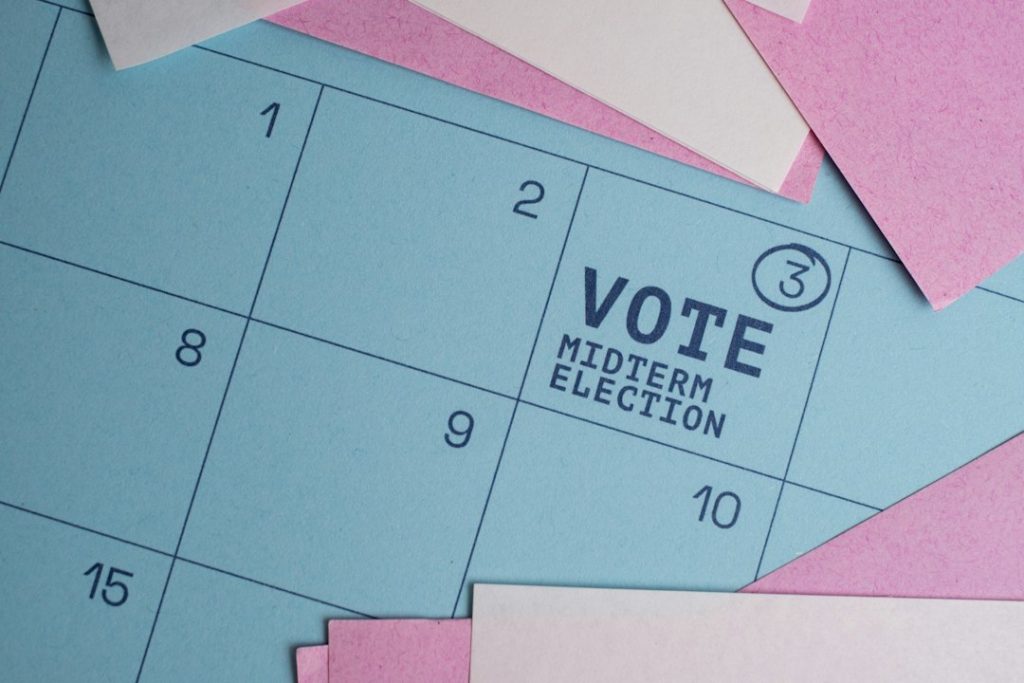
THE WORLD WATCHES AMERICA VOTE
Americans vote today for a new Congress. People outside the United States cannot vote in it, yet officials, analysts and newspapers across the world have spent weeks working out what it means for them. This report collects those readings. It was written before any result. It begins in the Middle East.
I. THE REGION WAITS ON A VOTE
American forces struck Iran’s Qeshm Island on Monday night, US officials said.
The officials called it a defensive action. They said the military hit a missile launcher after an Iranian surface-to-air missile brought down an American drone over waters east of the Strait of Hormuz. One official said Washington had deliberately kept the campaign quiet to avoid signalling a return to major combat operations. A US official said the incident did not mark the start of expanded strikes. Iranian media reported five explosions on the island. It was the latest in a series of limited US strikes in recent weeks.
Trump told reporters on Monday that the US had won the war with Iran. He said he did not know whether it could be called a war, since there had been no fighting for months. Asked by reporters whether he was considering a strike on Iran after the election, he replied no.
Trump’s earlier statements differ. On Thursday, October 8, he wrote that the US would not attack Iran at any time before the midterms. On Tuesday, October 27, he told a Texas rally, “You’ll see Iran in a couple of weeks.”
That same day, Washington told several Gulf Arab countries to prepare for a short, intense military campaign against Iran after the vote, according to people briefed on the conversations. Trump has not made a final decision but is leaning toward a large post-election attack that could target Iranian infrastructure and nuclear sites, according to the report.
An Israeli source and an American source said Trump and Prime Minister Benjamin Netanyahu spoke on Saturday, October 31. They said Netanyahu is pressing Trump to strike Iran immediately after the election, while Trump for now wants negotiations to play out. The Israeli source called the call “tough.” The American source called it direct.
The same Saturday, Iran’s security chief Mohsen Rezaei said he had received a letter from Vice President JD Vance seeking to revive stalled talks.
Mediators are working in parallel. Senior officials from Saudi Arabia, Türkiye and Pakistan held talks with Iran in Tehran on Monday, October 26. Saudi analyst Hesham Alghannam said the meeting may be the last chance before escalation spirals out of control. Pakistan and Qatar had helped broker an agreement in June to reopen the strait and begin talks on a wider settlement. It unraveled quickly as both sides renewed attacks.
In Lebanon, the Health Ministry says 4,389 people were killed and 12,428 wounded between March 2 and October 30. Lebanon says Israel occupies about 700 square kilometers of its territory.
Israel is dealing with an election of its own. Last week’s vote left the bloc led by Netanyahu’s Likud party with 53 of 120 Knesset seats, short of a majority. The opposition bloc led by former military chief Gadi Eisenkot won 48. Israel’s Arab parties won a record 19 seats and are set to back Eisenkot’s bloc.
Likud is considering voting against certification of the results by the Central Elections Committee on Wednesday. Such a move would be unprecedented in Israeli history.
Israel is watching the American vote with concern, particularly what happens if Democrats win a majority, as polls suggest. Both Netanyahu and Eisenkot would be ready to attack Iran in some circumstances, though most would agree Netanyahu would take on more risk.
🌍 Translator’s Note: Outside the US, this region is reading the vote as a deadline, not an election. A Lebanese official told Arab News that Lebanon has entered an “election-related diplomatic freeze,” with no diplomatic contacts underway. An Indian think tank wrote today that a renewed US offensive against Iran is “held back only by the American midterm elections.” Two places far apart give the same date the same weight. What no public source settles is whether Trump has decided.
🇺🇸 What American readers need to know: American forces struck an Iranian island on Monday night in what US officials called a defensive action. Trump told reporters he is not considering a strike on Iran after the election. An Israeli and an American source said Netanyahu is pressing him for one. Gulf states have been told to prepare for a possible campaign. Israel’s election left Netanyahu’s bloc short of a majority.
Sources Al Jazeera, Qeshm | The National | Euronews | Al Jazeera, October 9 explainer | Anadolu via Express Tribune | Axios | AFP via Arab News, Trump and Netanyahu | AFP via SCMP | AP via ADN | Arab News via Eurasia Review, Lebanon | Observer Research Foundation via Eurasia Review | Al Jazeera, Israel coalition | Haaretz | Ynet | Jerusalem Post
II. UKRAINE WARNS OF AN ELECTION-DAY STRIKE
Zelenskyy said on Monday that Ukraine has intelligence that Russia is preparing another massive attack, primarily on energy and logistics.
In his nightly address he said the assumption is that the world will be watching the American midterms. What happens in Ukraine, he said, along with its difficulties with air defense and Patriot missiles, will be overlooked.
The warning came hours after Russian forces struck a school used to distribute humanitarian aid in Komyshuvakha, in Zaporizhzhia region. Ukrainian reporting counted at least 26 dead.
Overnight into Tuesday, a Russian aerial bomb hit a hospital in Kharkiv. Prosecutors say 73 people were injured, among them patients, medical workers and residents of nearby buildings. Authorities are moving 226 patients to other facilities. Dnipro was struck again in the morning. Governor Oleksandr Hanzha said 15 people were wounded, three of them seriously.
Zelenskyy said in a Sunday interview that Ukraine would stop striking Russian oil refineries for a month in exchange for a month of Patriot interceptor missiles. The State Department has approved the potential sale of 500 Patriot PAC-3 interceptors to Ukraine for about $2.1 billion.
Kirill Dmitriev, who heads Russia’s Direct Investment Fund and serves as a presidential envoy, wrote on X on Monday that Zelenskyy is trying to undermine Republicans before the midterms. He wrote that Zelenskyy “keeps lecturing President Trump.”
A similar charge had been circulating in the US. On October 12, Ukrainian journalist Ostap Yarysh, who is based in the United States, described a narrative running from anonymous social media accounts to national television and members of Congress. It holds that Ukraine’s refinery strikes are meant to raise fuel prices, embarrass Trump and help Democrats. He cited the television host Rachel Campos-Duffy, the commentator Jack Posobiec and Senator Mike Lee of Utah. Yarysh said then that more such accusations would come before the vote.
The congressional question is what a new majority could do. If Democrats win both chambers, they could put new Ukraine aid to a vote. Such aid could pass with the two-thirds majorities needed to override a veto. Representative Gregory Meeks of New York would chair the House Foreign Affairs Committee if his party wins. He has introduced bipartisan legislation to block Trump’s plan to return Russian diesel to global markets.
The limits are real. Democrats would still face a president who can veto. Trump launched the Iran war without congressional approval, and his administration ignored a War Powers resolution that passed with a handful of Republican votes.
Oleksandr Leonov, executive director of the Penta Center for Applied Political Research in Kyiv, said on Tuesday that if Democrats gain strength, Trump’s arrangements with Russia will end. He said both chambers could press Russia harder through sanctions.
🇺🇸 What American readers need to know: Zelenskyy says Ukraine has intelligence that Russia is preparing a major attack timed to the American vote. A Russian official says Zelenskyy is trying to undermine Republicans. Ukraine says it would pause refinery strikes for a month in exchange for Patriot missiles. A Ukrainian analyst expects a Democratic Congress to end Trump’s arrangements with Russia.
Sources Fox News | Ukrainska Pravda | Espreso, overnight attacks | TASS | Texty | Reuters via Euromaidan Press | Espreso, Leonov
III. MEXICO PROJECTS CALM
Mexican President Claudia Sheinbaum says trade talks with Washington do not depend on the American vote.
She said at her morning news conference on October 28 that the review of the United States-Mexico-Canada Agreement, known in Mexico as the T-MEC, will continue after November 3. Economy Secretary Marcelo Ebrard had spoken days earlier with US Commerce Secretary Howard Lutnick and Ambassador Ronald Johnson. They were exploring whether a deal was possible before election day.
Mexico’s main open item is a cut in the Section 232 tariffs on cars, steel and aluminum. President Sheinbaum asked Mexicans for “much patience and serenity” in the face of Trump’s contradictory messages.
Sheinbaum keeps cooperating with the US on migration and security. She also demands respect for Mexican sovereignty and reciprocity in the fight against arms trafficking.
Two academics at the University of Guadalajara see risk in the vote. José Arturo Santa Cruz Díaz Santana warned that a Republican defeat could lead Trump to make reckless decisions against Mexico, including more trade or military confrontation. He also raised the possibility that Washington would take Mexican politicians, governors or officials accused of ties to organized crime to the United States for trial.
His colleague Miguel Alejandro Hiljar Chiapa said Trump could harden tariffs on Mexican products. He said Trump could also step up the offensive against cartels through direct military intervention or drone strikes. Such steps would carry extremely important implications for Mexican sovereignty, he said.
Jorge Fernández Menéndez, a columnist in Mexico City, wrote on Monday that the vote is unlikely to change the trends that shape relations with Mexico. A Democratic Congress could press harder on tariffs, he wrote, but the White House holds very broad presidential powers. In his view the vote would have no direct effect on the tariffs or the trade negotiation.
He wrote that Trump will not soften his positions after the election and will harden them. The doubt in the White House, he wrote, is how much pressure to put on Mexico, not whether. He wrote that the pressure will deepen after the vote unless Mexico’s federal government changes its position. Mexico holds its own midterm elections in June.
🌍 Translator’s Note: Outside the US, Mexico is the clearest case of a government projecting calm while its academics warn about the days after. Sheinbaum says talks continue whichever party wins. A Mexico City columnist gives the reason, that the tariffs and the negotiation sit with the president, not with Congress. Academics at Guadalajara warn of a Trump who lashes out if he loses. The two readings point to the same place. Tariffs, military action and trials of officials are all decisions a president can take. The election decides who sits in Congress, and the decisions Mexico fears are not Congress’s to make.
🇺🇸 What American readers need to know: Mexico’s president says trade-agreement talks do not depend on the vote. Mexico’s main open issue is US tariffs on cars, steel and aluminum. Mexican academics warn that a Trump defeat could bring escalation against Mexico, including over cartels. A Mexican columnist says the vote will not change the tariffs.
Sources Infobae, Sheinbaum | Infobae, University of Guadalajara | Excelsior | EFE via Diario Libre
IV. LATIN AMERICA WAITS ON WASHINGTON
Brazil’s government is waiting for the American vote before it restarts talks with Washington.
For Lula’s government, the stalled items in the relationship should move only after the election. The two countries have been in a diplomatic crisis since Washington imposed tariffs on Brazilian goods. Talks resumed in August after a call between Lula and Trump, then lost momentum. Members of Lula’s government say the White House was waiting to learn who would govern Brazil.
Lula won that runoff on October 25 against Senator Flávio Bolsonaro, who went to the United States two days later. Trump welcomed him.
Lula’s government believes a Congress with more Democrats could open doors on the environment and the regulation of large technology companies. That would not necessarily change the White House’s stance, because the president keeps significant powers over trade and foreign policy. Brazilian constitutional lawyer Guilherme Amorim of the Pontifical Catholic University of São Paulo said Trump might have to be “more discreet” in protecting the Bolsonaro family.
In Argentina, Thiago Leis, who coordinates a political-institutions observatory at the Lebensohn Institute, said President Javier Milei made a very strong political bet on Trump. It has produced financial support and trade agreements. Leis said a Democratic win could bring more questions about that cooperation. Members of Congress, including Republicans, have already requested information about the US Treasury’s currency swap with Argentina.
He said the Treasury would keep the authority that allowed the swap, so financial cooperation could continue and even expand, but not without problems. Washington backed Milei in 2025 with a swap of up to $20 billion and purchases of pesos. A Democratic advance could make future assistance harder to approve while Argentina needs foreign currency for debt payments.
Trump spoke about Cuba at a South Florida rally on Friday, October 23. “We’ll take care of Cuba on our way back from Iran,” he said. Secretary of State Marco Rubio wrote on X the same day that Cubans seeking change should act through a discreet partnership with the CIA. The CIA reposted the message in Spanish. Cuban President Miguel Díaz-Canel answered that Washington has not renounced its ambitions of domination.
The Trump administration has kept a near-total oil blockade on the island since the start of the year. Florida obtained a state arrest warrant for former president Raúl Castro on October 19. A Democratic majority could make new legislation on Cuba harder to pass and increase oversight, but would not lift sanctions automatically.
Washington keeps a pragmatic relationship with Venezuela’s acting government under Delcy Rodríguez. Analyst Mariano de Alba said the result will not change who sets Venezuela policy in Washington. It could change every actor’s incentives, he said.
In Havana, the independent writer Luis Cino argued in a column on Monday that Cuba’s government has delayed contacts with Washington, hoping a Democratic win limits Trump’s powers. He wrote that Trump could also want to score points on Cuba after the election. Cino called the street belief that a Democratic Congress would lift the embargo “simplezas y tonterías,” simplicities and nonsense. A Cuban state outlet republished an opinion column on November 1 saying the vote will matter above all for Latin America and the Caribbean, which it says suffer under the “Donroe Doctrine.”
🇺🇸 What American readers need to know: Brazil is holding trade talks until after the vote. Argentina’s president depends on US financial support that a Democratic Congress could scrutinize. Trump said on October 23 that the US would deal with Cuba on its way back from Iran. Sources Metrópoles | El Cronista | EFE via Diario Libre | IBTimes | CubaNet | Cubadebate
V. EUROPE DOUBTS A TAMED TRUMP
Officials at the European Union and the North Atlantic Treaty Organization (NATO) doubt that a big Democratic win would restrain Trump abroad.
“We don’t think the unpredictability is going to change,” said one senior EU diplomat. Officials said the midterms are not featuring much in the bloc’s internal discussions. A second senior EU diplomat said the result is hard to predict and that hopes for change should stay low. The diplomat was not sure how much even a Democratic wave would affect foreign policy. The European Commission said it will not comment on any elections in the EU or abroad.
On Ukraine, the EU is not expecting US support to ramp up again, even if Democrats win. Brussels is focused on plugging a 70-billion-euro hole in Kyiv’s finances next year. It is pushing Britain, Canada and Japan to do more.
On tariffs, diplomats note that it took months to get President Joe Biden to roll back tariffs on EU steel after Trump’s first term, and that limitations remained. At NATO, allies are waiting for a Pentagon review of US forces in Europe, expected in December. The widespread expectation is that it will scale back US deployments. Several NATO diplomats said they did not expect the midterms to affect the review.
Some officials fear it could get worse. Bruce Stokes of the German Marshall Fund said presidents in trouble at home have often turned to the international stage. That could mean an escalation in the Iran war or a more concerted push on Ukraine.
Catherine Fieschi, a scholar at Carnegie Europe who spoke from Paris, said a Democratic win could breed complacency in Europe about its own far right. Marine Le Pen leads polling for France’s presidential election on April 18, with about 34 percent. Fieschi also said Europe could end up with renewed pressure on Ukraine, as Trump could be “clinching deals with Putin as fast as he can.”
A poll for the German think tank Bertelsmann Stiftung found that 31 percent of Europeans see the United States as Europe’s most trustworthy ally, down from 51 percent in 2024. It found that 73 percent say Europe should go its own way rather than continue close cooperation with the US, up from 63 percent.
China reads the vote differently. Chinese experts said a Democratic win would leave Trump wide room on foreign policy. Diao Daming of Renmin University in Beijing said the next two years could be a lame-duck period for Trump, but that he would likely keep bypassing Congress through executive orders.
Meng Weizhan of Fudan University in Shanghai wrote that Trump “can still decide a lot of things.” He listed tariffs, sanctions enforcement and military deployments. German correspondent Miriam Steimer offered the opposite reading on October 29. In her view, China could benefit from a weak American president, because while Trump divides the West, Beijing can present itself as a reliable partner.
🇺🇸 What American readers need to know: European officials say they do not expect a Democratic Congress to change Trump’s foreign policy. Brussels is not counting on the US for Ukraine or on any rollback of tariffs. A Pentagon review of US forces in Europe is expected in December. Chinese experts say Trump could still decide a lot on foreign policy without Congress.
Sources AFP via EWN | Al Jazeera, Europe | SCMP via Korea Times | ZDF
VI. ASIA PLANS AROUND WASHINGTON
India’s foreign minister has criticized the Trump administration in public ahead of the vote.
Speaking at an event in New York last month, S. Jaishankar said the administration has been an insensitive partner to India’s concerns over terrorism, has warmed to India’s rival Pakistan, and has pursued “self-centred” trade policies. India’s finance minister, Nirmala Sitharaman, said earlier this month that trade negotiations had reached a plateau beyond which giving or taking might be very difficult.
In September, Trump signed a law allowing tariffs of up to 100 percent on countries that buy Russian oil, India among them. He paused it to avoid driving up energy prices in the US before the midterms. Secretary of State Marco Rubio said in an interview in the week of October 26 that none of the tariffs are meant to punish or harm India. He did not rule out that similar measures would return.
In Japan, Michael Cucek of Temple University’s Japan campus said Japan wants “just less extremes of behaviour.” Tokyo is urgently working on a bilateral emergency-consultation framework with like-minded nations, reports from October 26 say. Japan set up such a mechanism with Australia in 2022. It extended it this year to Germany, France and the Philippines. Yoichi Shimada of Fukui Prefectural University prefers Republican majorities.
🌍 Translator’s Note: Outside the US, India’s reading of the vote is a hope, not a forecast. Al Jazeera reports that many analysts think the Modi government may now prefer a Trump chastened by midterm losses. The three analysts it names do not agree. Milan Vaishnav of the Carnegie Endowment says a chastened Trump would serve India’s interests. Michael Kugelman doubts policy toward India would change. Praveen Donthi of the International Crisis Group sees a broader consensus among Trump-aligned Republicans to pressure India. WION, an Indian broadcaster, set out the limit of the hope on October 4. A divided Congress could restrict Trump’s unilateral tariffs, it said, but would likely keep the Russian oil sanctions.
🇺🇸 What American readers need to know: India’s foreign minister has criticized the administration in public, and trade talks with Washington have stalled. Trump signed a law allowing tariffs of up to 100 percent on buyers of Russian oil, then paused it before the midterms. Analysts disagree on whether a weaker Trump would ease pressure on India. Japan is building emergency-consultation frameworks with Australia, Germany, France and the Philippines.
Sources Al Jazeera, India | WION | SCMP, Japan
Today, Americans decide who sits in Congress. Tonight, a lot of other people find out what that means for them. They did not get a vote, but they have been planning around it for weeks.
“Whenever the people are well informed, they can be trusted with their own government.” — Thomas Jefferson, 1789