The Rest of the World Report | October 2, 2026 — Evening Edition
The View From Everywhere Else
Weekday morning and evening editions. Saturdays once. Good news on Sundays. All sources labeled.
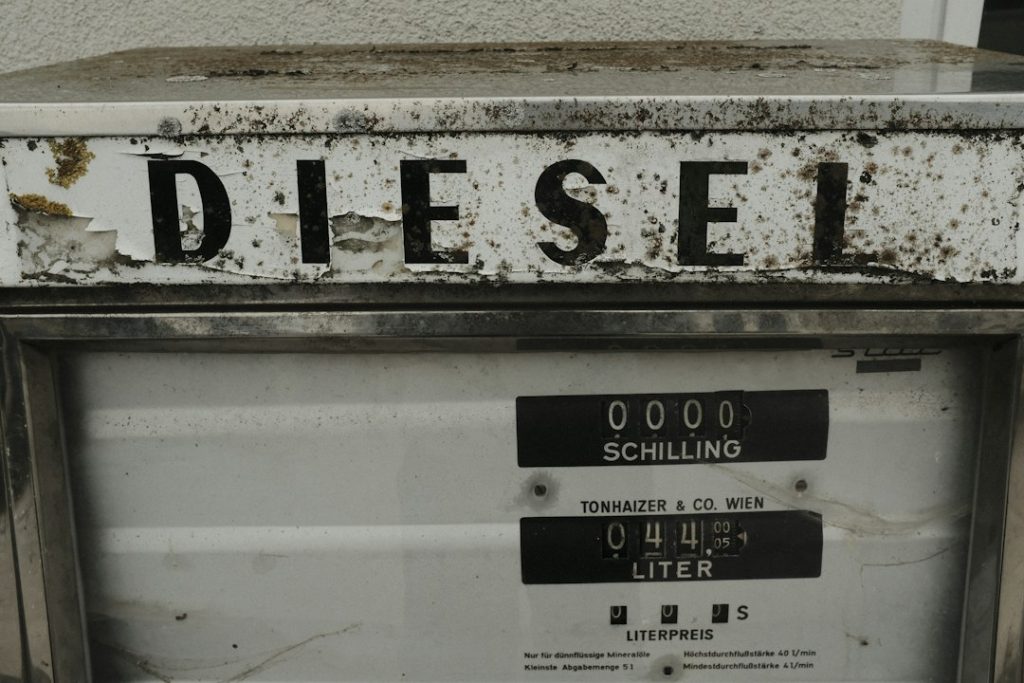
THE THREAT EUROPE TOOK SERIOUSLY
US diesel inventories just hit their lowest point in years. That shortage, not a one-sided European crisis, is what moved the whole G7 to act.
The G7 agreed Thursday to release 100 million barrels of diesel and other fuel reserves through the International Energy Agency, front-loaded within the first 20 days of a four-month window. It’s not the first time this year. In March, the IEA’s 32 member countries unlocked 400 million barrels from emergency reserves, a release officials say still hasn’t been fully completed.
The numbers explain the urgency. US diesel inventories stood at just 107.9 million barrels as of September 11, a historic low. The US national average diesel price was $6.37 a gallon the day the agreement was announced, having peaked at $6.52 on September 22. European diesel has risen to €2.24 a liter, up from €1.59 before Iran’s war with its neighbors began February 28, a conflict Trump launched alongside Israel. That war has since constrained shipping through the Strait of Hormuz, squeezing supply on both sides of the Atlantic at once.
Trump had separately threatened to ban US diesel exports outright, to force prices down at home, since the US supplies roughly half of Europe’s diesel imports. Macron pushed back on September 25, more than a week before Thursday’s agreement, warning Trump the move would raise prices even for countries like France, which has little American oil dependency of its own.
Macron credited Trump for the outcome anyway, saying he “was particularly clear” that an export ban wasn’t the answer. Treasury Secretary Scott Bessent had separately urged Europe to tap its own reserves “immediately.” Trump, on Truth Social, described the outcome as Europe having “just agreed to release a massive amount of their heavily stocked Diesel Oil.”
🌍 Translator’s Note: Al Jazeera’s reporting on this agreement includes three facts Trump’s own announcement leaves out entirely. First, the US itself is releasing reserves under this same agreement, not just Europe. Second, Washington’s own diesel stockpile is at its lowest level in years, the same kind of shortage Trump’s framing assigns only to Europe. Third, his export-ban threat, the thing he’s taking credit for not following through on, was not accepted as a reasonable option Europe talked him out of. The EU rejected it outright as a tactic. Read against Trump’s own account, the story he’s telling and the story Al Jazeera is reporting describe two different events.
🇺🇸 What American readers need to know: American diesel inventories are at their lowest point in years, and American drivers are paying the same spike Europeans are. The shortage is also showing up in Trump’s own approval numbers as the midterms approach, which his own announcement doesn’t mention either.
Sources: Al Jazeera (March IEA release context, US inventory figures, price figures, Iran-war origin and Hormuz link, EU rejection of export-ban tactic, Trump Truth Social quote, midterm political context); The National (release figures, timeline, Macron/Bessent quotes, Kpler shipping data); Yeni Şafak (Türkiye — Macron’s September 25 warning to Trump, French military deployment to Saudi Arabia)
THE TRADE PUTIN WON’T MAKE
Vladimir Putin rejected a ceasefire trade this week.
Trump and Zelenskyy had proposed it themselves, three days earlier at their September 22 meeting in New York: Kyiv would stop striking Russian oil refineries if Moscow stopped hitting Ukraine’s energy grid. Putin dismissed the idea Thursday at the Valdai Discussion Club, a Moscow think-tank forum, calling the proposed trade “simply ridiculous.”
He went further on what a direct attack on Russian territory would mean. An attack on Kaliningrad, the Russian exclave wedged between Poland and Lithuania, or on other Russian territory, would put every weapon in Russia’s arsenal back on the table immediately, he said, not a future possibility to weigh but a step that follows automatically. He warned the window for defusing the standoff could close abruptly, without much notice.
He put Russia’s own economic cost from Ukrainian strikes at roughly 1 percent of GDP. That figure is unverified outside the Kremlin. Russia’s own central bank and finance ministry have separately told Putin the broader war economy is under far heavier strain: the central bank cut its 2026 growth forecast to as low as zero, the finance ministry says defense spending now eats roughly a third of the budget, and the deficit for just the first four months of 2026 already exceeded all of 2025’s. Russian strikes on Ukraine’s energy infrastructure have continued.
🇺🇸 What American readers need to know: The ceasefire framework Putin just rejected wasn’t Kyiv’s idea alone. It came out of Trump’s own meeting with Zelenskyy. Moscow’s answer to a deal floated by the American president was to call it ridiculous and raise the nuclear question in the same breath.
Sources: Al Jazeera (Valdai speech, direct quotes, Trump-Zelenskyy meeting context, Kaliningrad warning, GDP claim); Jamestown Foundation (US think tank — Russian central bank and finance ministry’s internal economic warnings, growth-forecast and deficit figures)
THE SIEGE BEFORE THE VOTE
Fifty families in the Jordan Valley have been cut off from water, food and medical access for two weeks.
Israeli forces imposed the blockade on Ras al-Ahmar, a Bedouin community of roughly 300 people, in mid-September. It hasn’t lifted. Soldiers are using the siege to clear the way for a new 20-kilometer military road residents call “Crimson Thread,” cutting through about 115 hectares of land, 85 percent of it privately owned by Palestinians, according to Kerem Navot, an Israeli group that monitors settlement and land-use policy.
Residents haul supplies in by donkey at night. Fifty-one schoolchildren have been blocked from reaching their classrooms. An estimated 15,000 head of livestock are at risk, according to Al-Baydar Organization for Defense of Bedouin Rights, a group tracking the siege. Livestock herder Saeed Ayed said the animals can’t survive much longer without water and food.
Village council head Abdullah Bisharat said the community appealed to human rights organizations for help. “No one was able to break the siege,” he said.
Hassan Mleihat of Al-Baydar said the road’s real purpose isn’t security. “The road aims to dominate the area’s land under security pretexts,” he said.
Israel holds national elections October 27. Analysts cited by Al Jazeera describe a pattern: measures that change territorial facts on the ground accelerate just ahead of a vote, so whatever shifts before election day is harder to undo after it.
🌍 Translator’s Note: +972 Magazine, an Israeli outlet critical of the occupation, reported on this same barrier and this same community three weeks earlier, in early September, with a sharper edge than Thursday’s straight news account carries. Its reporting put the barrier’s planned length at 300 miles, from the Golan Heights to the Red Sea, and said 13 of Ras al-Ahmar’s 70 families had already fled after their water pipes were damaged, which Israeli officials on the ground called deliberate sabotage. It described settlers patrolling in military fatigues alongside soldiers, and called the project “a war against the fields, the trees, and the people.” Where Thursday’s coverage treats the siege as a discrete, two-week event, +972’s account frames it as one chapter in a barrier-building campaign that’s been displacing families for months.
🇺🇸 What American readers need to know: Washington rarely weighs in on West Bank land seizures timed to Israeli domestic politics. The practice, changing facts on the ground right before an election, is one American policymakers would recognize instantly in any other country they were watching more closely.
Sources: Al Jazeera (siege details, barrier/land figures, Ayed/Bisharat/Mleihat quotes, Kerem Navot and Al-Baydar sourcing, election-timing analysis); +972 Magazine (Israel — barrier length, families-fled figure, sabotage characterization, settler/military description, critical framing)
AN INSENSITIVE PARTNER
India’s foreign minister called the United States an “insensitive partner” this week. That is not language New Delhi uses about Washington lightly, after years of courting the relationship.
S. Jaishankar made the remark at an Asia Society event in New York in late September, after the UN General Assembly. He criticized US trade policy as serving Washington’s own interests at the Global South’s expense, and said Washington’s relationship with Pakistan has grown too warm for India’s comfort.
Three frictions are driving the shift. Trade talks remain unresolved, and a threatened 100 percent tariff on Indian purchases of Russian oil could take effect within a month, a “deal breaker,” according to retired Indian diplomat Ajay Bisaria. Trump’s repeated claims that he personally brokered the May 2025 India-Pakistan ceasefire have irritated New Delhi, which treats Kashmir as a strictly bilateral matter. And new US H-1B visa restrictions are squeezing Indian professionals seeking American jobs.
Modi’s own language has cooled alongside his foreign minister’s. He and Trump spoke by phone October 1; Modi’s office called the call merely “productive,” a step down from the warmer, personal-friendship language Modi used for Trump earlier in his term.
🇺🇸 What American readers need to know: Modi’s government has spent years avoiding public friction with Washington. Its foreign minister’s blunt public language this week is India signaling that avoidance has a limit, a story that’s had almost no footprint in US coverage.
Sources: Al Jazeera (Jaishankar quotes and Asia Society remarks, trade/tariff detail, Bisaria quote, Kashmir/Pakistan context, H-1B detail, Modi-Trump October 1 call)
THE DEBATE NEITHER OF THEM WANTED
Brazil’s final presidential debate collapsed before a bomb scare ever factored in.
Both leading candidates had already pulled out of Thursday’s debate, for reasons that had nothing to do with each other. Flávio Bolsonaro, the right-wing senator and son of former president Jair Bolsonaro, refused to appear after an electoral court ruling barred keeping President Luiz Inácio Lula da Silva’s chair empty onstage if Lula skipped it. He called the ruling “censorship imposed by the electoral court.” Lula, 80, went on a popular YouTube podcast instead.
The bomb scare came separately, the same day. A man tried to jump the fence outside Brazil’s Supreme Court and threw a backpack onto a nearby bus stop. Police arrested him. The backpack held only personal belongings; no bomb was found.
Brazil’s first round of voting is Sunday. Polls show Lula with a slim lead, with a potential October 25 runoff looking close.
🇺🇸 What American readers need to know: South America’s most consequential election this year is three days from its first round, and its final debate just collapsed from unrelated candidate boycotts and a false alarm on the same day, a story with almost no footprint in US coverage.
Sources: Al Jazeera (debate cancellation, candidate reasons, Bolsonaro quote, bomb-scare details, polling); Tasnim News (Iran, state-affiliated — independent corroboration of debate cancellation and bomb-scare facts)
BRIEFS
Congo’s Ebola outbreak passes 4,000 dead. The toll crossed a threshold Thursday: 4,018 deaths among 8,300 confirmed cases, up from the 3,901 deaths and 8,067 cases ROTWR reported September 28. The outbreak, first announced May 15 and concentrated in Ituri province (Bunia) and North Kivu (Butembo), is now five months old. It’s the rarer Bundibugyo strain, which has no approved vaccine or treatment. More than 2,000 patients have recovered. Source: CBS News (updated toll, case count, strain, timeline)
NUMBERS AT PUBLICATION
🇮🇷 Iran: 3,684 killed
🇱🇧 Lebanon: 4,386 killed, 12,413 wounded
🇮🇱 Israel: 1,200+ killed, ~5,400 wounded
🇺🇸 US military: 23 killed, 861 wounded
🇵🇸 Gaza: 74,134+ killed, 5,052 wounded (since ceasefire)
🇵🇸 West Bank: 322 killed (incl. 74 children), 5,927 wounded (incl. 946 children) since January 2025
🛢️ Brent crude: $102.80/barrel
⛽ US gas: $4.40/gallon
Sources: HRANA (Iran); Lebanon MOPH; INSS (Israel); DCAS (US); OCHA (West Bank); gazacasualties.org (Gaza total); Al Jazeera (Gaza since ceasefire); OilPrice.com (Brent); AAA (US gas).
“Whenever the people are well informed, they can be trusted with their own government.” — Thomas Jefferson, 1789