The Rest of the World Report | October 6, 2026 — Morning Edition
The View From Everywhere Else
Weekday morning and evening editions. Saturdays once. Good news on Sundays. All sources labeled.
BOLSONARO LEADS LULA
Flavio Bolsonaro won the first round of Brazil’s presidential election.
He finished two points ahead of President Luiz Inacio Lula da Silva. Neither cleared 50 percent. The runoff is October 25.
Bolsonaro took 47 percent of the vote. Lula took 45.1 percent. Polls before Sunday had Lula winning the round by about three points.
Bolsonaro is a 45-year-old right-wing senator. His father, former President Jair Bolsonaro, is serving a 27-year sentence for plotting a coup. Flavio has said he will seek an amnesty for his father if elected. He told reporters Brazil “wants change.”
His Liberal Party won 121 of 513 seats in the Chamber of Deputies. Lula’s Workers’ Party won 70. Bolsonaro’s stepmother, Michelle, and his brother Carlos won Senate seats.
The other candidates took nearly eight percent. Most are right-leaning. About one in five registered voters, 21 percent, stayed home.
Since 1989, every first-round leader in a Brazilian presidential election has gone on to win.
Donald Trump called the result a “big victory.” The United States has imposed steep tariffs on Brazil and sanctioned officials. Lula has accused the Trump administration of using tariffs and other means to interfere in Brazilian affairs.
🌍 Translator’s Note: Foreign coverage splits on what the United States had to do with this vote. Al Jazeera’s Sao Paulo correspondent, Lucia Newman, reads Brazil as a prize in a contest between Washington and Beijing. China is its largest trade partner, and she puts Lula on a collision course with Trump. In that frame, the result is a test of American reach. AFP reads it the other way. It quotes the analyst Thomas Traumann on voters worried about prices, crime and debt. It says Lula’s sovereignty campaign against Trump’s pressure may have been a miscalculation. If AFP is right, US tariffs did not decide the first round. Running against Washington did not win Lula votes.
🇺🇸 What American readers need to know: Brazil’s runoff is October 25. Flavio Bolsonaro leads Lula by two points. Trump welcomed the result. The US has tariffs on Brazil, and Lula has accused Washington of interference.
Sources: Al Jazeera (Qatar, state-funded/editorially independent; percentages, seat counts, Stuenkel, Newman, Lula’s interference claim); Kuwait Times (Kuwait; AFP wire copy; two-point margin, Trump reaction, tariffs, Traumann, 1989 pattern)
QUEBEC ELECTS SEPARATISTS
Quebec has elected a separatist government.
The Parti Quebecois won the most seats on Monday and will govern in a minority. It fell short of the 64 seats needed for a majority in the 127-seat National Assembly. Its leader, Paul St-Pierre Plamondon, becomes premier.
The PQ promised a third independence referendum in its first term. St-Pierre Plamondon says it will not come while Donald Trump is president. Trump’s term ends in January 2029. He said a decision on independence needs conditions that are not “hijacked by the theatrics of an unpredictable president.”
The Liberals and the Conservatives have both said they will never support a referendum. A minority government needs opposition votes to pass major laws and survive confidence votes.
Support for independence is about 30 percent. Daniel Beland, a political scientist at McGill University, said the result reflects a divided multiparty system. He did not read it as a surge in separatism.
The PQ ends eight years of rule by the Coalition Avenir Quebec. The CAQ was wiped out, and Premier Christine Fréchette lost her own seat. The Liberals won 40 seats and become the official opposition. The Conservatives won 19. Quebec solidaire won nine.
Prime Minister Mark Carney congratulated St-Pierre Plamondon. He said building a stronger Quebec is core to building a stronger Canada.
Alberta votes in two weeks. On October 19, Albertans decide whether to stay in Canada. The alternative is a legal process toward a second, binding separation referendum. Premier Danielle Smith has said she will vote to stay. Polls in early September showed the stay side with a large lead.
As of early September, leaders of the separatist Alberta Prosperity Project said they had met US government officials three times. They claimed those officials have a direct line to the White House. US Ambassador Pete Hoekstra brushed the meetings aside as routine contacts and said no commitments were made. Treasury Secretary Scott Bessent called Alberta a “natural partner for the US.” Trump had not declared support for a united Canada.
🌍 Translator’s Note: Quebec’s coverage makes Trump the reason for the timing. AFP sets the PQ win against a trade war and annexation threats from Washington. It reports that the PQ leader will wait for Trump to leave office before any referendum. Noovo, a Quebec broadcaster, finds the brake closer to home. A minority government can be stopped by the opposition. For Quebec, independence is on hold for reasons that run through both Washington and the National Assembly. Alberta shows the same pull from the other side. India’s Hans India, running PTI copy, frames the October 19 vote around one question: whether Trump will back separation.
🇺🇸 What American readers need to know: A separatist party now governs Quebec without a majority. Its leader says there will be no referendum while Trump is in office. Alberta votes October 19 on whether to start down a path toward separation.
Sources: Al Jazeera (Qatar, state-funded/editorially independent; AP and Reuters copy; seat threshold, Beland, minority rules); Kuwait Times (Kuwait; AFP wire copy; referendum timing, opposition stance, Carney); Noovo Info (Canada, Bell Media, French-language; seat counts for Liberals, Conservatives and Quebec solidaire, CAQ result, Fréchette); The Hans India (India; PTI wire copy of a Conversation essay dated September 4; Alberta vote, Alberta Prosperity Project meetings, Hoekstra, Bessent)
GUNFIRE ON THE RIO GRANDE
The United States says its Coast Guard took gunfire from Mexico. Mexico says it has found no sign of it.
On Monday, President Claudia Sheinbaum said Mexico has no evidence of shots fired from its territory. She said no member of the National Guard, the Army or the Navy detected any. Mexico has asked Washington for all of its evidence.
The Coast Guard has said its personnel took gunfire from the Mexican side near Garceno, Texas, on September 26. It said they returned fire. No one was hurt and no equipment was damaged. It has not said who fired.
US Ambassador Ronald Johnson wrote on X on Sunday about the border area “where U.S. Coast Guardsmen were fired upon.” Sheinbaum said Washington also sent its account in writing.
About 500 US troops have gone to the border since the incident.
Mexico announced Operation Mirror on Sunday night. It puts 500 Mexican soldiers, with helicopters and drones, along the Tamaulipas border. Sheinbaum said mirror operations put Mexican forces on the river alongside US Northern Command elements and the Coast Guard. Her defense and navy secretaries proposed them to prevent incidents, she said. She said Mexico acted to avoid any situation even though it has been given no proof the shots happened.
The dispute sits inside older ones. On Monday, Sheinbaum objected to Johnson announcing an international police academy in Queretaro without her government’s knowledge. Under Mexico’s constitution, the federal government must approve the activities of foreign forces on Mexican soil. In April, reports said two CIA agents died in a car crash in Chihuahua. Sheinbaum said neither she nor her cabinet knew of any CIA activity there.
Trump has said he may order military strikes inside Mexico against cartels. Sheinbaum has said that would violate Mexico’s sovereignty.
🌍 Translator’s Note: Mexico reads this as a sovereignty case, not a shooting. El Heraldo de Mexico carries the president’s daily press conference. Sheinbaum has seen no evidence, wants Washington’s proof and answers with mirror operations meant to head off any incident. Forbes Mexico’s Reuters-based copy reports the same demand. Al Jazeera lines the shooting up with the Queretaro police academy and the April CIA crash. It adds Trump’s threats to strike cartels. Mexico’s constitution requires federal approval for foreign forces on its soil. Each episode raises the same question of who approves US activity there. The Coast Guard statement describes one incident. Mexican officials and Al Jazeera place it on a longer list.
🇺🇸 What American readers need to know: US and Mexican troops now patrol the Rio Grande. The Coast Guard says it was fired on and fired back. Mexico says it has seen no evidence and wants Washington’s proof.
Sources: Al Jazeera (Qatar, state-funded/editorially independent; Johnson’s post, US deployment, Queretaro academy, CIA crash, Trump’s strike threats); El Heraldo de Mexico (Mexico; Sheinbaum’s statements, mirror operations, Johnson’s post); Forbes Mexico (Mexico; Reuters-based; Operation Mirror announcement, Sheinbaum on proof); Stars and Stripes (US military newspaper, Defense Department-funded, editorially independent; October 2; Coast Guard account, Garceno location, no injuries)
FRANCE’S LYCÉE PROTESTS
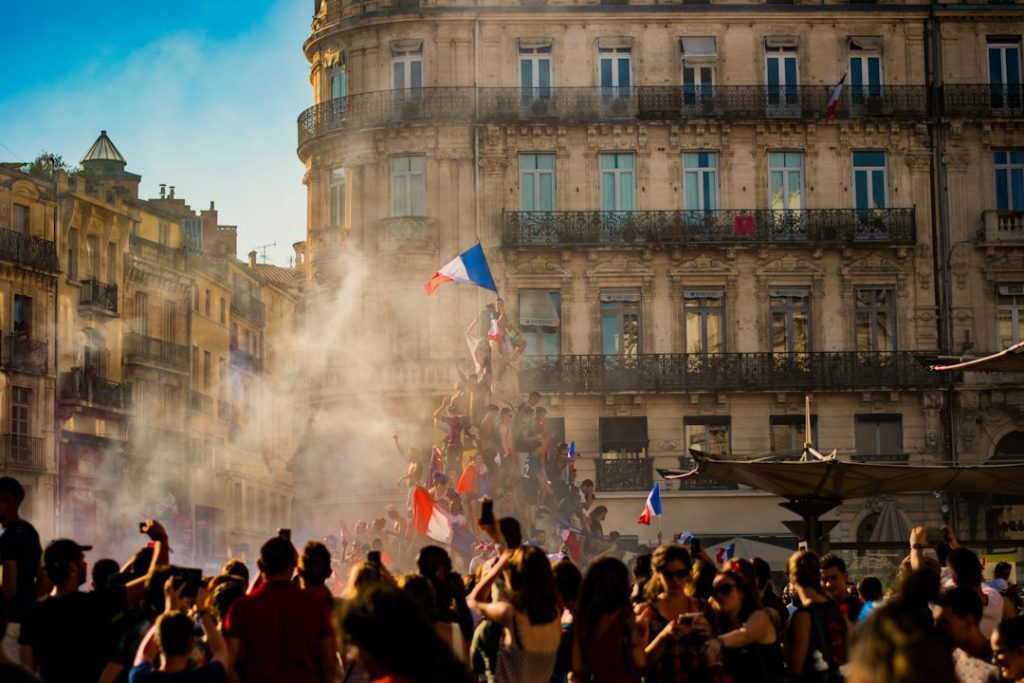
French police have held 5,060 people since the school protests turned violent. 87 percent were minors.
The Justice Ministry gave the figure Monday. Prosecutors have charged 1,802 people, 319 adults and 1,483 minors. Fourteen are in pretrial detention, four of them minors. Justice Minister Gerald Darmanin told prosecutors to seek civil liability from the parents of arrested minors.
Students have blocked high schools since late September over missing teachers, overloaded timetables and run-down buildings. The government counts 215 students, 715 police officers and 85 teaching staff injured. Twenty-four schools have been burned or ransacked. On Monday, 589 of France’s 3,700 high schools and 32 universities were disrupted.
Several of the injured students are children.
On September 28 in Saint-Ouen-l’Aumone, north of Paris, a police officer fired a grenade launcher at a 14-year-old’s face. Video shows the boy facing three officers. One strikes him with a launcher. He kicks at the officer’s legs. A second officer fires a “Cougar” launcher at his face, and he falls. A tear-gas grenade burns on the ground in front of him. His upper teeth are broken and his jaw is immobilized.
The prosecutor in Pontoise says the first images show the boy hitting a policewoman who was pushing him back. His mother says he was outside the scuffles, filming. His family’s lawyer says the shot came from about 1.5 meters. His parents are filing a complaint for attempted homicide. The national police inspectorate, the IGPN, is examining the officer’s use of the weapon. A second inquiry covers violence against police. The Défenseur des droits has also taken up the case.
In Tours on September 30, a 16-year-old lost the use of his right eye. The city’s prosecutor said the injuries were compatible with an LBD rubber-ball launcher. The prefecture said officers were being hit with projectiles while they dealt with several fires. In Lens on Monday, a 15-year-old lost a hand to a police “de-encirclement” grenade. Prosecutors have not established whether he picked it up or it landed on him.
Interior Minister Laurent Nuñez said police have opened 10 internal investigations into allegations of brutality. Amnesty International France says police used disproportionate force on minors.
The next day of action is Tuesday. Tens of thousands are expected in Paris. A coalition of education unions urged staff to join, including by striking. It includes the FSU, CGT, FO, CFDT, Unsa, Sud and Solidaires. CGT leader Sophie Binet said members would join to “protect high-school students.”
The government says it is trying to answer the grievances. It also accuses hard-left activists of hijacking the movement. It is pushing a bill to make people who damage public property pay for repairs. Prime Minister Sébastien Lecornu has said the money could be recovered from family allowances and housing benefits. Binet said that would hit the most vulnerable families. The unrest comes months before the 2027 presidential election.
A separate bill is waiting in the Senate. It would presume that police acted lawfully when they fire their weapons. The National Assembly adopted it on July 7. Under its text, officers who fire are “presumed to have acted” within the cases the law allows. The standards are absolute necessity and strict proportionality. The presumption can be overturned at any time by contrary evidence. The Senate’s agenda through October 29 does not list the bill.
Laurent Frajerman, a researcher at the Cerlis social-research center, said any link with other protests is likelier over violence.
🌍 Translator’s Note: French coverage treats the injuries as a turning point. A protest over school conditions becomes a question about policing. Public Sénat compares the movement with the 1990 lycée protests. It doubts talk of a convergence with other causes. Its source, Laurent Frajerman, says any link is likelier to come over violence. Bondy Blog and Le Nouvel Obs report the case that could supply it. A 14-year-old was shot in the face on video. The family’s lawyer alleges attempted homicide, and the prosecutor tells a different story. Who is believed will shape what the video means. Reuters and AFP lead with injuries and arrests. Those are the numbers that travel across borders.
🇺🇸 What American readers need to know: French police have held 5,060 people in the school protests. Most are minors. Several teenagers have been seriously injured, and prosecutors and the Défenseur des droits are investigating. Separately, a bill that would presume police shots lawful is waiting in the French Senate with no date set.
Sources: Ministère de la Justice (France, primary; October 5 press release; custody, charges, detention, instructions to prosecutors); Kuwait Times (Kuwait; AFP wire copy; injury counts, 10 investigations, unions, Binet, government stance); Al Jazeera (Qatar, state-funded/editorially independent; Reuters copy; Lens injury, Amnesty France); Public Sénat (France, parliamentary public broadcaster; 1990 precedent, Frajerman, education unions); Le Nouvel Obs via Yahoo (France, centre-left weekly; Saint-Ouen-l’Aumone video, prosecutor and mother); Bondy Blog (France, independent, suburbs-focused; the boy’s injuries, the family’s lawyer, IGPN, Défenseur des droits); lematin.ch (Switzerland; AFP wire copy; Tours prosecutor, prefecture); Sénat (France, primary; text of the bill); Sénat, ordre du jour (France, primary; agenda through October 29)
SIBERIA’S PLAGUE QUESTION
A technician at a Russian plague research institute has died, and Russia has not said of what.
Darya Shipilova, 28, worked at the Irkutsk Anti-Plague Research Institute in Siberia. Local media identified her. She was hospitalized with severe pneumonia and died days later.
Russia’s health watchdog, Rospotrebnadzor, calls the cause “pneumonia of unknown etiology.” Lab tests found no microorganisms tied to her work, it says. The institute’s commission and the watchdog concluded no emergency or security breach occurred. Earlier reports that she broke a test tube of live bacteria have not been confirmed.
Alexei Tsydenov, who heads the neighboring republic of Buryatia, first said she died of plague. He then added the word “maybe.”
About 200 people are under medical observation, and a hospital has been quarantined. Contacts are tested daily. The tests found two cases of Covid-19 and two of rhinovirus, and no other infections. Irkutsk Governor Igor Kobzev said relatives in quarantine could be discharged next week. The Kremlin referred all questions to Rospotrebnadzor.
The World Health Organization said, based on unofficial information, that the risk to the general public is low. Plague is endemic in Siberia, and it is rare for Russians to fall ill with it.
Trump said Monday the US is ready to help. “We are looking at it very strongly,” he said. He said he had not spoken to Vladimir Putin about it. Secretary of State Marco Rubio said, “I don’t think it’s cause for alarm.” He called it a matter to watch closely. A State Department official urged Russian authorities to share accurate information quickly and openly. The European Commission said it is watching closely too.
🌍 Translator’s Note: The AP and Reuters report is built around Washington. It leads with Trump’s offer of aid and carries a State Department call for openness. Trump says he has not spoken to Putin about it, so the offer is a public statement, not a channel. The story becomes what the US will do if Russia asks. The Moscow Times is built around Moscow. Its headline is that officials are seeking to reassure the public. It sets each official assurance against what is still unknown. The outlet works from exile, and Russian prosecutors have designated it “undesirable.” That gives it little reason to take Moscow’s account as settled. One frame asks how Washington should respond. The other asks whether Moscow’s account can be trusted.
🇺🇸 What American readers need to know: Trump says the US will help Russia if asked. Russia says the death was pneumonia of unknown cause and denies a lab accident. The WHO says the risk to the public is low.
Sources: Al Jazeera (Qatar, state-funded/editorially independent; AP and Reuters copy; Trump, Rubio, WHO, State Department, Rospotrebnadzor via TASS); The Moscow Times (Russia-founded exiled outlet, designated “undesirable” by Russian authorities; commission finding, contact testing, Kobzev, Kremlin, European Commission)
NEW YORK’S MEASLES EMERGENCY
New York has declared a disaster emergency over measles.
Governor Kathy Hochul announced it Monday. It lets more health workers give the measles, mumps and rubella vaccine. It runs through November 4. It is the first such declaration since measles cases began rising in 2025.
New York has 108 cases this year as of October 3. Seven are in New York City and 101 are elsewhere in the state. Ninety-two have come since July 15 in a handful of rural communities with low vaccination rates. “No one should get seriously ill or die from a vaccine-preventable disease,” Hochul said.
Pennsylvania has passed 1,000 cases this year. That is the largest outbreak in the US in three decades. Outbreaks have also been recorded in Texas, Utah, Ohio and South Carolina.
Health experts attribute the resurgence to vaccination rates below the 95 percent they say is needed to prevent outbreaks. Critics say an anti-vaccination movement has gained advocates inside the Trump administration, including Health Secretary Robert F. Kennedy Jr. The US eliminated domestic spread of measles in 2000. The last outbreak above 1,000 cases was in New York City in the early 1990s.
In November, the Pan American Health Organization reviews whether the US and Mexico keep their measles elimination status. The test is whether the same virus lineage circulated without a break for 12 months or more. The clock started on January 20, 2025 for the US and February 1, 2025 for Mexico. US health authorities are running full viral genome sequencing as part of the analysis. The region lost its status in November 2025, when PAHO found endemic measles in Canada.
🇺🇸 What American readers need to know: New York’s measles emergency runs through November 4. Pennsylvania has more than 1,000 cases. In November, an international body reviews whether the US keeps its measles-free status.
Sources: Al Jazeera (Qatar, state-funded/editorially independent; Reuters and AP copy; New York figures, Pennsylvania, vaccination rates, Kennedy); Pan American Health Organization (WHO regional office, primary; March 2 statement; November review, analysis dates, endemic definition, Canada)
FORTY DENATURALIZATION CASES
The Justice Department has filed 40 new cases to strip naturalized Americans of their citizenship.
It announced them Monday. The complaints were filed between August 21 and October 2. The department said they are the largest volume of complaints submitted in a single period under Trump. Attorney General Todd Blanche said the announcement marks “the largest denaturalization effort in modern history.”
The department says the defendants are accused of serious offenses. These include acting as an agent for a foreign government, voluntary manslaughter and child sexual abuse. Others include money laundering, visa fraud and tax fraud. The defendants come from countries including Mexico, Pakistan, China and Sierra Leone. Two cases involve the Chinese government. One defendant, a Navy enlistee, is accused of conspiring to sell military secrets to China. Another is accused of working at the direction of China’s Ministry of State Security.
Prosecutors can ask a court to strip citizenship from someone born abroad. They must show the person willfully concealed a material fact in the application. The laws have been used for decades but were reserved for serious crimes. After World War II, the government moved against dozens accused of hiding involvement in the Holocaust or war crimes. The practice became much less frequent after the Cold War.
Human rights groups say Trump’s push to widen denaturalization could leave people stateless. Critics say he has aimed it at political rivals. Last year the administration said it would seek to denaturalize many Somali Americans. That followed a fraud case in Minnesota. Representative Andy Ogles has floated taking citizenship from New York City Mayor Zohran Mamdani. Trump once floated the idea for Elon Musk.
In June, the Supreme Court struck down Trump’s effort to end birthright citizenship. A second executive order seeking to restrict it is in litigation.
🇺🇸 What American readers need to know: The Justice Department has filed 40 denaturalization cases since August 21. It calls this the largest effort of its kind. Each case goes to a federal court. Critics warn of statelessness and political targeting.
Sources: Al Jazeera (Qatar, state-funded/editorially independent; history of the law, critics, birthright citizenship); Department of Justice (US, primary; October 5 press release; case count, filing dates, Blanche, offenses, countries, China cases)
BRIEFS
US says blockade has redirected 130 ships. US Central Command said US forces have redirected 130 commercial vessels while enforcing the naval blockade of Iran. It said forces disabled three ships that refused to comply. Over 12 weeks, it said, forces destroyed 13 vessels that were breaking the blockade or were part of the IRGC’s “multibillion-dollar shadow network.” CENTCOM Commander Adm. Brad Cooper said US forces helped secure passage of more than one billion barrels of oil through the Strait of Hormuz over two months. The figures are CENTCOM’s. Source: Kuwait Times (Kuwait; KUNA wire copy; CENTCOM statement)
Saudi airports hit, Sanaa struck. Two airports in Saudi Arabia were attacked, with injuries and damage reported. The Saudi-led coalition launched air strikes on Houthi weapons facilities in Sanaa. Yemen’s government military says it has recaptured the port city of Mocha and launched a counteroffensive near the Bab al-Mandeb strait. Source: Al Jazeera (Qatar, state-funded/editorially independent; live blog summary)
Grain ship sinks off Romania. A Turkish-owned grain ship sank in the Black Sea on Monday inside Romania’s exclusive economic zone, about 20 nautical miles from the coast. Romania’s Interior Ministry said two people died and 11 crew were rescued. It did not name a cause. Ukrainian President Volodymyr Zelenskyy blamed two Russian drones and said the captain was killed. He said the crew were from Azerbaijan and India. Romania is a NATO member. Sources: Al Jazeera (Qatar, state-funded/editorially independent; AP copy; Zelenskyy, Romanian ministry); The Kyiv Independent (Ukraine, independent; location, deaths, rescue, Zelenskyy)
A claim that Gulf states pay Iran a Hormuz toll. Michelle Brohard, head of policy and geopolitical risk at Kpler, said she suspects a toll is being paid for safe passage through the strait, perhaps 10 or 20 percent of cargo. She presented it as speculation. It has not been independently verified. Abdul Khalique of Liverpool John Moores University said no public proof confirms a systematic Iranian toll system. The Trump administration has said Iran will not be allowed to charge a toll under any agreement. Kpler data show Middle East crude exports passed pre-war levels on four days in the last week of September. Source: Al Jazeera (Qatar, state-funded/editorially independent; Brohard, Khalique, Kpler data)
NUMBERS AT PUBLICATION
🇮🇷 Iran: 3,684 killed
🇱🇧 Lebanon: 4,386 killed, 12,413 wounded
🇮🇱 Israel: 1,200+ killed, ~5,400 wounded
🇺🇸 US military: 23 killed, 861 wounded
🇵🇸 Gaza: 74,332+ killed, 5,060+ wounded (since ceasefire)
🇵🇸 West Bank: 322 killed (incl. 74 children), 5,927 wounded (incl. 946 children) since January 2025
🛢️ Brent crude: $98.63/barrel
⛽ US gas: $4.37/gallon
Sources: Lebanon MOPH; gazacasualties.org (Gaza total).
“Whenever the people are well informed, they can be trusted with their own government.” — Thomas Jefferson, 1789