The Rest of the World Report | September 17, 2026 — Evening Edition
The View From Everywhere Else
Weekday morning and evening editions. Saturdays once. Good news on Sundays. All sources labeled.
THE ASSOCIATE MEMBER
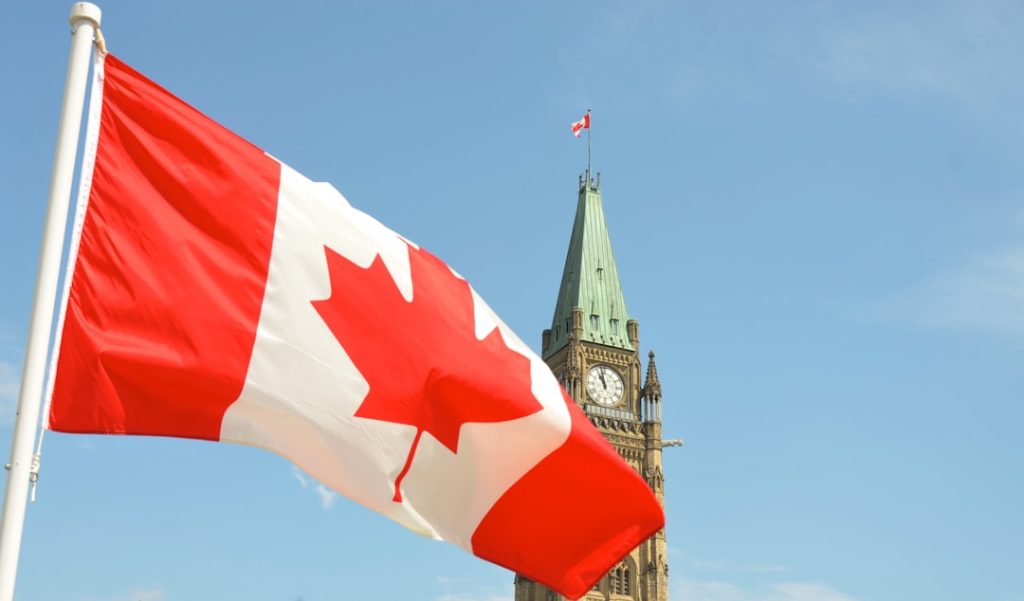
On Wednesday, European Commission President Ursula von der Leyen invited Canada to become the European Union’s first-ever “associate member.” The status does not exist in any EU treaty. It would have to be invented from scratch.
Canadian Prime Minister Mark Carney welcomed the offer Thursday in an address to the European Parliament in Strasbourg. He drew clear lines around it. Canada is not seeking full EU membership, he said. Any final arrangement would go to a vote in the Canadian Parliament. “Canada and Europe are stronger together,” Carney told lawmakers. He framed the relationship as an alliance built on shared values, not a reaction to Washington.
The offer follows the collapse of trade talks between Ottawa and Washington in late August. The United States has since imposed 50 percent tariffs on a range of Canadian goods. Canada has retaliated with tariffs on roughly $20 billion in US imports. More than 70 percent of Canadian exports went to the United States in 2025, leaving Ottawa exposed and searching for alternatives.
President Trump responded overnight and again Wednesday from Charlotte, North Carolina. He called the idea of Canada joining the EU laughable and dismissed Canada as a “terrible trade partner.” He said his response would depend on the EU’s intent. If it’s a hostile act, Trump said, he would impose new tariffs on Europe or halt trade in some areas entirely.
European officials pushed back within hours. A European Commission spokesperson said the proposed partnership with Canada was meant to strengthen, not target, any other country. European Parliament President Roberta Metsola told reporters the bloc was not afraid of retaliation. She said Australia and New Zealand could eventually follow Canada into a similar arrangement. Canada’s own opposition Conservative Party criticized Carney from the other direction, accusing him of negotiating away Canadian sovereignty without a parliamentary mandate.
No timeline exists for turning the offer into anything concrete. Both sides pointed to an EU-Canada summit in Montreal at the end of October as the next real checkpoint.
🌍 TRANSLATOR’S NOTE: European coverage treated Wednesday’s proposal as a genuine break from precedent, not merely a symbolic gesture. Euronews’s live coverage from Strasbourg captured European lawmakers greeting Carney warmly. Several wore red, and one Green group leader wore a Canadian hockey jersey to the session. The framing across that coverage centered less on Canada’s specific status and more on what it signals. It described a EU willing to invent new categories of relationship rather than lose an ally to American pressure. Ireland’s foreign minister endorsed the idea within a day of von der Leyen’s speech. Multiple MEPs described it to Euronews as a natural next step, citing Canada’s participation in the EU’s SAFE defense loan program.
That same coverage noted Trump’s tariff threat arrived before the EU had even finished defining what “associate membership” would mean. In Strasbourg, that timing was read as confirmation of the dynamic Carney and von der Leyen were describing: American pressure narrowing its own allies’ options.
🇺🇸 What American readers need to know: A close US ally with a trade relationship dating back decades is now negotiating an unprecedented arrangement with the European Union. The explicit goal is reducing dependence on the United States. Trump’s tariff threat targets the EU over a Canadian initiative Washington had no role in shaping. American consumers may feel this through auto and steel tariffs already in effect on both sides. A further rupture with the EU would touch a trading relationship worth far more than the one with Canada.
Sources: Euronews (European, broadly centrist — Strasbourg speech coverage, Carney and Metsola quotes, MEP reactions, Ireland endorsement); Al Jazeera (Qatar, state-funded/editorially independent — Trump’s Charlotte remarks); CNBC (US confirmation — Trump quotes, tariff and trade war background); The Hill (US confirmation — Carney’s “dependence” remarks, trade war figures)
THE BAB AL-MANDEB ASSURANCE
Houthi forces have completed control of Yemen’s entire Red Sea coastline, including the Bab al-Mandeb strait, one of the world’s busiest shipping corridors. Now, according to political sources in Sanaa, they have quietly told Washington they won’t touch American ships there.
The assurance came through Omani mediators, the only communication channel that has ever existed between the Houthis and the United States. Two political sources briefed on the group’s military strategy told The National the contacts remain indirect. There has never been direct US-Houthi dialogue at any point in the conflict. The Houthi coastal takeover was completed in a rapid offensive from September 3 to 11. It gave the Iran-backed group a direct hold over both sides of the strait’s shipping channels for the first time.
The Houthis have separately announced a blockade against Saudi oil shipments bound for Asia. The move unravels the decades-old security-for-oil arrangement that has underpinned Gulf shipping. Saudi Arabia’s information ministry has warned the group is trying to replicate its Hormuz leverage at a second global chokepoint.
President Trump addressed the situation last week in Dublin. He told reporters the Houthis “called us, and they don’t want to fight us.” He said the group was letting ships pass and predicted the situation would work out well. His comments came the same day Houthi forces completed their seizure of the port of Mocha and Perim Island. That island splits the strait into two shipping channels.
🌍 TRANSLATOR’S NOTE: An Al Jazeera opinion analysis from a Saudi political scientist argued that Washington’s posture toward the Houthi advance exposes real limits on the US security umbrella in the Gulf. American forces are already stretched thin defending the Strait of Hormuz. The piece argued Washington now needs Saudi cooperation to contain disruption at Bab al-Mandeb, reversing the arrangement that has defined the region for decades. The analysis noted Riyadh has so far resisted US pressure to take a more direct role against the Houthis. It cited Saudi wariness of a wider confrontation that further exposes Saudi territory to attack.
🇺🇸 What American readers need to know: A second major global shipping chokepoint has effectively passed into the control of an Iran-aligned militia while US attention remains fixed on the Strait of Hormuz. The Houthis are trading safe passage for American vessels in exchange for a freer hand against Saudi Arabia, a close US partner. If that blockade holds, Gulf oil flows to Asia face a second point of pressure. It has drawn almost no American media coverage.
Sources: The National (UAE — Omani back-channel, Sanaa political sources); Al Jazeera (Qatar, state-funded/editorially independent — Trump’s Dublin remarks, regional analysis); NBC News (US confirmation — coastal takeover timeline, Saudi pipeline strikes)
THE SANCTIONS VETO
Russia and China vetoed a US-drafted UN Security Council resolution Thursday. It would have extended the mandate of the panel of experts monitoring sanctions on Iran. The vote was 11 in favor to two against, with Somalia and Pakistan abstaining.
The panel’s mandate expires September 27. Without an extension, the Security Council loses its only independent body for investigating sanctions violations. Those sanctions were reimposed on Iran last September through the nuclear deal’s “snapback” mechanism. British Ambassador Sarah MacIntosh warned the council loses its “principal source of impartial, evidence-based reporting on sanctions violations” as a result.
Russian Ambassador Vassily Nebenzia said Moscow considers the entire snapback mechanism illegal. He argued the resolution lacked any legal basis on that ground. He said Russia and China had urged the United States not to bring the measure to a vote at all. He called Washington’s decision to proceed a choice for “confrontation.”
The veto comes eight days after the International Atomic Energy Agency referred Iran’s nuclear file to the Security Council for non-compliance with its safeguards obligations. It is the first such referral in roughly twenty years. The sanctions committee itself has been effectively paralyzed for more than nine months. Council members have been unable to agree on who should chair its subsidiary bodies.
🌍 TRANSLATOR’S NOTE: The National’s coverage from the Security Council session placed this veto in a documented pattern, not an isolated diplomatic dispute. British officials drew an explicit comparison to Russia’s March 2024 veto of the North Korea sanctions panel. That earlier veto ended fourteen years of UN expert monitoring on that regime. The National also reported British accusations that Russia has separately received Iranian-designed Shahed drones and North Korean ballistic missiles for its own war in Ukraine. That framed Thursday’s veto as protection for a partner rather than a principled legal objection.
🇺🇸 What American readers need to know: The Security Council’s ability to independently verify Iran sanctions violations effectively ends in ten days, with no replacement mechanism agreed. Sanctions on Iran remain formally in force and binding on all UN member states. What disappears is the independent monitoring that made those sanctions enforceable, at a moment when the war between the US, Israel, and Iran remains unresolved.
Sources: The National (UAE — vote count, MacIntosh quote, North Korea comparison, Russia-Iran-North Korea weapons allegations); AP via local10.com (wire confirmation — Nebenzia quote, snapback mechanism background); Al-Monitor via AFP (US-based, Middle East specialist, centrist — IAEA referral date, September 9)
THE NATO WARNING
Polish Prime Minister Donald Tusk told parliament Thursday that intelligence indicates Russia is planning drone and missile attacks against countries supporting Ukraine. The warning came hours before Russia struck Kyiv for the second consecutive night.
Tusk said the assessment points to attacks designed to weaken NATO’s ability to respond collectively to Russian aggression. He said the target is the alliance’s cohesion, not any single member state in isolation. He did not name which countries might be targeted or offer a timeline.
Russia’s overnight strikes hit Kyiv, Zaporizhzhia, and Odesa with missiles and 157 drones. At least 16 people were injured, including two children. Ukraine’s air force said it downed or suppressed 131 the incoming drones and missiles. The attack came hours after the US House of Representatives passed the Lindsey O. Graham Sanctioning Russia and Iran Act of 2026, a package meant to increase pressure on Moscow and on countries that help finance its war. President Zelenskyy called the timing “symbolic.”
Ukraine struck back the same night. Zelenskyy said a joint operation by Ukrainian intelligence and security services hit the Yaroslavl oil refinery inside Russia. The same operation hit several aircraft and helicopters at a base in Rostov. It is a fresh sign that neither side has agreed to anything resembling an energy truce, despite past claims from President Trump to the contrary.
🌍 TRANSLATOR’S NOTE: Al Jazeera’s report on Tusk’s warning, sourced to AFP and Reuters, framed it as part of a wider European reassessment of Russian intent toward NATO members themselves, not only toward Ukraine. Poland sits on NATO’s eastern flank and has the most immediate exposure to any such campaign. The wire framing treated Tusk’s remarks as significant for that reason.
🇺🇸 What American readers need to know: A NATO member’s prime minister has told his own parliament that Russia may be planning strikes intended to fracture the alliance’s collective response. This came the same week Congress passed new sanctions and Russia hit Kyiv again regardless. The sanctions bill and the strikes landed on the same day. Neither side is treating the other’s actions as a deterrent.
Sources: Al Jazeera (Qatar, state-funded/editorially independent, via AFP/Reuters — Tusk’s parliamentary warning); Bloomberg (US confirmation — overnight strike details, refinery counterstrike); RFE/RL (US public broadcaster — sanctions bill timing, Zelenskyy “symbolic” quote); ABC News/AP (wire confirmation — casualty figures, targeted regions)
GHALIBAF’S EQUATION
On Wednesday, Iran’s parliament speaker went after the Federal Reserve with a math problem.
Mohammad Bagher Ghalibaf posted a modified version of the Taylor rule, the formula central banks use to set interest rates, on X. “You can’t 25bp a chokepoint,” he wrote, referring to the Strait of Hormuz. Iran has effectively closed the strait to shipping since the war with the US and Israel began. Hours later, the Federal Reserve raised its benchmark rate by 25 basis points, the first increase in three years.
Fed Chair Kevin Warsh, in remarks following the decision, said renewed fighting between the US and Iran had pushed up petrol prices. He said that helped convince Fed officials to support the increase. Analysts largely agreed the war was a real factor. Chris Beauchamp of IG Group told Al Jazeera the energy spike from the conflict, combined with rising bond yields, has left the Fed with no real way out of raising rates.
Whether Iran is actually setting American interest rates is a different question. Researchers told Al Jazeera the answer is no. Susannah Streeter of the Wealth Club said the war has clearly fed into the inflation picture the Fed is responding to. But she noted heavy capital investment tied to the AI boom and resilient domestic demand were also driving the decision. Negar Mortazavi of the Center for International Policy in Washington said Ghalibaf’s real point was about leverage, not monetary policy. The war’s economic costs run partly through maritime security, an area Iran controls, and a Fed rate hike can’t undo that.
Ghalibaf has spent much of the war using economic arguments to mock the Trump administration’s conduct of the conflict. He previously posted a graphic comparing Trump’s “Make America Great Again” slogan to US hunger statistics.
🇺🇸 What American readers need to know: Iran’s parliament speaker is turning America’s own war-driven inflation into a public messaging campaign. The underlying economics hold up better than the trolling suggests.
Sources: Al Jazeera (Qatar, state-funded/editorially independent — Ghalibaf’s post, Warsh remarks, Beauchamp, Streeter, and Mortazavi analysis)
NUMBERS AT PUBLICATION
🇮🇷 Iran: 3,684 killed
🇱🇧 Lebanon: 4,352 killed, 12,318 wounded
🇮🇱 Israel: 1,200+ killed, ~5,400 wounded (includes 472 killed, 3,004 wounded in Gaza)
🇺🇸 US military: 18 killed, 756 wounded
🇵🇸 Gaza: 1,358 Palestinians killed, 4,541 wounded, since the October 10, 2025 “ceasefire”
🇵🇸 West Bank: 316 killed (incl. 73 children), 5,641 wounded (incl. 915 children), since January 2025
🛢️ Brent crude: $104.20/barrel
⛽ US gas: $4.44/gallon
Sources: HRANA (Iran), Lebanon MOPH, INSS (Israel), DCAS (US), OCHA (Gaza, West Bank), OilPrice.com, AAA.
“Whenever the people are well informed, they can be trusted with their own government.” — Thomas Jefferson, 1789