The Rest of the World Report | September 19, 2026 — Saturday Edition
The View From Everywhere Else
Weekday morning and evening editions. Saturdays once. Good news on Sundays. All sources labeled.
GREENLAND, UNSIGNED
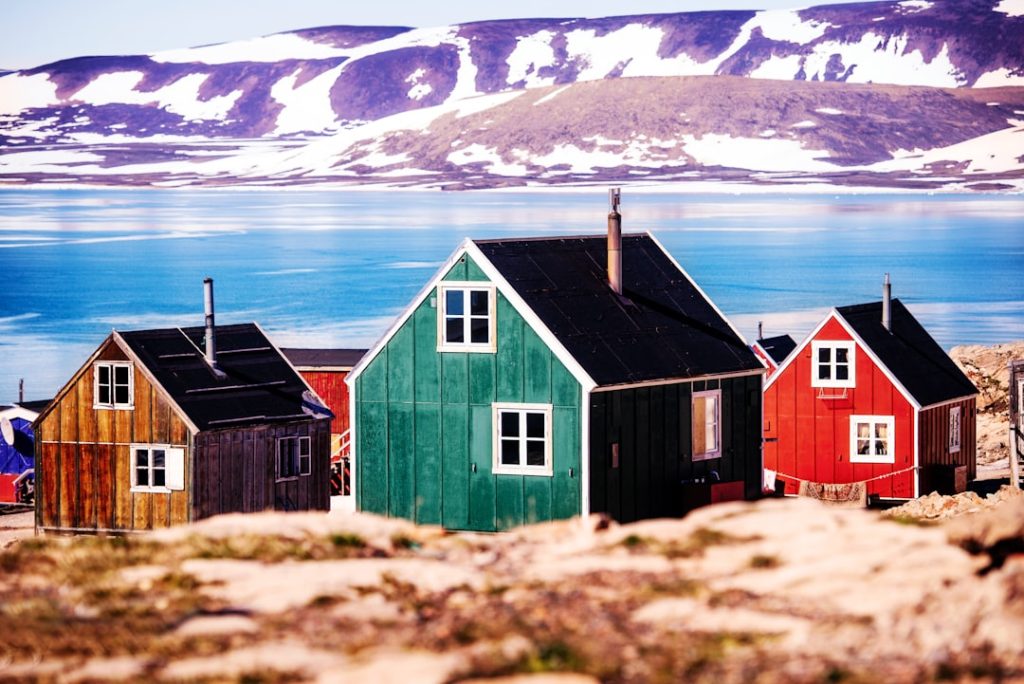
Donald Trump announced on September 18 that the United States, Denmark, and Greenland had reached a security agreement over the Arctic island he spent a year threatening to take by force. The deal is not signed. It will be signed at the United Nations General Assembly next week, and still needs parliamentary approval in both Copenhagen and Nuuk.
What is actually in it, according to Trump’s own description: the US gets what he called “permanent control over security, and all other needs” on Greenland. Non-NATO military bases are banned from the island. Chinese and Russian military presence and investment are restricted. Washington will begin building up its military footprint there immediately. In exchange, the agreement states that Greenland and Denmark keep their sovereignty and territorial integrity.
Trump framed it as a partnership, saying he looked forward to working with Denmark and Greenland toward what he called “a magnificent future” for the island. Danish Prime Minister Mette Frederiksen said the deal “recognises the sovereignty and territorial integrity” of both Denmark and Greenland. Greenland’s own premier, Jens-Frederik Nielsen, said it “recognises Greenland’s interests and our place in international cooperation.”
What the announcement does not resolve is the year of pressure that preceded it. Trump spent months refusing to rule out military or economic force to take the island outright. The deal on the table now gives the US the security and basing access it wanted without the annexation, while both Nuuk and Copenhagen get language preserving their sovereignty on paper. Neither side has said what happens if that language and the reality on the ground start to diverge once American bases are actually built.
🌍 TRANSLATOR’S NOTE: Australia’s ABC covered the deal by centering Trump’s own declaration that it “completely address[es] ALL of our many US concerns,” alongside Danish officials’ pledge to help expand the American military presence, treating the agreement as Washington securing what it wanted rather than as a walk-back of Trump’s earlier annexation threats. That framing cuts against any assumption that the deal represents American restraint. European outlets covering the Frederiksen and Nielsen statements have focused instead on the sovereignty language as the two governments’ primary achievement, an emphasis that reflects a year of anxiety in Copenhagen and Nuuk about becoming the first Trump-era territorial acquisition rather than a negotiating partner.
🇺🇸 WHAT AMERICAN READERS NEED TO KNOW: Nothing is signed yet, and the specific mineral and basing rights Washington will actually get remain undefined pending that signature and two rounds of parliamentary approval. American coverage has largely run with Trump’s framing of “permanent control.” What’s confirmed so far is a security and access agreement, not a takeover, and the details that would show the difference haven’t been made public.
Sources: Bloomberg, NBC News, ABC News Australia, CNBC
THE RALLY
Iran staged its largest demonstration of the war on September 18: hundreds of thousands of people in downtown Tehran, mobilized by the government to showcase a new volunteer force called Janfada-ye-Iran, “ones who sacrifice their lives for Iran.”
The official participation figures are Iran’s own and unverified. State media put Friday’s crowd at roughly 313,000. Iranian officials say more than 600,000 have registered for the underlying civilian training program, with over a million expected to train and as many as 30 million registered nationally for potential call-up. The rally arrived on the ninth day of an undeclared pause in Iranian attacks, an informal halt rather than a negotiated ceasefire, with no confirmed Iranian missile or drone launch against any coalition state since the night of September 8-9.
The government’s purpose was explicit. It wanted to recruit volunteers and project defiance after months of American naval blockade and sanctions that have driven the rial to roughly 2.31 million to the dollar and food inflation past 127 percent. New Basij commander Hossein Taeb said the volunteers would be ready for “full-fledged defense” and would become a problem for Iran’s enemies. One participant, 24-year-old Marzieh Afaghi, put the message more plainly. “I am here to tell Trump that we Iranians have no fear about his threats,” she said.
The rally followed a large Basij mobilization drill the day before, which Iranian officials linked to Kurdish protest activity in the country’s west. A UN fact-finding mission released findings this week that both the United States and Iran had committed violations during the war, the US in two specific strikes, Iran in its suppression of domestic protests. Neither government has formally responded.
🌍 TRANSLATOR’S NOTE: Al Jazeera’s coverage placed the rally in a context largely absent from American reporting: it comes nine months after the anti-government protests of December 2025 that shook Tehran before the war even began, and the government is using the current mobilization to “regain the initiative” it lost then. That reframes Friday’s crowd less as a simple show of wartime unity and more as a political recovery operation, using an external threat to paper over an internal one.
🇺🇸 WHAT AMERICAN READERS NEED TO KNOW: The scale of this rally, and the fact that it happened at all nine days into a pause in Iranian attacks, complicates any assumption that the war’s pause means de-escalation on Iran’s side. The volunteer numbers are a mobilization claim, not a verified troop count, but the economic desperation behind them, a currency in freefall and food inflation above 100 percent, is independently documented and not in dispute.
Sources: Al Jazeera, PBS NewsHour, NBC News, GlobalSecurity.org Iran War Operational Update
MOUNT HERMON
Syria told the UN Security Council on September 18 that Israel is “the greatest threat facing the stability of the entire region, not just Syria.” Israel’s ambassador didn’t dispute the specifics. He changed the subject to Türkiye.
Syria’s representative, Ibrahim Olabi, told the Council that Israel had moved into Syrian villages, displaced people, and struck Syrian facilities, even as Damascus pursued dialogue instead of confrontation. He said Israel had answered that outreach with strikes, incursions, and violations.
The session followed a September 9 visit by Israeli leadership to Jabal al-Sheikh, known in English as Mount Hermon, inside Syrian territory Israel has held since Bashar al-Assad’s fall. Forty-four nations issued an emergency declaration afterward condemning the visit as unlawful and a “blatant violation” of international law.
Israel’s ambassador, Danny Danon, did not directly answer the Mount Hermon allegation at the session. He pointed instead to Türkiye, saying it maintains “20,000 troops and over 100 bases in Syria, controlling 5 percent of its territory.” Türkiye’s ambassador, Ahmet Yildiz, rejected the framing. He said Turkish forces operate “at the invitation of Damascus,” and separately accused Israel of attacks that target Syria’s infrastructure and violate its sovereignty.
The exchange makes public what had been building quietly for weeks. Israel struck a vehicle in the Syrian village of Beit Jinn on August 22. The strike came days after US envoy Tom Barrack called an earlier Israeli strike on a Syrian air base an “unnecessary escalation that does not advance regional stability.” Barrack suggested at the time that strike may have been aimed at provoking Türkiye directly. Five weeks later, Israel’s own ambassador made Türkiye’s military footprint in Syria the centerpiece of Israel’s defense at the UN.
🌍 TRANSLATOR’S NOTE: Al Jazeera’s coverage of the session noted something absent from a straight recap of the exchange: Olabi’s own frustration that the Council keeps circling back to the Israel-Türkiye dispute rather than Syria’s actual post-Assad transition, which he found difficult to sit through. That framing casts Thursday’s session less as Syria scoring a diplomatic point and more as Damascus getting pulled into a proxy argument between two more powerful neighbors while its own reconstruction goes undiscussed.
🇺🇸 WHAT AMERICAN READERS NEED TO KNOW: A member of the UN Security Council stood up this week and called Israel, a close American ally, the single greatest threat to regional stability, and Israel’s own ambassador didn’t contest the underlying accusations. He pivoted to blaming Türkiye instead. This is a public three-way rupture between Syria, Israel, and Türkiye playing out at the UN, and it follows weeks of quieter friction, including an American envoy’s own public criticism of an Israeli strike in Syria last month.
Sources: Al Jazeera (Qatar, state-funded/editorially independent — Olabi and Danon quotes, Mount Hermon visit, 44-nation declaration), Middle East Monitor (UK-based, pro-Palestinian editorial lean — flag; Yildiz quote), TRT World (Türkiye, state-affiliated — flag; Yildiz quote corroboration), Asharq Al-Awsat (Saudi-owned, pan-Arab — Beit Jinn strike, Barrack criticism)
THE QUEUE HOLDS
Russian forces launched 93 drones against Ukraine overnight into September 18, and neither side gained ground, according to the Institute for the Study of War’s latest assessment. Ukraine kept up its own long-range campaign against Russian military and energy targets.
The more consequential development is what the Kremlin is not doing. Moscow continues denying any plan for a new mobilization following its September elections, a decision analysts tied to Russia’s elections read as an attempt to prevent a fresh wave of draft-age men leaving the country, the same pattern that followed the 2022 call-up. But sustaining Russia’s current casualty rate without a formal mobilization is understood to require some form of involuntary reserve call-up, according to the ISW assessment, meaning the Kremlin is trying to fight this stage of the war without saying so publicly.
Poland has shifted its own air defense posture in response, citing an increase in Russian strikes on border infrastructure and cross-border drone incursions into territory belonging to states that neighbor Ukraine, not Ukraine itself. Vladimir Putin has separately nationalized several foreign-owned enterprises inside Russia on national security grounds, a legal tool he has now used against domestic as well as foreign assets. Ukraine, for its part, is restructuring its military command in Donetsk Oblast and working to harden its energy grid ahead of what it expects will be another Russian winter campaign against power infrastructure.
🌍 TRANSLATOR’S NOTE: Kyiv Post’s own framing of the ISW assessment leaned heavily into Russia’s manpower constraints, the likelihood of a quiet involuntary call-up despite public denials, as evidence the war’s newest phase is being shaped by what Moscow cannot afford to admit rather than what it can achieve. That emphasis on Russian capacity limits gets less attention in American coverage, which tends to lead with drone counts and territorial lines rather than the recruitment math underneath them.
🇺🇸 WHAT AMERICAN READERS NEED TO KNOW: Poland is now adjusting its own air defenses because of strikes landing near, not just in, Ukraine, a sign the war’s edges are creeping into NATO territory in a way that hasn’t produced a major American headline. Neither side broke the current battlefield stalemate this week; the story is in the strain building behind it on both sides.
Sources: Kyiv Post / ISW Assessment, GlobalSecurity.org
GENEVA, AGAIN
The Democratic Republic of Congo and Rwanda returned to negotiations in Geneva on September 16 and 17, more than a year after signing a Washington-brokered agreement meant to end their confrontation in eastern Congo. The fighting never stopped.
The two governments remain divided on the same issue that has stalled progress since the original deal: the FDLR, a Rwandan Hutu militia operating from Congolese soil that Kigali has demanded be neutralized as a precondition for its own withdrawal. Rwandan President Paul Kagame called Congo’s progress on disarming the group “insufficient.” Congo’s Information Minister, Patrick Muyaya, pushed back, saying the work of disarming the group was already “being carried out in accordance with the Washington agreements.”
On the ground, the picture contradicts both sides’ diplomatic framing. M23 still controls large stretches of eastern Congo after capturing Goma in January 2025. Through early September, fighting has continued on two separate fronts. Around Minembwe in the south, Congolese-aligned Wazalendo forces have traded territory with M23-allied fighters. In the Masisi-Walikale corridor to the north, M23 pushed into previously uncontested ground before Wazalendo counterattacks retook the town of Kibati on September 11. Both sides accuse each other of ceasefire violations. Congolese-aligned forces have separately arrested two Burundian military officers, accusing them of passing intelligence to M23.
🌍 TRANSLATOR’S NOTE: Al Jazeera’s reporting from Geneva centered a voice absent from most American coverage of the talks: Congolese civil society. Human rights activist Josue Akuzwe Walayi told the outlet that residents are still waiting for the “real benefits of peace that have been trumpeted for over a year.” That line frames the negotiations not as a diplomatic success story, but as a promise that has outlived its credibility with the people living through the war it’s supposed to end.
🇺🇸 WHAT AMERICAN READERS NEED TO KNOW: The Washington agreement that ended one round of this war a year ago is now the subject of dueling interpretations in Geneva, while the fighting it was meant to stop continues on multiple fronts. A peace deal signed in Washington has not functioned as one on the ground in eastern Congo.
Sources: Al Jazeera, Critical Threats / Congo War Security Review
THE BORDER CHAD CLOSED
Sudan’s civil war spilled directly onto Chadian soil in late August, when the Sudanese Armed Forces launched a drone strike on a Rapid Support Forces convoy near Mourdi, on the Chad side of the border, destroying dozens of vehicles.
Chad responded by deploying roughly 100 armored vehicles to its border with Sudan and placing its own forces on what it called its highest alert level within a day of the strike. The episode is the clearest sign yet that the war between Sudan’s army and the RSF, already the world’s largest displacement crisis, is no longer contained inside Sudan’s own borders.
Inside Sudan, the RSF opened a renewed offensive in Blue Nile state in mid-August, capturing army bases at Sirkum and Bakori by August 28. Ethiopia has sharply increased weapons deliveries reaching the RSF over the same period. Tracking by the Critical Threats Project counted 44 Emirati-linked flights carrying suspected weapons shipments in August 2026, compared with two such flights in September of last year. Neighboring Niger thwarted a coup attempt in its own capital on August 29 with help from roughly 200 Russian Africa Corps troops. It is a reminder that the instability radiating from Sudan is unfolding alongside a wider contest for the Sahel that now includes direct Russian military intervention on the ground.
🇺🇸 WHAT AMERICAN READERS NEED TO KNOW: A war that started as an internal power struggle between two Sudanese generals is now pulling in Chad’s military, Ethiopian arms shipments, and Russian ground troops in a neighboring country, with almost no American coverage tracking the regional spread. This is the kind of story that gets a paragraph, if that, in US outlets already stretched across three other active wars.
Sources: Critical Threats Project
NUMBERS AT PUBLICATION
🇮🇷 Iran: 3,684 killed
🇱🇧 Lebanon: 4,386 killed, 12,407 wounded
🇮🇱 Israel: 1,200+ killed, ~5,400 wounded (includes 472 killed, 3,004 wounded in Gaza)
🇺🇸 US military: 23 killed, 794 wounded
🇵🇸 Gaza: 1,358 Palestinians killed, 4,541 wounded, since the October 10, 2025 “ceasefire”
🇵🇸 West Bank: 322 killed (incl. 74 children), 5,927 wounded (incl. 946 children), since January 2025
🛢️ Brent crude: $103.90/barrel
⛽ US gas: $4.48/gallon
Sources: HRANA (Iran), Lebanon MOPH (Lebanon), INSS (Israel), DCAS (US military, disputed), OCHA / gazacasualties.org (Gaza), OCHA West Bank Monthly Snapshot (West Bank), OilPrice.com (Brent), AAA (US gas).
“Whenever the people are well informed, they can be trusted with their own government.” — Thomas Jefferson, 1789