The Rest of the World Report | September 26, 2026 — Saturday Edition
The View From Everywhere Else
Weekday morning and evening editions. Saturdays once. Good news on Sundays. All sources labeled.
TASIA FORTUNE
Tasia Fortune was already dead when someone hung her body from a tree behind an abandoned home in Jackson, Mississippi.
Jackson Police Detective Samuel Dukes testified at a preliminary hearing Friday that investigators believe Fortune was killed elsewhere in a drug-related dispute, then moved to the tree and positioned to look like a lynching. Fortune, a Black mother of four who had experienced homelessness and was working to rebuild her life, was found hanging on August 3. She had been dead two to three days before she was discovered, a scene that drew national attention because of its resemblance to historical lynchings.
Dukes testified that Fortune fought her attackers before she was killed. Two men have been arrested and charged with her murder: Jarques Ratliff, 51, who has pleaded not guilty and is being held without bond, and Earnest Lloyd Jr., 25, arrested this week. A third suspect, a 45-year-old man named in a warrant, turned himself in Friday. Ratliff’s attorney, Toney Baldwin, said his client wants the case resolved. “All we want is the truth to come out,” Baldwin said.
Fortune’s mother, Christy Spivey, has said publicly that her daughter did not take her own life. Spivey said the detail that stayed with her most was learning how hard Fortune fought. “What bothered me was they said Tasia fought for her life,” Spivey said.
The preliminary hearing resumes September 30.
🇺🇸 What American readers need to know: A Black woman’s body was staged to look like a lynching in Mississippi in 2026. It took seven weeks and a preliminary hearing for police to say publicly that she was murdered before she was hung, not by her own hand and not as the scene first suggested. ROTWR has followed two other cases out of Mississippi this year involving Black victims whose deaths drew delayed or incomplete official accounts: Kohen Wiley, a one-year-old killed by police gunfire in Senatobia, and Khloe McDonel, a 15-year-old found shot dead in Jackson whose family was not notified for two weeks. Fortune’s case is its own, with its own facts. It is also the third this year to raise the same question about how thoroughly Mississippi authorities account for Black deaths before the public is told what happened.
Sources: CBS News (US — Dukes testimony, staged hanging finding, suspects, Baldwin quote); Newsweek (US — discovery timeline, Spivey quote, third suspect)
THE SEVEN-DAY PLAN
Iran offered the United States a week-long roadmap to reopen the Strait of Hormuz. The Trump administration turned it down within days.
Iranian Foreign Minister Abbas Araghchi presented the proposal as a faster version of the Islamabad memorandum of understanding that collapsed on June 17. Under Araghchi’s plan, the US would release $12 billion in frozen Iranian assets, lift sanctions on Iranian oil exports, and end its naval blockade on Iranian ports within four to five days. Israeli operations in Lebanon would also have to stop. Once those steps were complete, Araghchi said, the strait would reopen and final negotiations toward a permanent deal would begin on day seven. “The choice now rests with the United States,” Araghchi said, adding that Iran would not accept coercion, threats, or intimidation.
Unnamed US officials told the Wall Street Journal that Trump rejected the plan quickly, citing doubt that Iran would actually follow through. Trump’s own conditions, that Iran give up any path to a nuclear weapon and that the strait reopen to free passage, remain unmet. Iran has refused to discuss its nuclear program at all until the US meets the conditions in Araghchi’s proposal first.
Roughly one-fifth of the world’s oil and natural gas moves through the Strait of Hormuz in peacetime. Its closure is the reason Brent crude has stayed elevated for months.
Thomas Warrick, a senior fellow at the Atlantic Council, said the more realistic outcome of Araghchi’s offer is not a deal but a clearer picture of what Washington will actually accept. Paul Musgrave, an associate professor of government at Georgetown University in Qatar, said Trump “doesn’t want to end the war on unfavourable terms.” A president who rejects Iran’s terms now, only to accept similar ones later, hands Tehran a political win it could use against him, Musgrave said. That raises the odds of a resumed bombing campaign before any deal is struck, timed for after November’s midterm elections rather than before them. Indirect talks are continuing through Qatari mediators at the UN.
🌍 TRANSLATOR’S NOTE: Al Jazeera’s coverage of the rejection framed Iran’s offer as a real test of Washington’s actual demands, not just a rhetorical move. It treated the timing, an offer made and rejected within the same week, as itself the story. That timing was evidence, in Al Jazeera’s framing, that neither side is currently negotiating toward an end to the war so much as positioning for whatever comes after November. That framing has had little pickup in American coverage. US outlets have largely treated the rejection as confirmation that Iran isn’t serious, rather than as a data point about what Washington is actually willing to trade for a reopened strait.
🇺🇸 What American readers need to know: Iran put a specific, time-bound offer on the table and the United States said no within days. Whatever else is true about Iran’s intentions, the American side has now been offered a path to reopen a waterway carrying a fifth of the world’s oil and turned it down. Gas prices and Brent crude, both still elevated, are the direct result of a strait that stays closed by American choice as much as Iranian mining.
Sources: Al Jazeera (Qatar, state-funded/editorially independent — Araghchi quote, proposal terms, Warrick and Musgrave analysis); Al Jazeera (Qatar, state-funded/editorially independent — original proposal details)
THE SAVE DATABASE
The Supreme Court let the Trump administration keep using a revamped federal database to check voters’ citizenship, over the objection of its three liberal justices.
The database, known as SAVE (Systematic Alien Verification for Entitlements), was built under immigration law to keep government benefits from going to non-citizens. The Trump administration expanded its use this year to scan state voter registration rolls, and more than 67 million registrations have been checked since the expansion began. A federal judge blocked the expanded program in June, ruling it violated voters’ privacy and risked wrongly flagging eligible citizens for removal from the rolls. The Supreme Court’s unsigned majority opinion found that a 1996 law authorizes the Department of Homeland Security to share citizenship information with the states, clearing the way for the program to resume while the underlying case continues.
Justice Ketanji Brown Jackson dissented, joined by Justices Elena Kagan and Sonia Sotomayor. Jackson wrote that the harm of disenfranchising even a small number of lawful voters “outweighs” the government’s stated interest in the program. A separate law limits how close to an election most states can systematically purge voters from the rolls, a 90-day window that will blunt the ruling’s practical effect ahead of November.
The ruling lands roughly six weeks before the 2026 midterms.
🇺🇸 What American readers need to know: The Supreme Court just let a Trump administration program built on unproven premises about non-citizen voting run through the run-up to a midterm election, while its own three dissenting justices said in writing that it risks stripping eligible citizens of their vote. The 90-day rule means most states can’t act on it immediately.
Sources: PBS NewsHour (US — ruling details, Jackson dissent, 90-day rule); CBS News (US — SAVE program background, 67 million registrations checked)
THE FUEL SIEGE
For a full year, a militant group has kept Mali’s capital running short of fuel, and it has barely registered outside the region.
Jama’at Nasr al-Islam wal Muslimin (JNIM), an al-Qaeda-linked group, began blockading the roads that supply Bamako with fuel in September 2025. Mali imports roughly 95 percent of its fuel by road, through Senegal, Côte d’Ivoire, and Guinea, which makes the capital acutely vulnerable to exactly this kind of siege. JNIM has destroyed more than 300 fuel tankers along those routes since the blockade began. An attack on a convoy near the Senegalese border in early February killed at least 15 people.
The effects inside Bamako are visible from space. Satellite imagery shows the capital measurably darker at night, a result of reduced power generation as fuel runs short. Schools and universities closed for two weeks starting in late October 2025. Long lines at filling stations have become routine, with what fuel does arrive prioritized for the military and the government first.
Mali’s ruling junta appointed a general in January to oversee what it now calls the “fuel war,” and the military has escorted more than 1,000 tankers into the capital since late October under armed convoy. Russia’s Africa Corps and Turkish drones have both been deployed to help break the siege. Neither has succeeded. Moscow has separately pledged 200,000 tonnes of petroleum to Mali’s government, a pledge that has not resolved the shortage either.
The blockade is also straining Mali’s alliance with Burkina Faso and Niger, the two other military-run states in the regional bloc known as the Alliance of Sahel States, and it is deterring the kind of outside investment all three governments have said they need.
🇺🇸 What American readers need to know: A capital city of roughly two and a half million people has spent a full year unable to reliably fuel itself, held hostage by a militant group’s control of the roads leading in, and neither Russian nor Turkish military support has broken the siege. This has drawn essentially no sustained American coverage, despite involving one of the clearest examples anywhere right now of a jihadist group holding a national capital’s basic functioning at risk without ever taking the city itself.
Sources: The Rio Times (Brazil-based, English-language regional coverage — blockade timeline, tanker losses, junta response, Russian and Turkish deployments)
THE CONCORDE MASS
Pope Leo XIV said Mass for an estimated 700,000 people in central Paris on Saturday, in the first papal visit to the French capital since 2008.
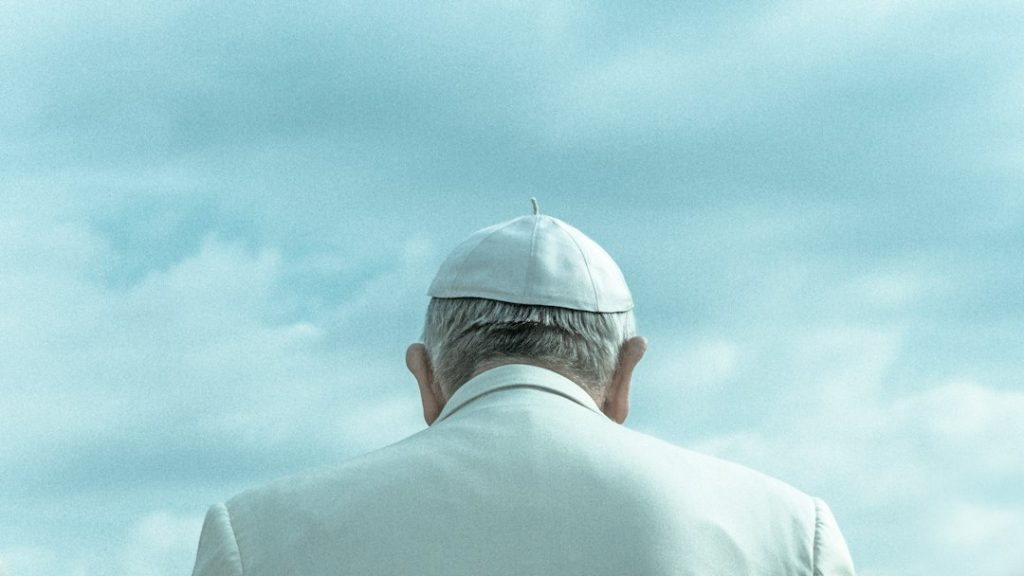
The Vatican’s own estimate put attendance at Place de la Concorde above the 600,000 who had pre-registered, following a Friday night vigil that drew roughly 80,000 young people to a national stadium outside the city. Leo traveled two kilometers down the Champs-Élysées in the popemobile before the Mass began. Organizers chose Place de la Concorde, a site tied to the French Revolution and the Republic itself, because it was the only location in Paris able to hold a crowd that size. At Friday’s vigil, Leo told the young Catholics gathered there that they were “the saints of France.”
The visit reopened a long-running French argument over laïcité, the constitutional principle of church-state separation rooted in the 1905 law. Communist Party Senator Pierre Ouzoulias was the visit’s most vocal critic. He objected to a 250,000 euro subsidy for public screens in Metz, which a French administrative court had cleared days earlier. Metz sits in Moselle, one of three departments that were under German rule in 1905 and have never fallen under that law’s specific provisions, governed instead by a separate local legal regime known as droit local. The court did not rule on that basis. It grounded the funding in the broader constitutional principle of laïcité itself, finding the papal visit was an event of international significance whose cultural and economic returns to the community justified the expense. Ouzoulias also described a Catholic education outreach tied to the visit as “the translation of the will to reconquer confessional commitment.” Constitutional law scholar Anne-Charlène Bezzina defended the Mass as compatible with French secularism. She argued that the law requires the state itself to stay neutral, not that religion be absent from public life. “The Republic does not commune,” Bezzina said.
Emmanuel Macron did not attend the Mass. He met Leo separately at the Élysée Palace the day before, at a formal reception billed as a meeting with “the Authorities, Civil Society and the Diplomatic Corps.” Leo is head of state of the Vatican, a sovereign state. The Élysée meeting followed the protocol France affords a visiting head of state, distinct from the informality of a pastoral visit. Several French presidential hopefuls did not stay away from the Mass itself: Marine Le Pen and Jordan Bardella of the National Rally, Gabriel Attal of Renaissance, Édouard Philippe of Horizons, and Bruno Retailleau of the Republicans all confirmed attendance.
The visit continues Sunday and Monday, with Leo traveling to Lourdes to meet seven survivors of clerical sexual abuse connected to the Notre-Dame de Bétharram school scandal. France’s own numbers on the Church’s place in a famously secular country cut in two directions at once. Adult baptisms have tripled since 2016, to roughly 13,000 a year. Over that same longer stretch, though, the overall number of baptisms performed in France has fallen sharply, from 513,000 in 1980 to 186,000 in 2024.
🌍 TRANSLATOR’S NOTE: French coverage of the Mass treated the laïcité question as a live, contested one, not settled by the Vatican’s turnout numbers. Public Sénat’s reporting centered Ouzoulias’s specific objection to municipal funding and a Catholic outreach campaign, alongside a constitutional scholar’s defense that state neutrality does not require excluding religion from public space. That framing is an argument over what secularism actually requires, not over whether the Mass should have happened at all. It has had little equivalent in American coverage, which has largely treated the visit as a story about crowd size and papal popularity.
🇺🇸 What American readers need to know: Nearly three-quarters of a million people turned out for a religious event in a country whose government is legally required to stay separate from religion, in numbers large enough that even a sitting president chose to greet the Pope privately rather than be seen at his Mass. The scale says something real about religious practice in France that a purely secular read of the country would miss, even as France’s own baptism numbers show a much more complicated, declining picture underneath the turnout for one weekend.
Sources: WTVM/AP (US, AP wire — crowd figures, Leo quote, baptism statistics, itinerary); Public Sénat (France, public broadcaster — Ouzoulias quote, Bezzina quote, candidates attending); franceinfo (France, public broadcaster — court ruling on the Metz subsidy); Vatican (Holy See — Élysée Palace meeting title and format)
BRIEFS
Russia and Ukraine exchanged heavy strikes overnight into Saturday, with at least seven people killed across both countries as the aerial war continues to intensify, according to wire reporting. Source: ABC News/AP (US, AP wire — casualty count, strike details)
NUMBERS AT PUBLICATION 🇮🇷 Iran: 3,684 killed 🇱🇧 Lebanon: 8,953 killed, 30,643 wounded 🇮🇱 Israel: 1,200+ killed, ~5,400 wounded 🇺🇸 US military: 23 killed, 794 wounded 🇵🇸 Gaza: 74,105+ killed (total war), 4,916 wounded (since ceasefire) 🇵🇸 West Bank: 322 killed (incl. 74 children), 5,927 wounded (incl. 946 children) since January 2025 🛢️ Brent crude: $104.30/barrel ⛽ US gas: $4.49/gallon Sources: HRANA (Iran); Lebanon MOPH; INSS (Israel); DCAS (US); OCHA (West Bank); gazacasualties.org (Gaza total); Gaza Health Ministry via WAFA (Gaza since ceasefire); OilPrice.com (Brent); AAA (US gas).
“Whenever the people are well informed, they can be trusted with their own government.” — Thomas Jefferson, 1789